This travel update is part four of our two-week stay in Stockholm, Sweden. It covers October 6 – 8. “Any text in quotes and Italics has been copied and pasted from some informational website like Wikipedia.”
October 6, 2023 – Friday: The National Museum
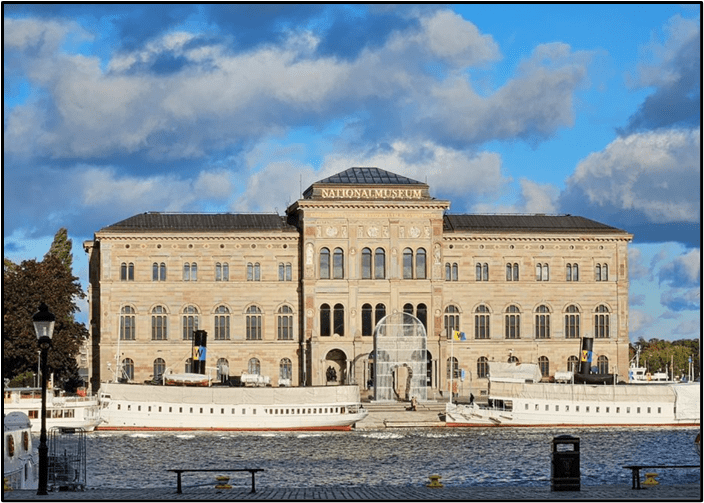
This is a very large art museum in Stockholm and we decided to go there today.
“Nationalmuseum (or National Museum of Fine Arts) is the national gallery of Sweden, located on the peninsula Blasieholmen in central Stockholm.”
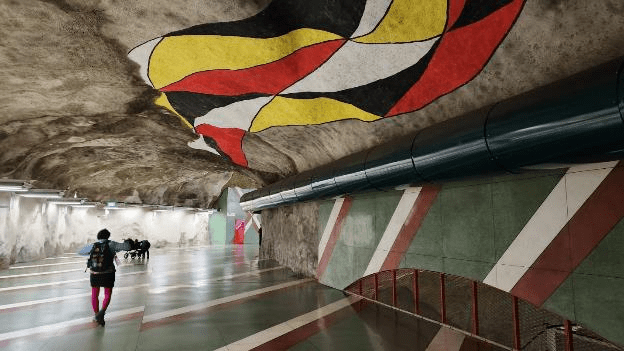
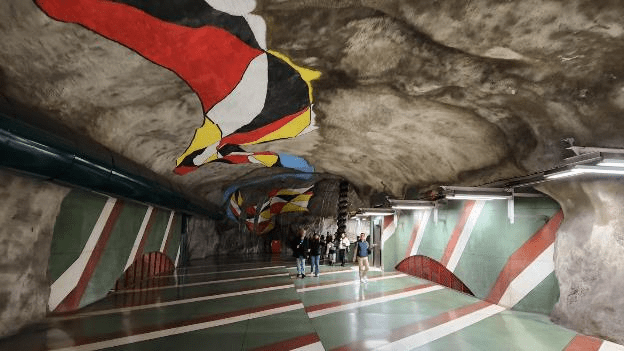
We took a different subway line to get there. This station was full of artwork. There were old statues on the platform.
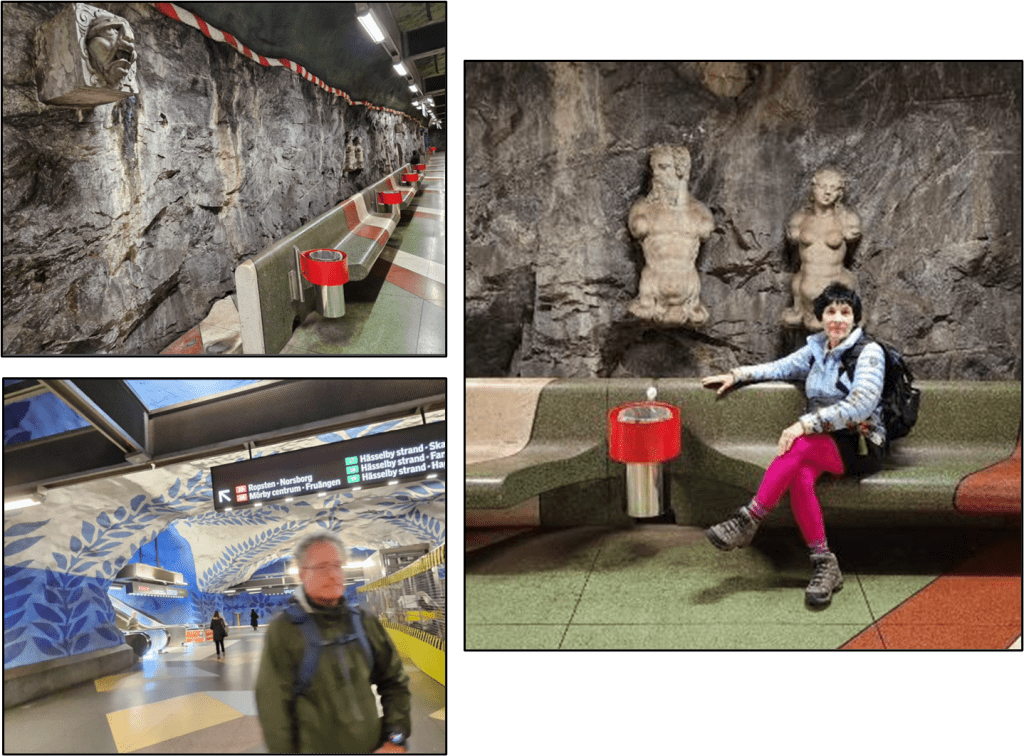
And painted ceilings, walls, and floors.
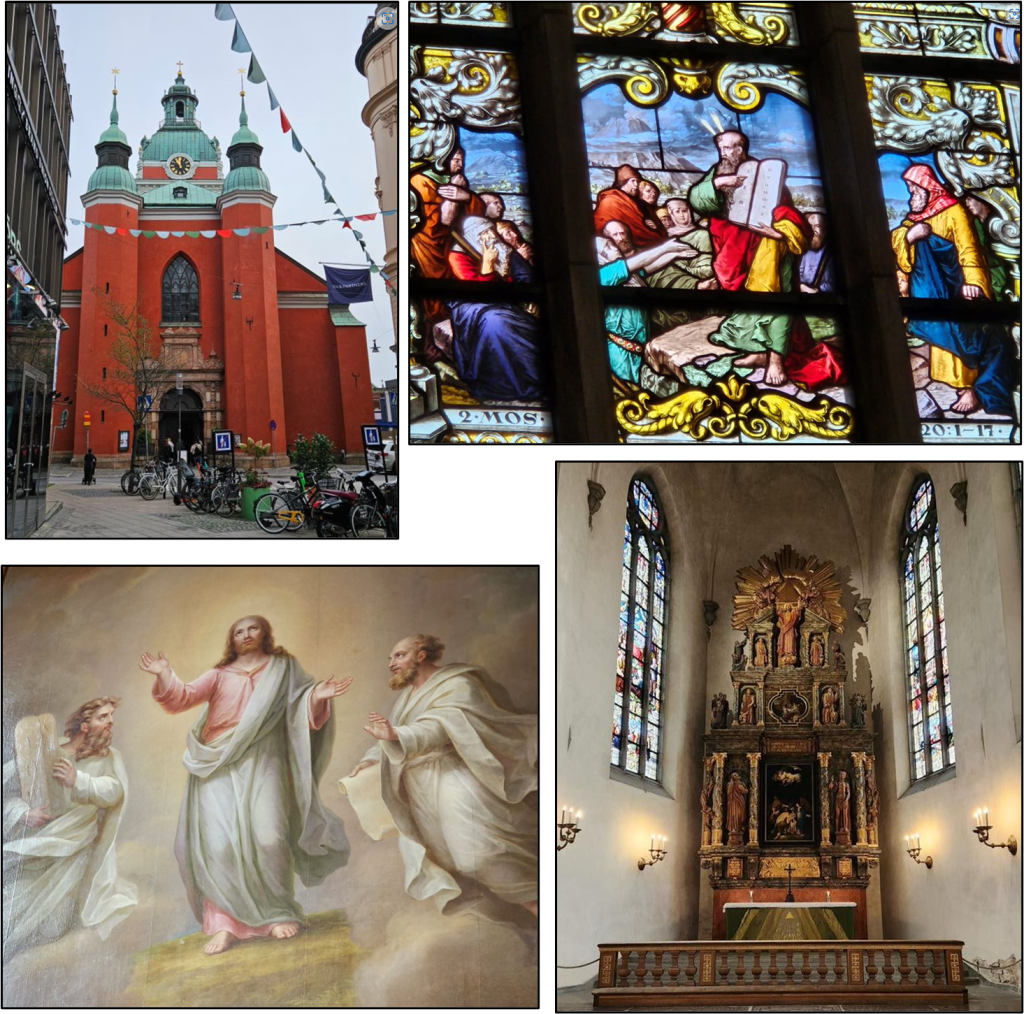
On the way from the subway to the museum we went by St. Jacob’s Church and went in for a few pictures. All the churches we’ve seen in Stockholm are full of beauty.
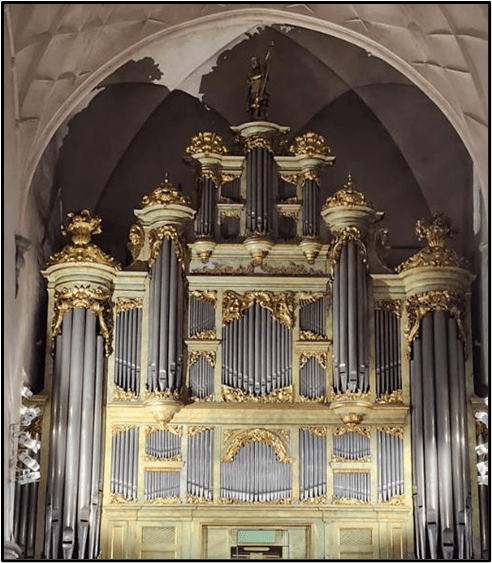
As ususal there was a beautiful organ up in the loft.
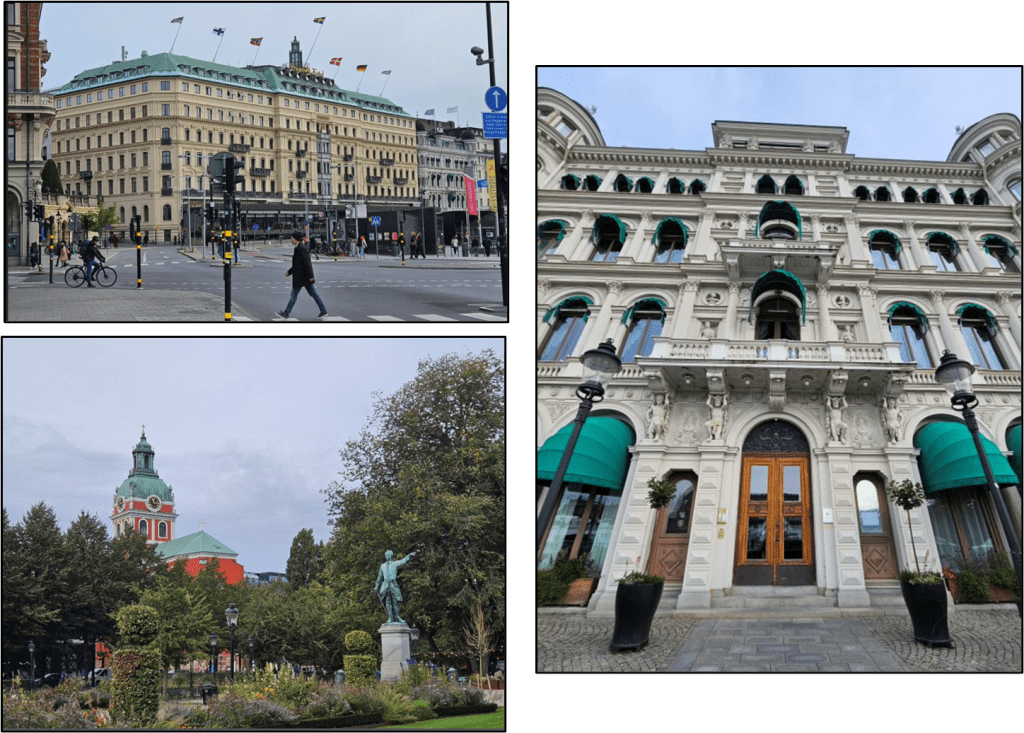
Many beautiful buildings stand tall in the neighborhood surrounding the museum.
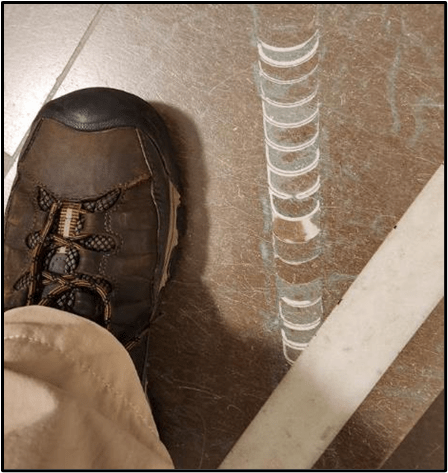
At the museum we bought our tickets and put our backpacks into a locker. Going up the stairs I enjoyed seeing all the Orthoceras fossils in the flooring. This one was about the length of my boot.
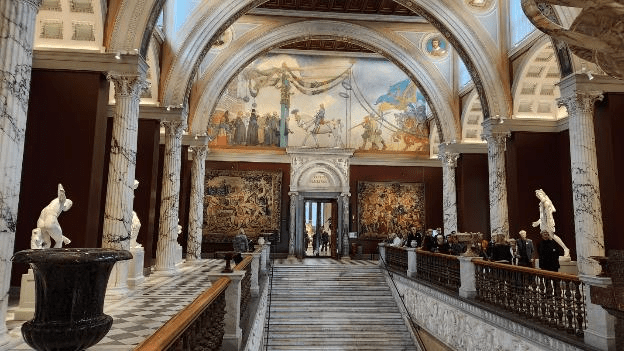
There are lots of magnificent sights at this museum. This is what the staircase to the top floor looked like. There was a giant wall painting over the door and two big tapestries on either side.
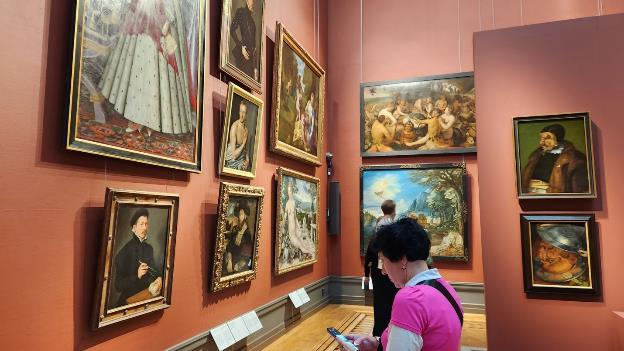
We followed the suggestion of seeing things chronologically so we started with the 1500s. There were lots of lovely paintings from the Renaissance.
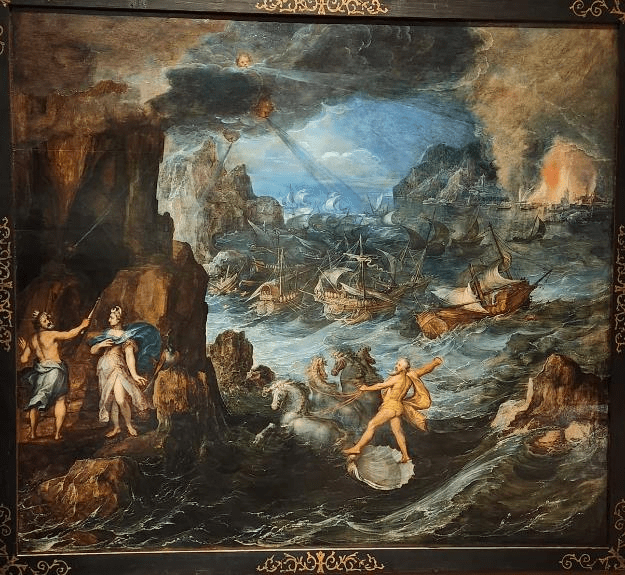
I liked this one about the shipwreck of the Greek fleet on the voyage home from Troy.
This one shows an old man paying a young woman for sexual services.
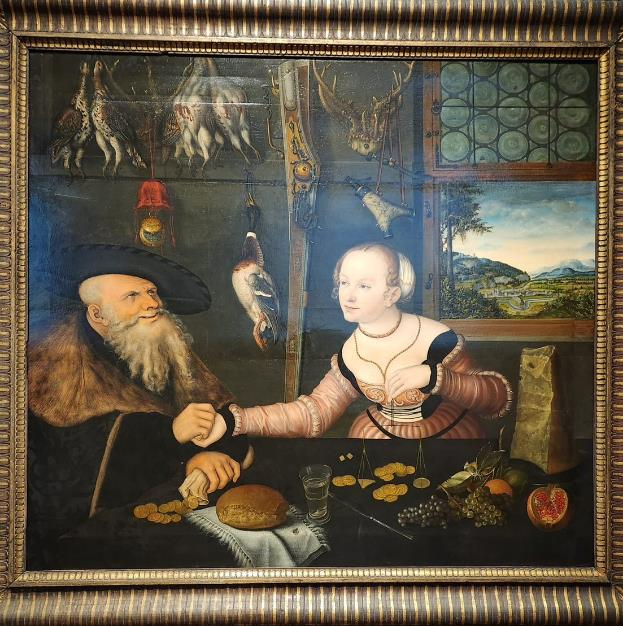
“This was a recurring theme in north European Renaissance art and literature, often interpreted as an example of the folly of lust.”
This was an interesting bit of history, these are portraits of Martin Luther and his wife.
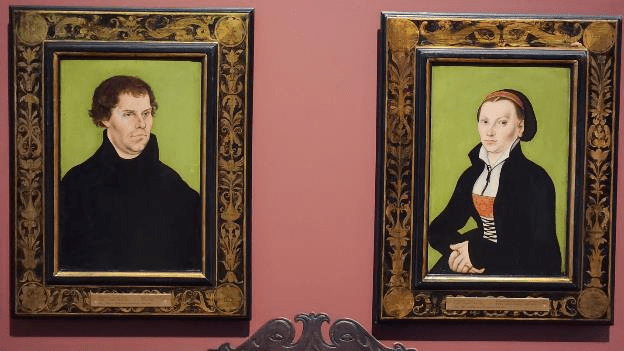
Sweden broke from Catholicism and accepted Lutheranism so Luther is an important guy here.
“Martin Luther (10 November 1483 – 18 February 1546) was a German priest, theologian, author, hymnwriter, professor, and Augustinian friar. He was the seminal figure of the Protestant Reformation, and his theological beliefs form the basis of Lutheranism.”
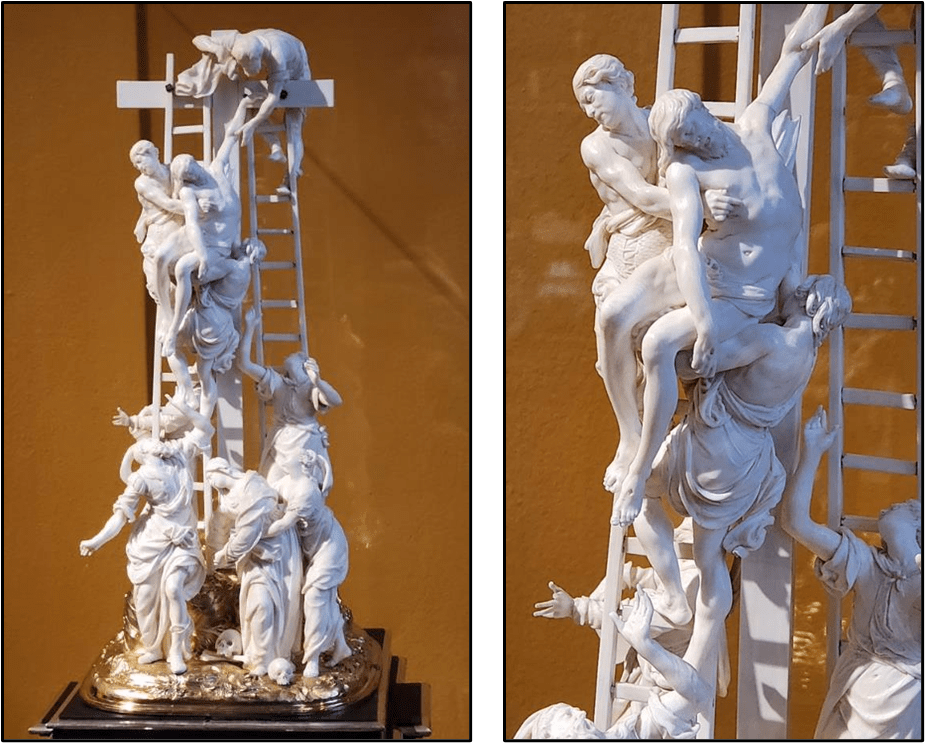
This is a really nice ivory carving of the descent from the cross, referred to as the “The Deposition” — shown is the full display along with a close-up view.
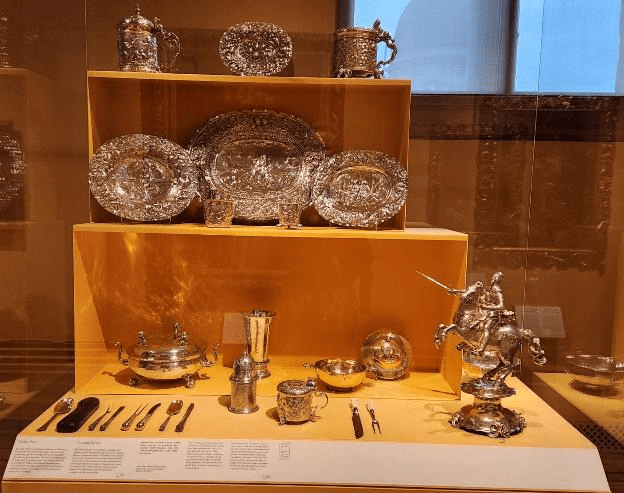
There were quite a few displays of silver.
We ate lunch in the museum restaurant which had pretty fancy food. I got the schnitzel with brown butter and Patti got the Char (an arctic fish). It was all good.

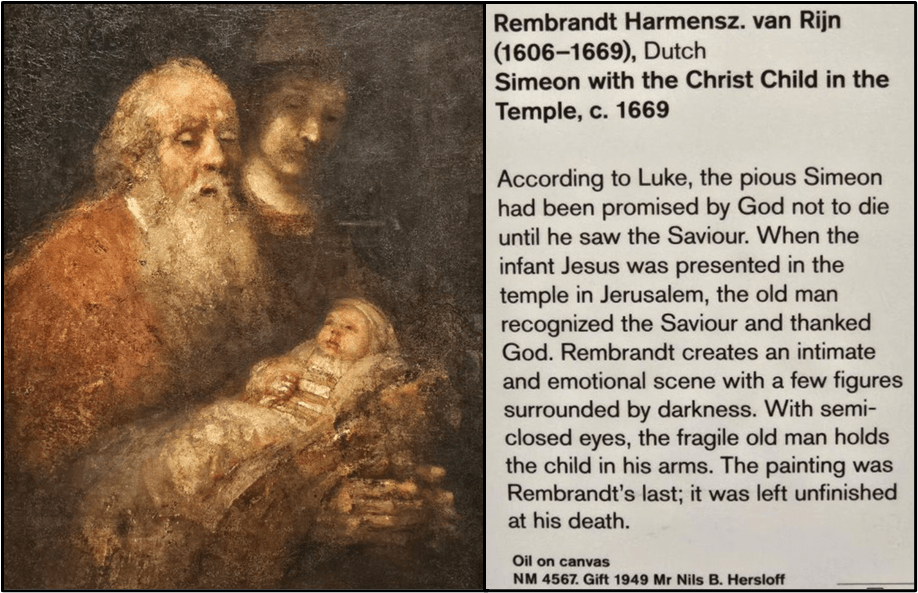
After lunch we went through the 1600s where there were several paintings by Rembrandt van Rijn like this one called “Simeon with the Christ Child in the Temple” from 1669.
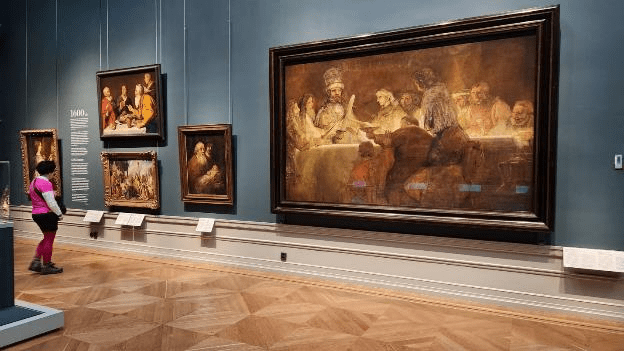
There were more lovely paintings.
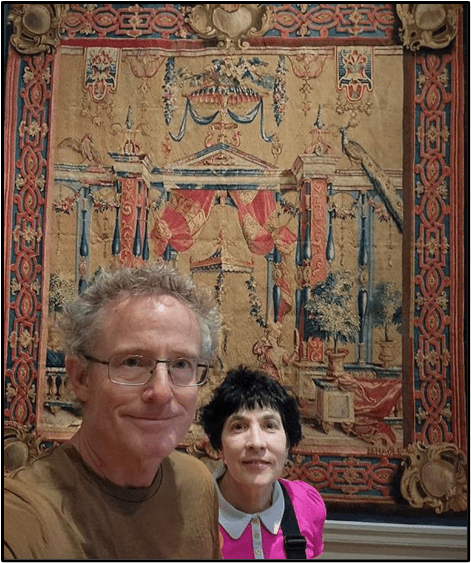
Here’s our selfie with a tapestry.
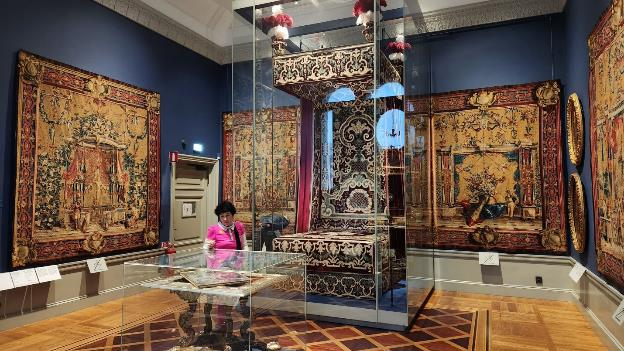
The tapestry room was pretty impressive, and there was a throne canopy.
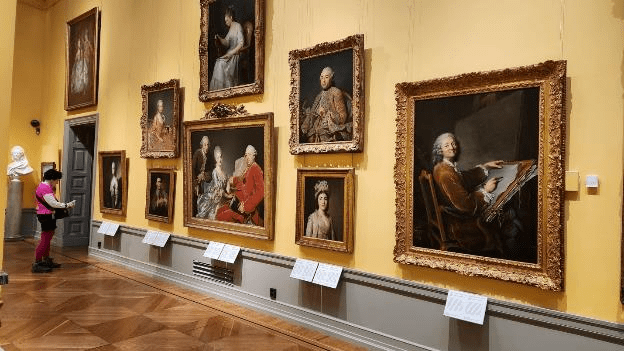
There were lots of portraits.
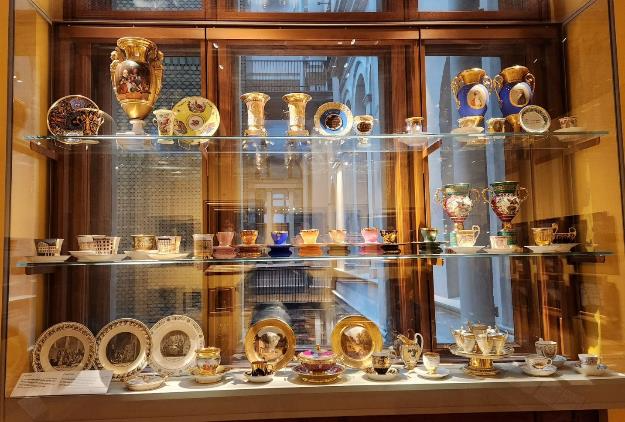
There were some nice displays of porcelain.
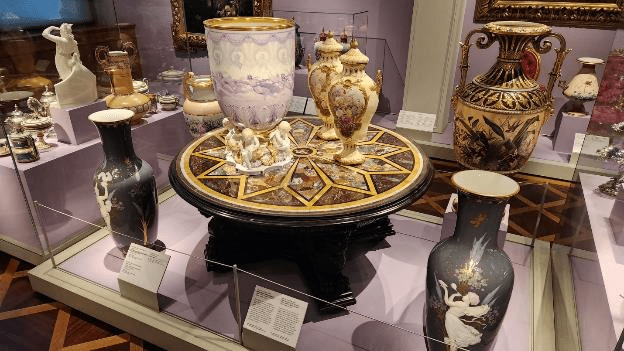
There were all kinds of vases and inlaid tables.
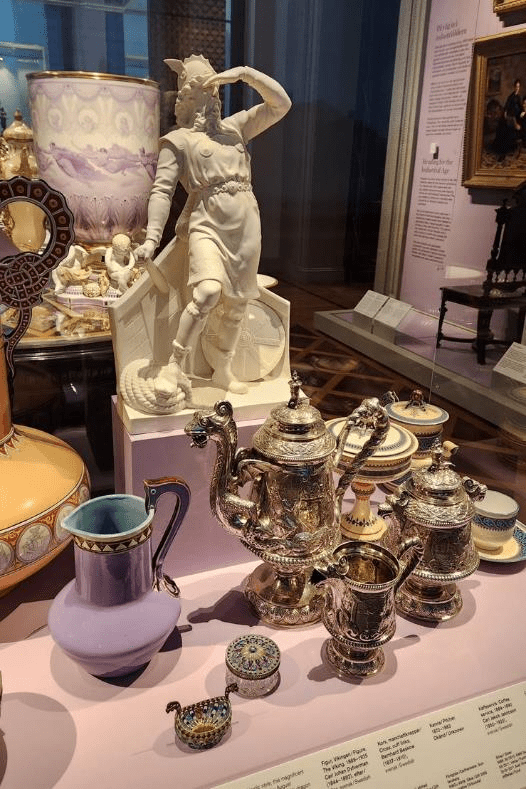
The Viking theme was used in a lot of art here, you can see the Viking statue here and the serving vessels have handles that look like longship dragon heads.
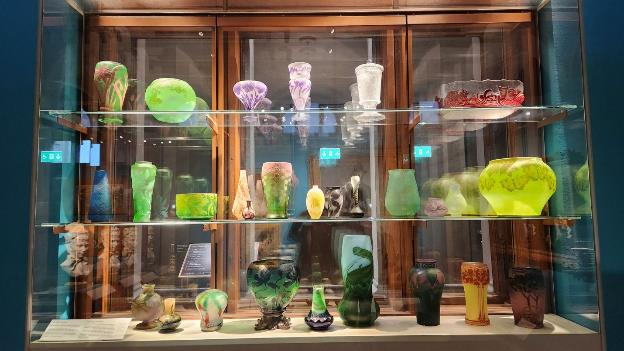
This art glass was really pretty.
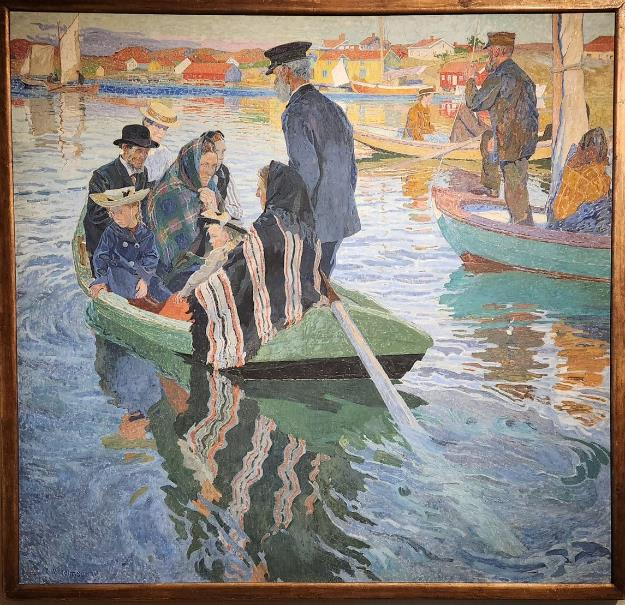
As we got to the 1900s there were a lot of paintings by Swedish artists, here’s one by Carl Wilhelmson called “Church-Goers in a Boat” from 1909.
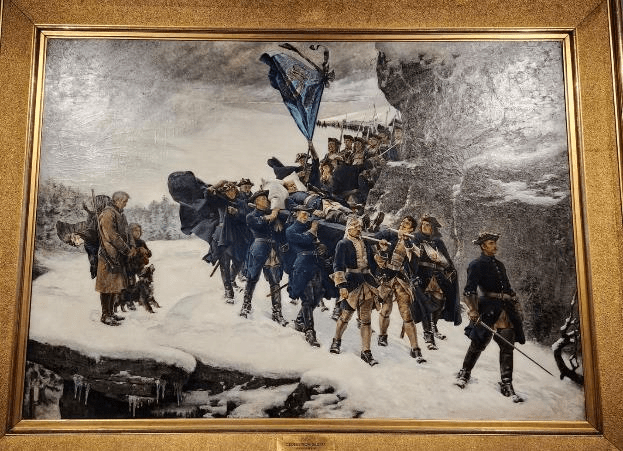
This was an interesting historical painting by Gustaf Cederström called “Bringing Home the Body of King Karl XII of Sweden”.
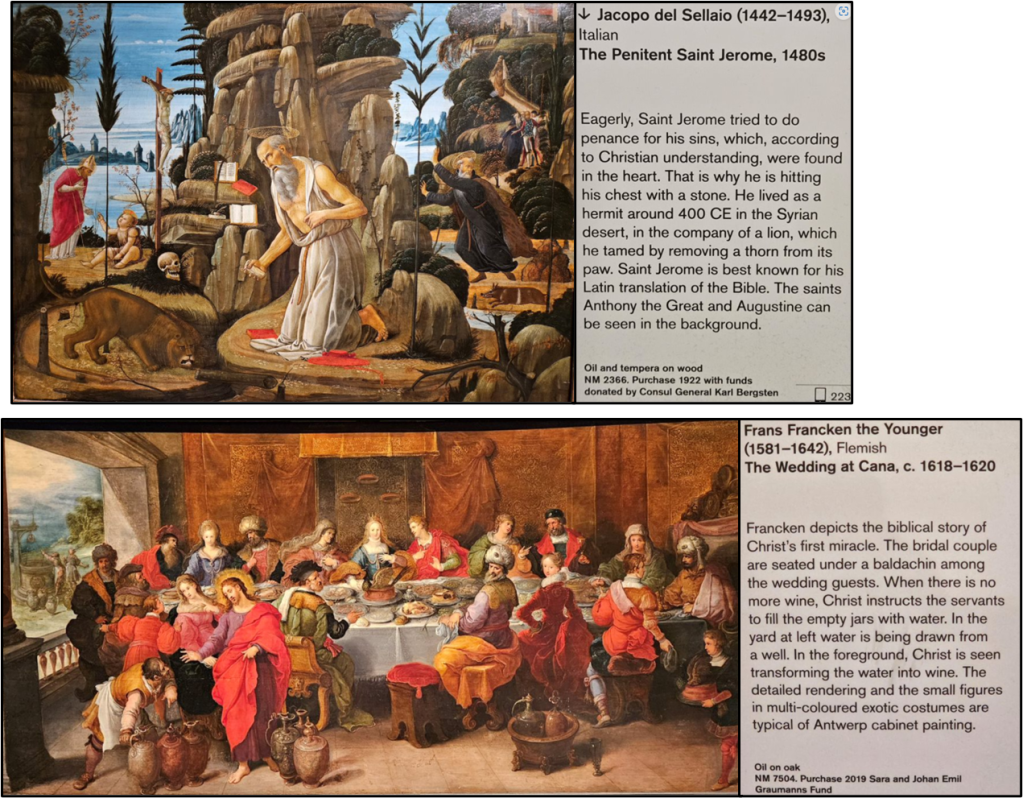
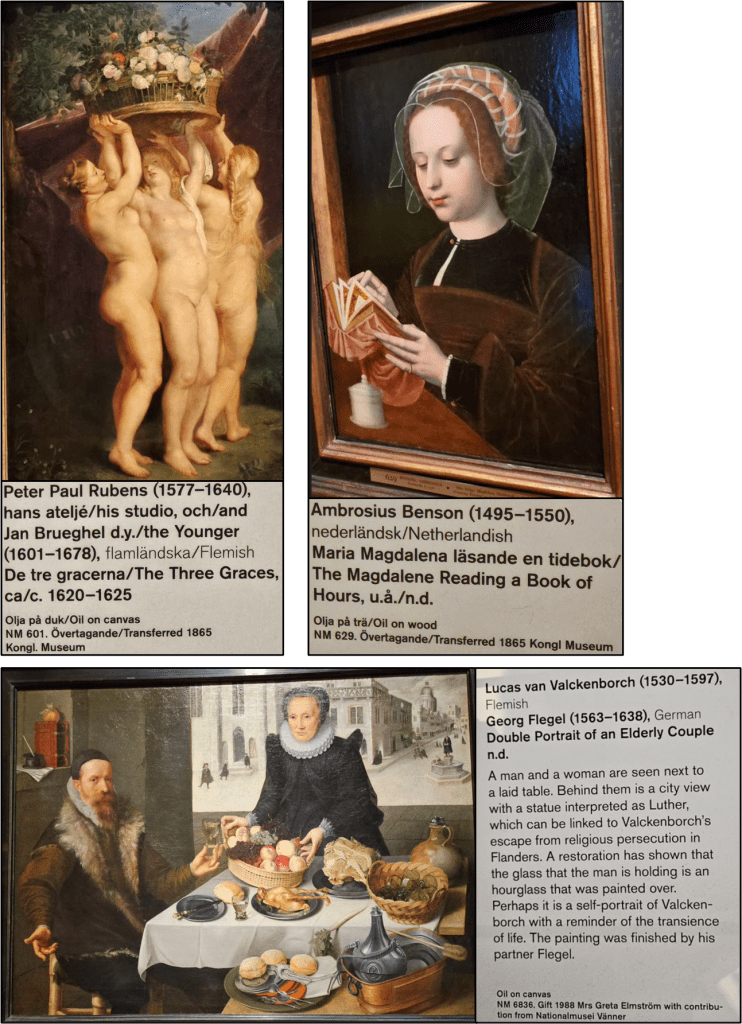
Shown below are some additional paintings we enjoyed seeing, including the painting of Saint Jerome — we’ve seen paintings of Saint Jerome at museums all over the world. He’s a popular subject.
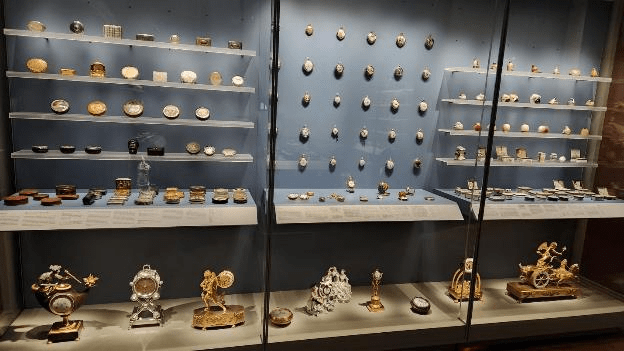
In the Treasury there were hundreds of small enamel boxes, pendants, and clocks.
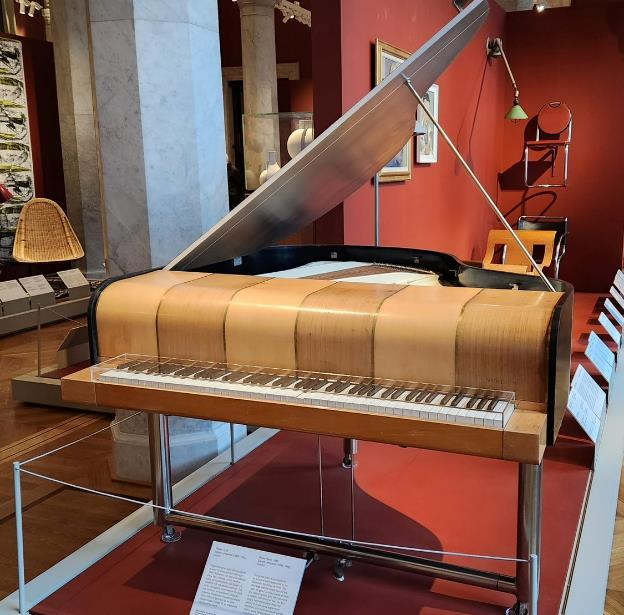
This piano was pretty, it was created by Sigurd Lewerentz for an exclusive show apartment at the Stockholm Exhibition of 1930.
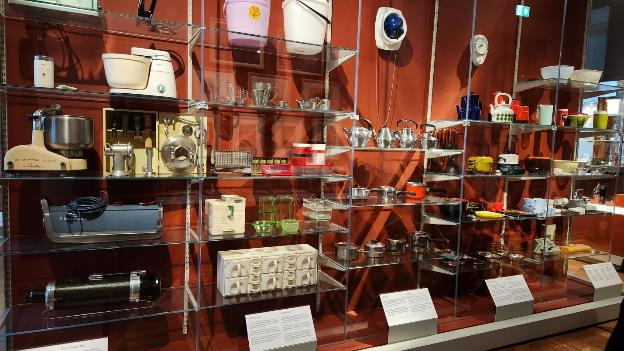
When we got to the mid 1900s there were household items on display. I was happy to see the Electrolux Vacuum Cleaners, they’re at the lower left in this picture. Back in the summer of 1976 I sold Electrolux vacuums and rug shampooers door to door but I didn’t know it was a Swedish company.
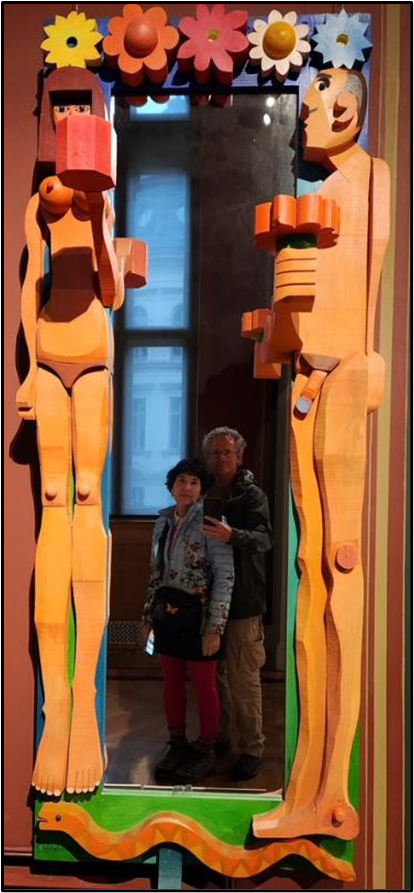
We found this colorful mirror to take our usual reflection picture.
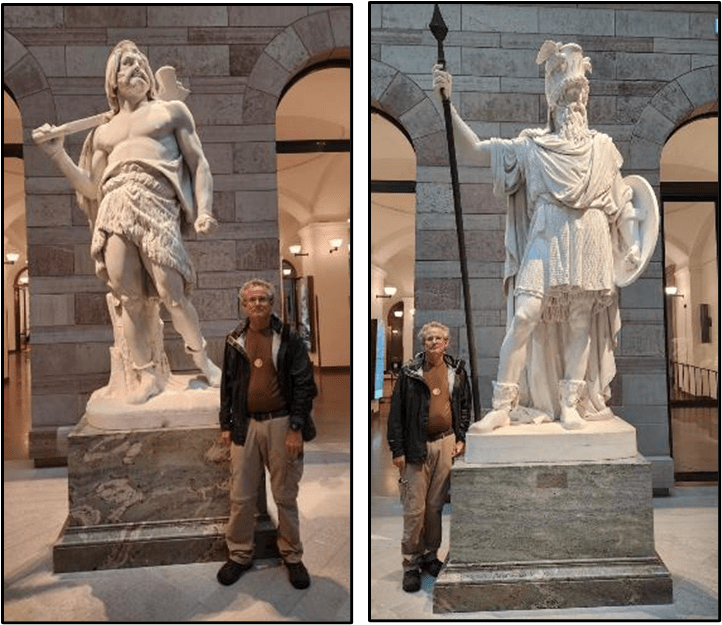
In the sculpture courtyard I got my picture with Thor (on the left) and Odin (on the right).
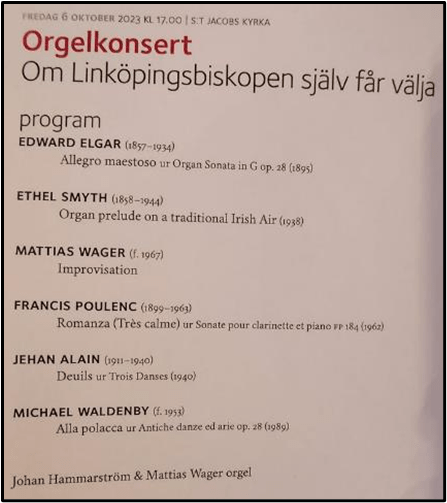
We enjoyed this museum and stayed until almost closing. Then we returned to St. Jacob’s church and went in to listen to an Organ Concert we read about earlier in the day. The organist played some songs we were familiar with and other songs we had never heard before.
After the concert, we returned to the artsy subway tunnels to make our way back to our Airbnb.
October 7, 2023 – Saturday: The Royal Palace
This was our day for the Royal Palace. We’ve been seeing it as we walk around the city and it has several museums inside. Here’s the view from the courtyard.

“Stockholm Palace or the Royal Palace (Swedish: Stockholms slott or Kungliga slottet) is the official residence and major royal palace of the Swedish monarch. King Carl XVI Gustaf and Queen Silvia use Drottningholm Palace as their usual residence. Stockholm Palace is on Stadsholmen, in Gamla stan in the capital, Stockholm. It neighbors the Riksdag building. The offices of the King, the other members of the Swedish royal family, and the Royal Court of Sweden are here. The palace is used for representative purposes by the King whilst performing his duties as the head of state.”
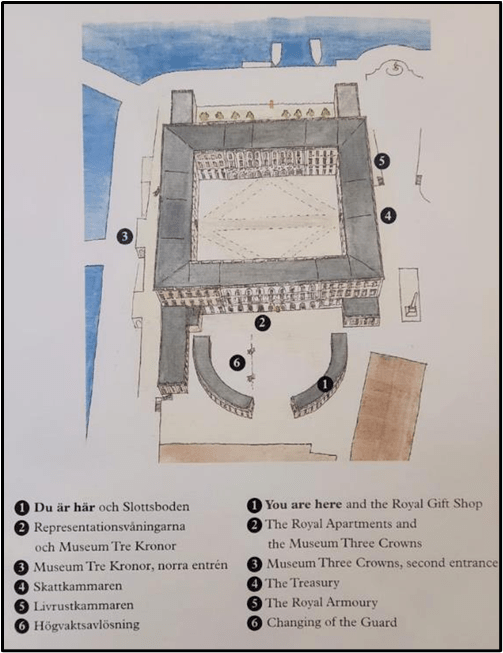
Here’s a map of the place with the museums listed.
There’s a special exhibition right now that spans 500 years of Swedish history from 1523 to 2023. We remembered that the current king is celebrating his 50th year as king this year, his Jubilee. We went into the special exhibition first. They emphasized that Sweden’s hereditary monarchy has lasted 500 years.
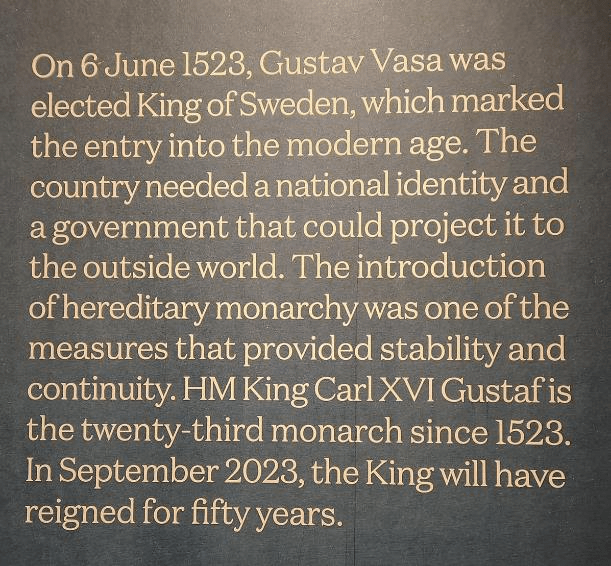
This is actually a double jubilee year.

Here I am with the first king, Gustav Vasa.

And here’s the current King Karl XVI Gustaf.

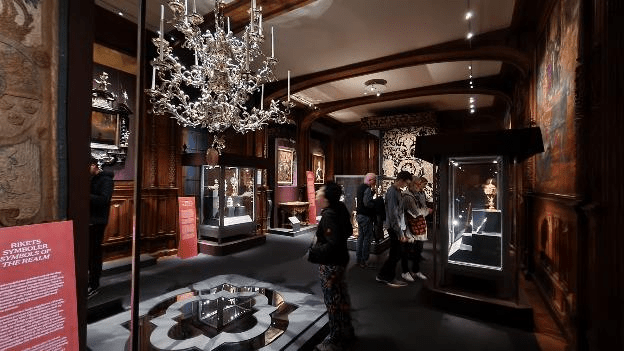
There were several rooms with all kinds of artwork, furniture, clothing, and decorations from the last 500 years of the monarchy.
This is a small pendant in the form of a rat trap.
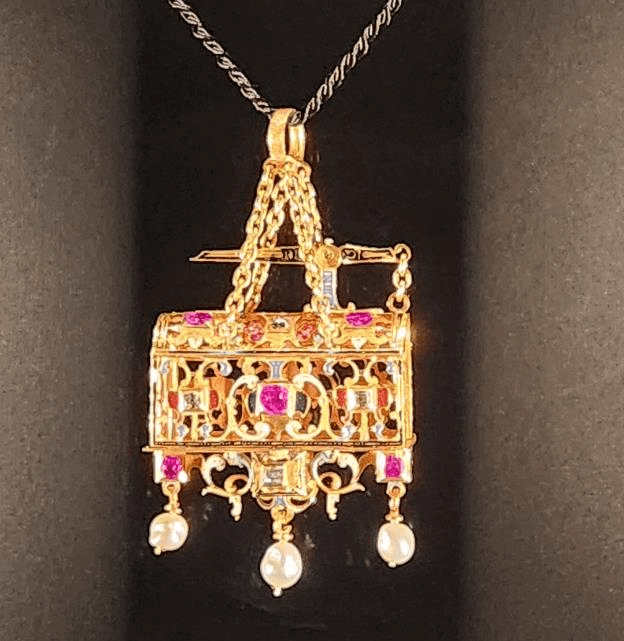
“Mentioned in a 1630 inventory of King Gustav II Adolf’s costume jewelry, the pendant is most likely the “treasure”, in the form of a rat trap, that Duke Johan Adolf of Holstein-Gottorp acquired in 1592, the year his sister Kristina was outfitted for her wedding to King Karl IX of Sweden.”
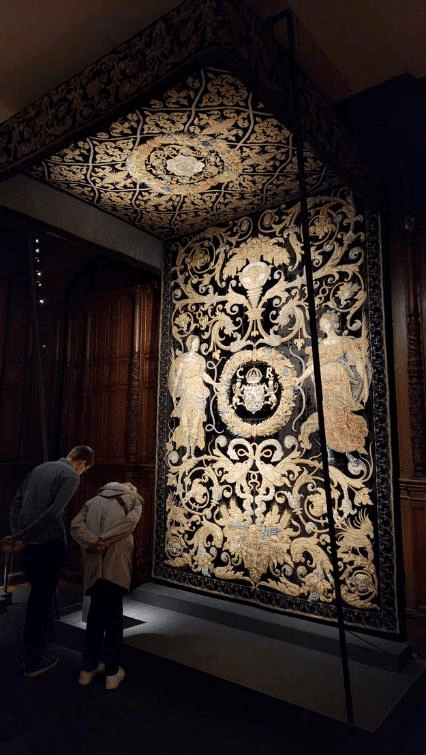
Here’s a “Throne Canopy” from the first half of the 16th century, made in Italy.
“The canopy served as a magnificent framework for the monarch and marked his elevated position.”
This display had some lovely things.

I liked this wall mirror that was made in Hamburg in the 1640s.
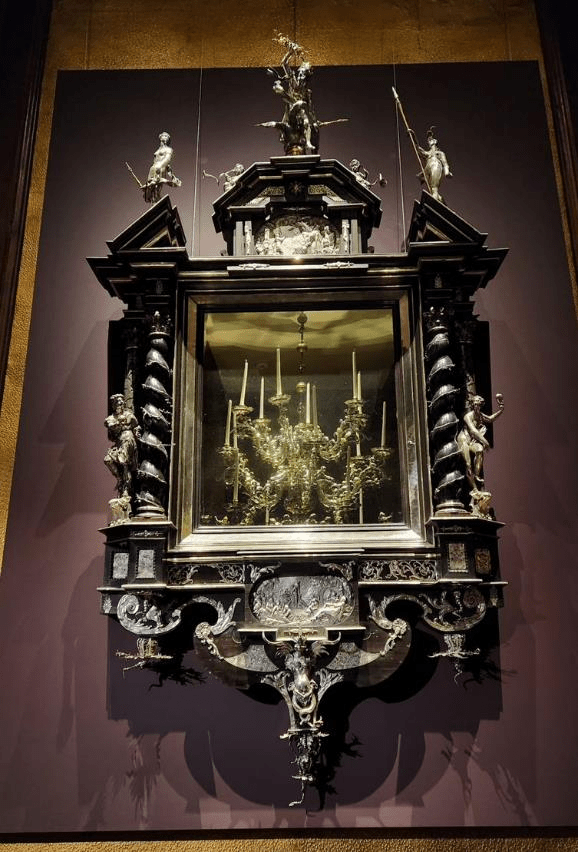
Here’s a closeup of the scene at the bottom of the mirror. The intricate work on all this stuff is just amazing.
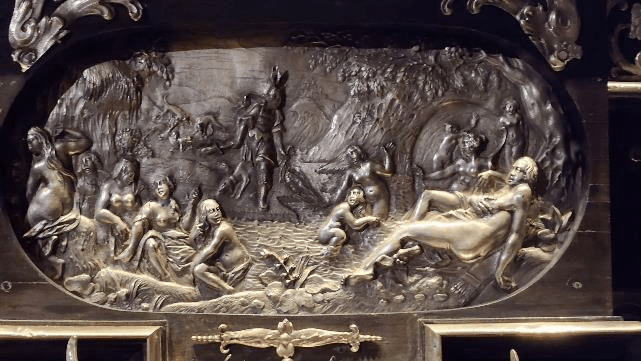
“When the mirror arrived at Gripsholm Castle, it was the property of the Dowager Queen Hedvig Eleonora. It is an example of the extensive mid-17th century trade with exclusive arts and crafts objects for the royal courts of Northern Europe.”
I didn’t know what “dowager” means, evidently it means “a woman holding property or a title from her deceased husband.”
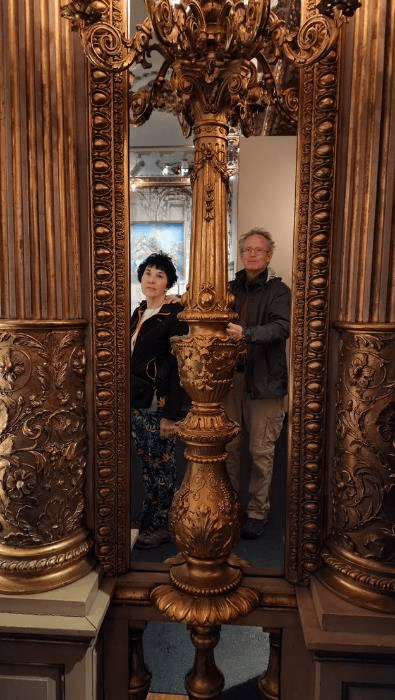
We found a mirror for our customary reflection picture.
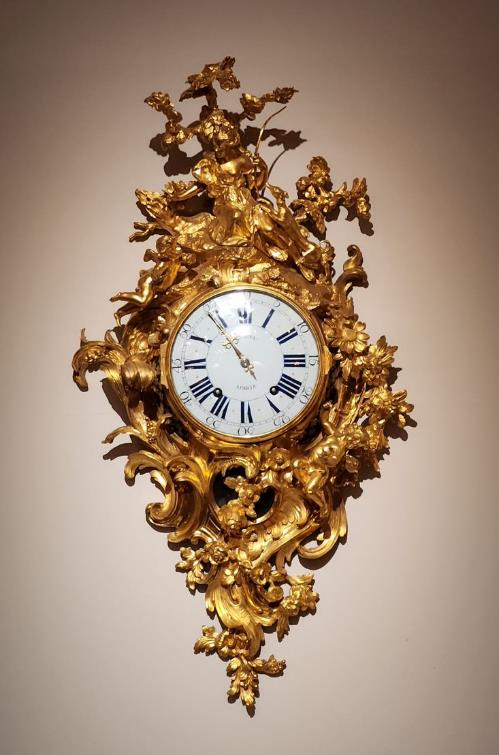
I was really impressed that most of the old clocks were still working and keeping good time. This wall clock was built in 1747 in Paris.
This case had trumpets and timpani, which was fun to see.
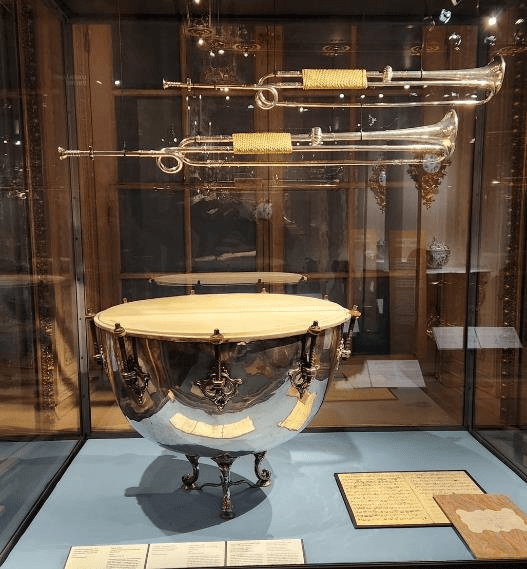
The written music on the bottom of the case was in notation that we could read today. I hummed a few bars of it.
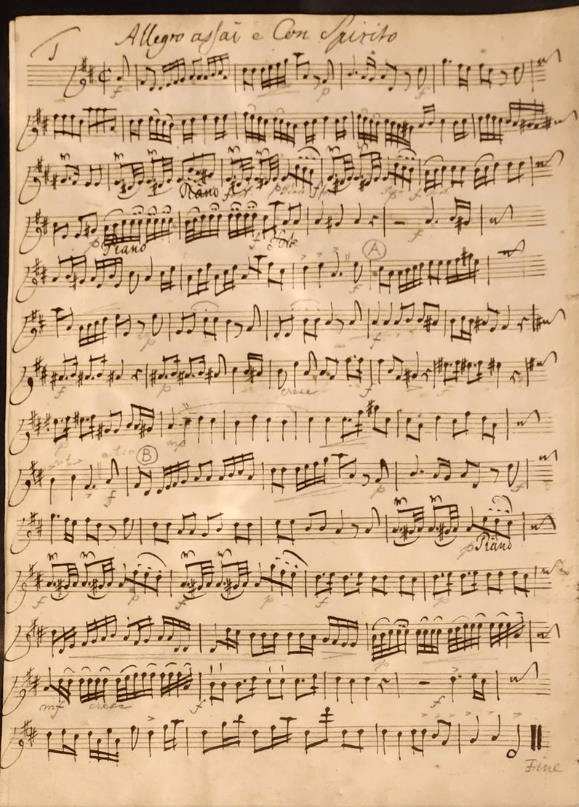
“As early as 1526 musicians were employed by the court. Their titles indicate that they primarily played the trumpet and the kettledrum, instruments that were used for signaling and at ceremonies.”
We were particularly impressed with this porcelain cabinet made in 1844 in Paris.
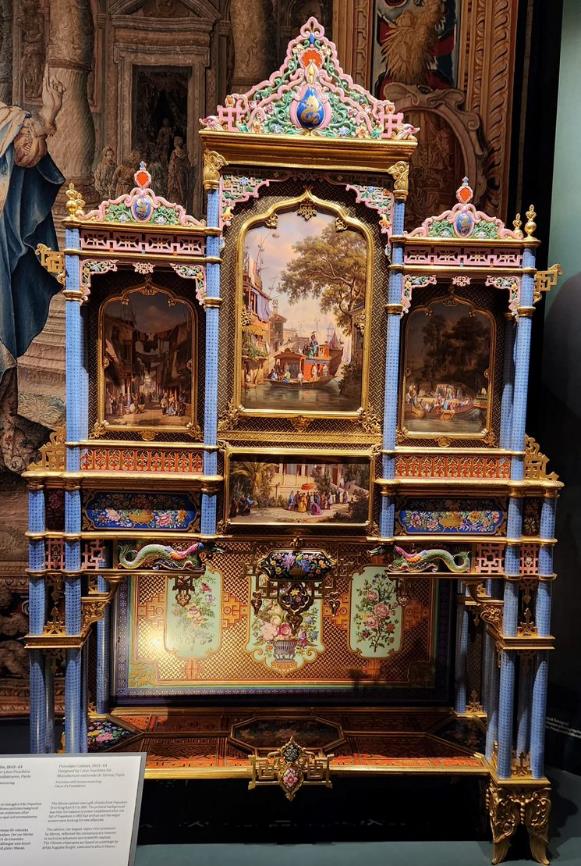
“The Sevres Cabinet was a gift of state from Napoleon III to King Karl XV in 1861. The cabinet, the largest object ever produced by Sevres, reflected the contemporary interest in technical advances and realism. The Chinese cityscapes are based on paintings by artist Auguste Borget, executed in situ in Macau.”
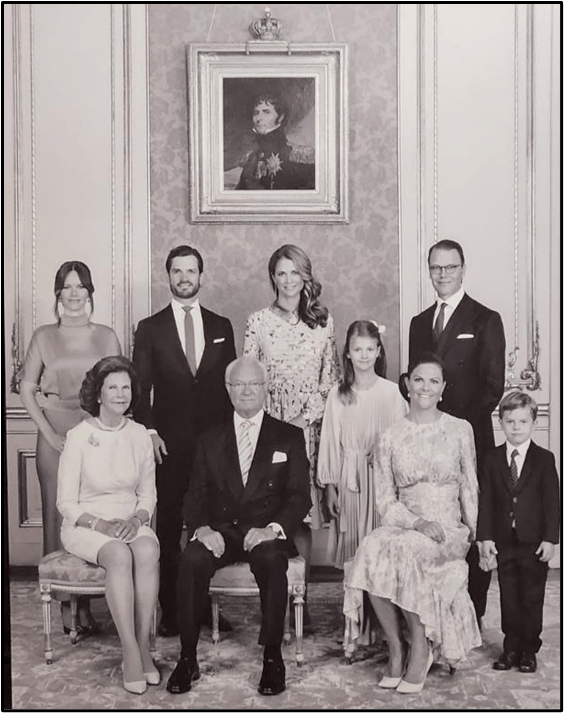
At the end of the exhibition there were pictures of the current Royal House. The King and Queen are bottom left and their daughter, the next queen, is bottom right with her son and daughter. The second row is just other children and their spouses who will not be king or queen.
It was lunchtime when we finished up this exhibit, so we planned to find a nearby cafe for lunch. However, as we left, we were blocked by people gathering outside to watch the Changing of the Guards, which happens every day at 12:15 PM. We therefore postponed our lunch plans to watch the event.
First, the marching band entered the courtyard.
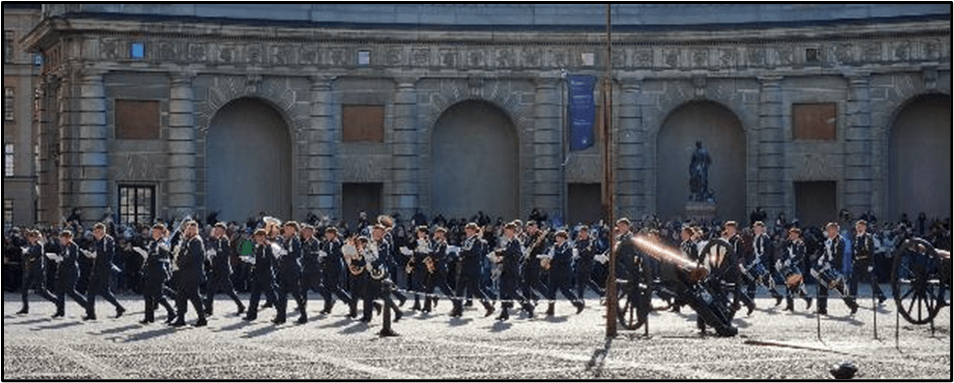
The old group of guards marched out and the new group marched in.
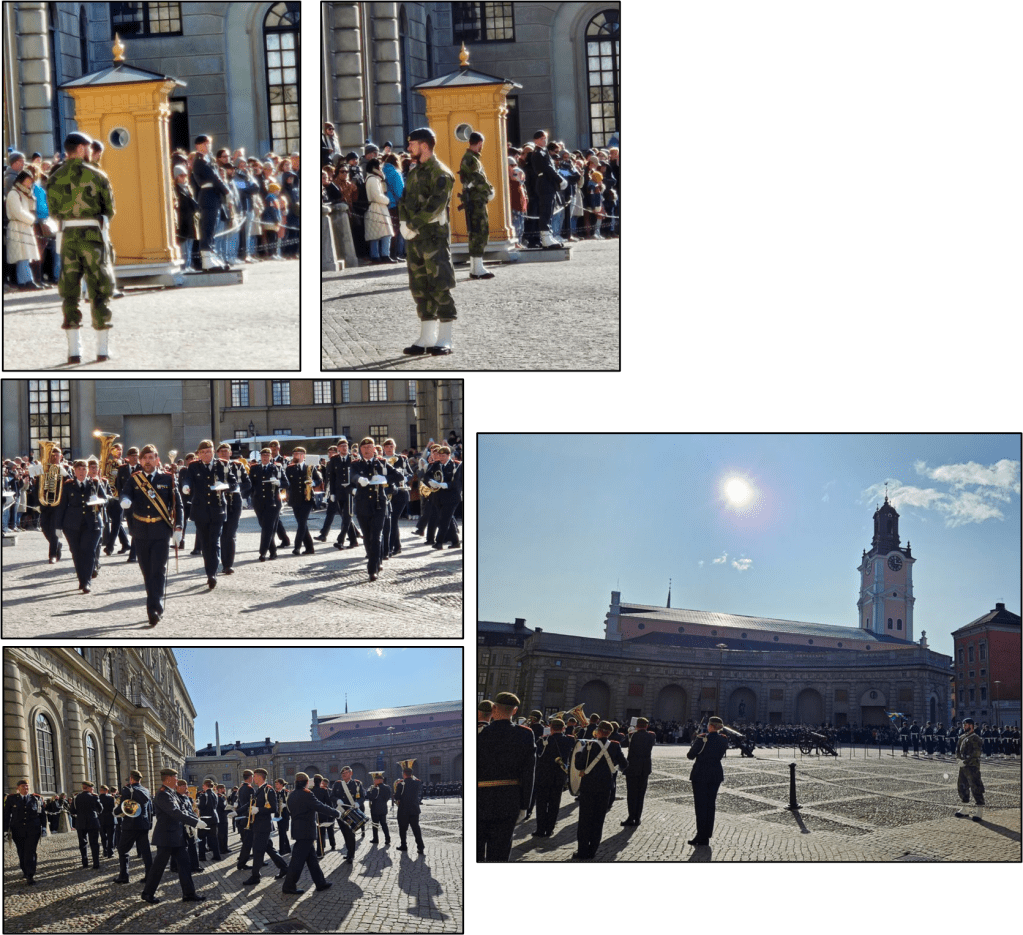
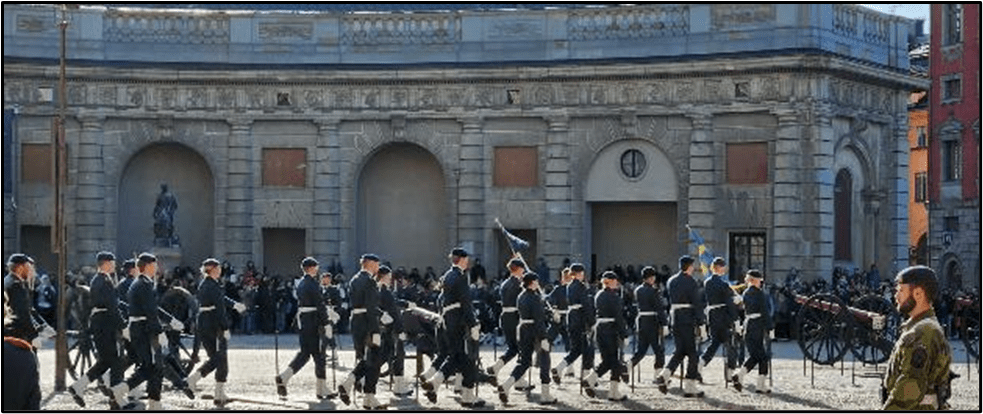
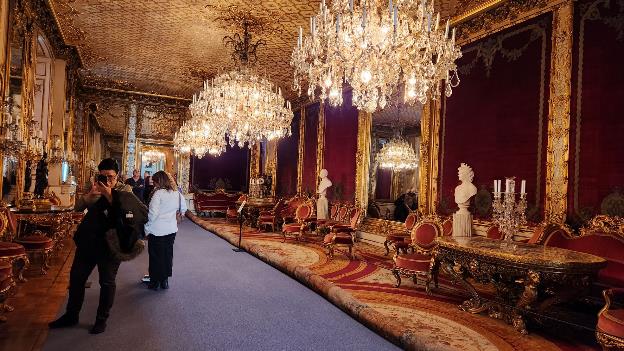
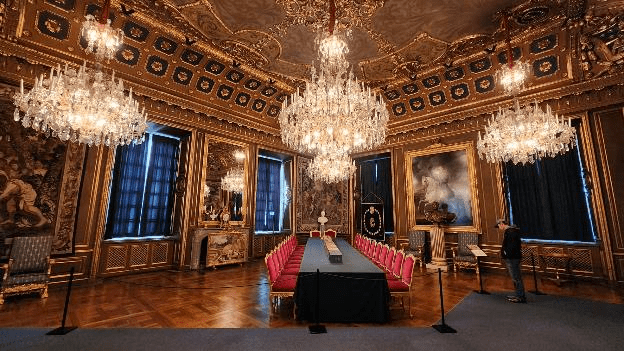
After the guard changing, we discovered a nearby café to eat lunch at and then returned to the palace to see the “Royal Apartments”. These rooms have been used for various purposes over the centuries, and there are a lot of them. As always in Royal Palaces the luxury was over the top. Shown below are a few pictures.
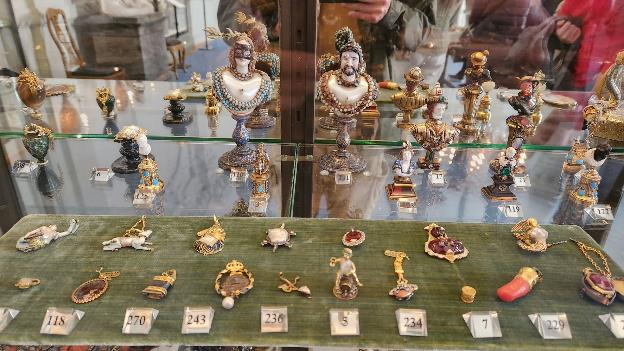
There were more displays of jewelry, etc.
The Nobel Peace Prize Awards are presented to the recipients on December 10 every year, which is the anniversary of Alfred Nobel’s death. The awards are handed out in the presences of the King and Queen of Sweden. After the presentation ceremony, the Noble Peace Prize recipients are hosted by a lunch with the King and Queen of Sweden in this dining room.
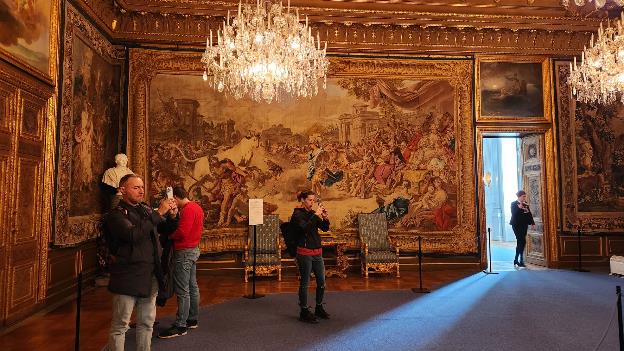
Many of the rooms had huge tapestries like this one.
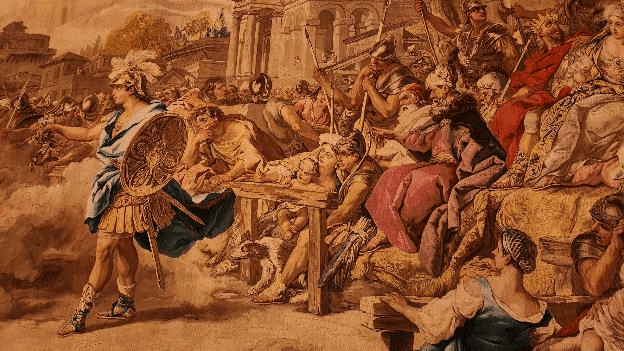
Here’s a closeup of that tapestry so you can see some of the detail.
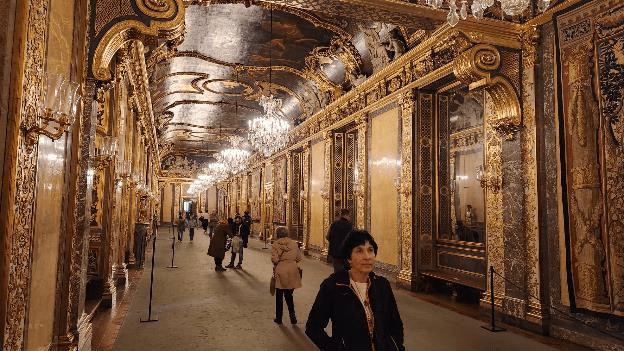
The Hall of Mirrors was very long.
There was an old upright piano in this room.
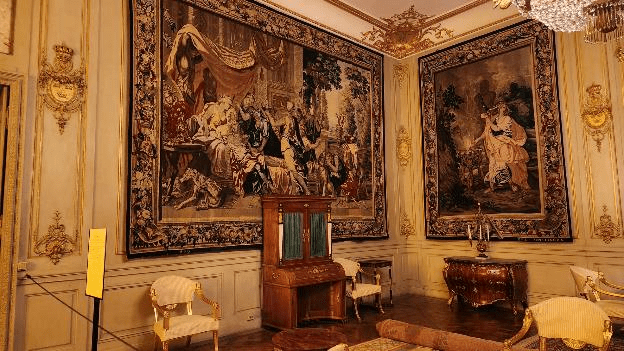
The apartments went on and on, we almost got overloaded with the royal decorations, furniture, paintings, etc. It’s hard to imagine living in a place like that.
After the Royal Apartments Museum we went into the Tre Kronor Museum. This is about the history of the castle that was built here and then burned down, before the Royal Palace was built on top of it.
“Tre Kronor (Swedish pronunciation: [ˈtreː ˈkrûːnʊr]; “Three Crowns”) was a castle located in Stockholm, Sweden, on the site where Stockholm Palace is today. It is believed to have been a citadel that Birger Jarl built into a royal castle in the middle of the 13th century. The name “Tre Kronor” is believed to have been given to the castle during the reign of King Magnus IV in the middle of the 14th century.
Most of Sweden’s national library and royal archives were destroyed when the castle burned down in 1697, making the country’s early history unusually difficult to document.”
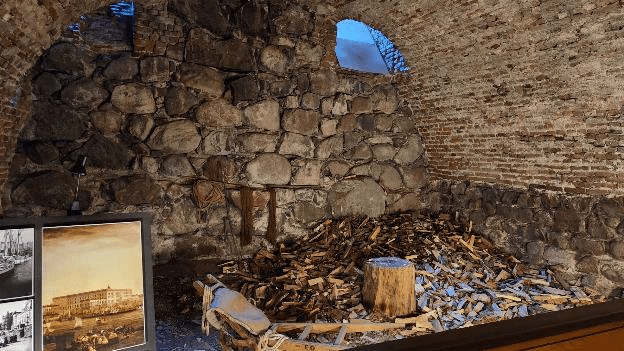
The museum was in the lower levels and the Palace wood cellar was our first stop.
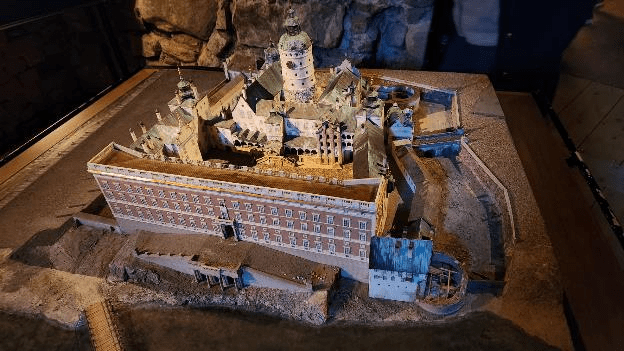
Here’s a model of the Tre Kronor Castle.
The original brick vaults were fun to walk through, and there were lots of artifacts from the castle.

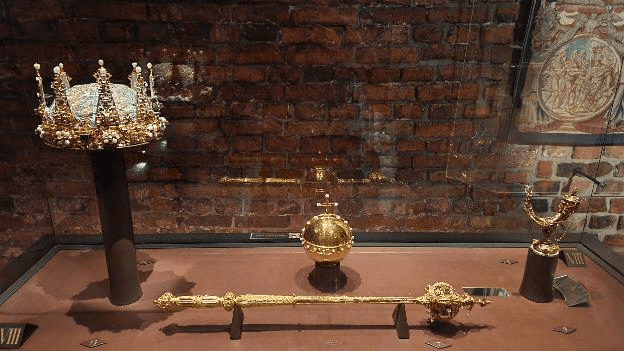
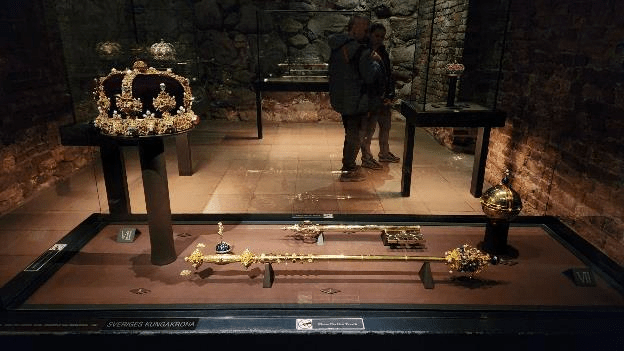
After this we went to the Treasury Museum where they keep some of the crown jewels and coronation accoutrements. There were quite a few crowns.
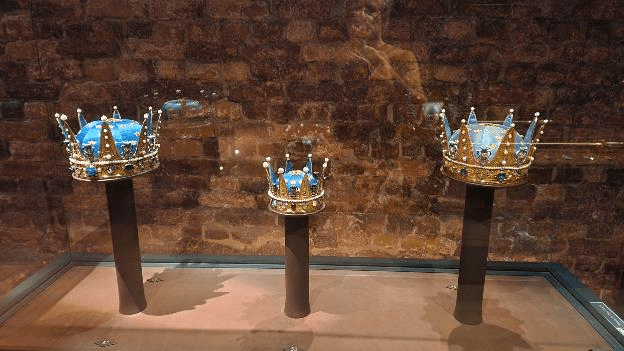
And also several sets of Crown, Scepter, and Orb.
At this point the time was nearing 4PM which was closing time so we went back up to the ticket-selling building to use the toilet and get our backpacks that we’d put in lockers there.
This is definitely a cool museum, we were glad we had experienced it.
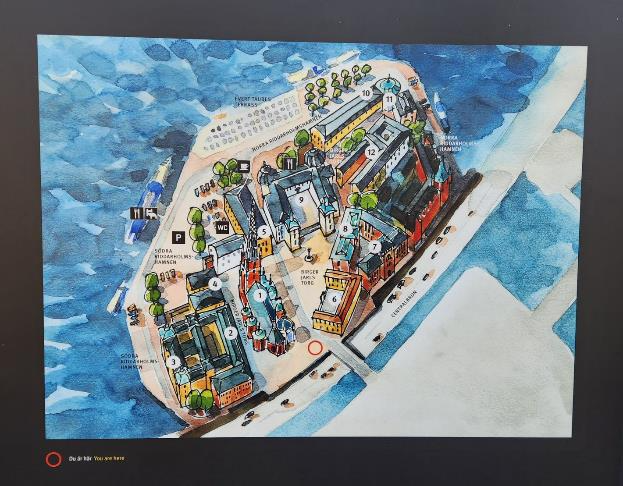
Since we were close to the island of Ridarholmen and there was plenty of daylight left we decided to walk over there to see the church and terrace that we’ve read about in the tourist books. We found a nice picture/map of the island on a sign.
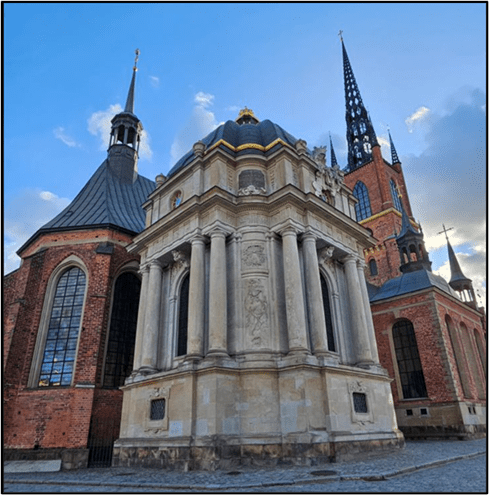
We discovered another beautiful church; but weren’t able to go inside. It is closed until May of 2024 for renovations.
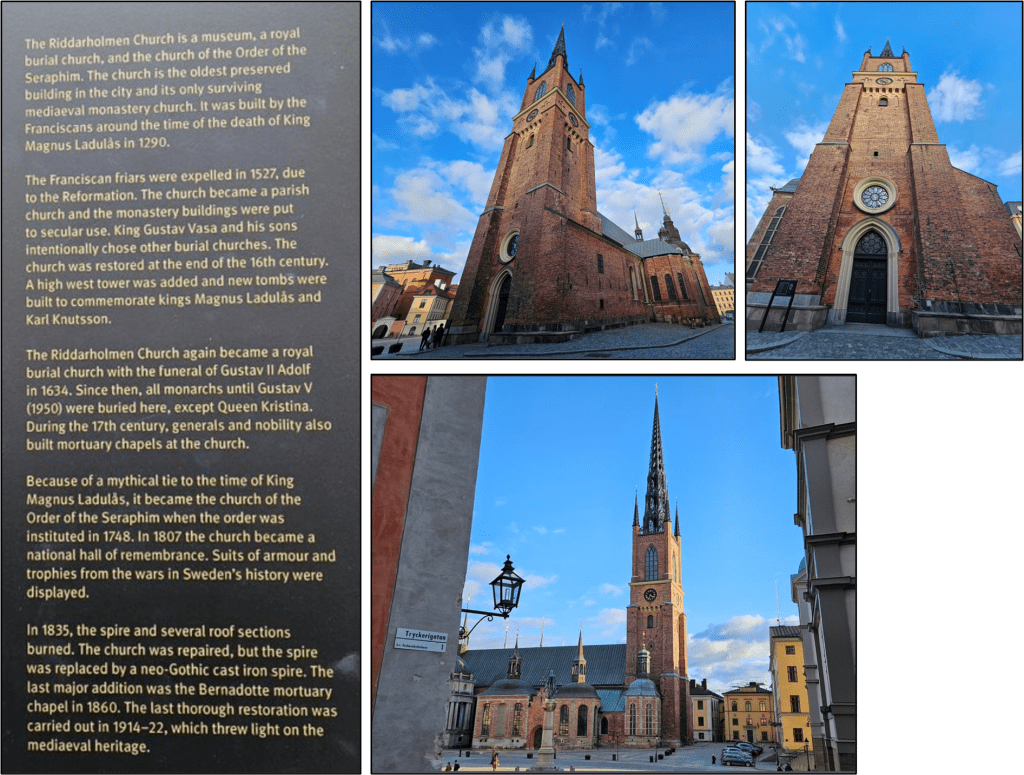
“The Riddarholmen Church is a museum, a royal burial church, and the church of the Order of the Seraphim. The church is the oldest preserved building in the city and its only surviving medieval monastery church.”
After admiring the church, we walked over to the Evert Taubes Terrass which is a tourist destination. It looks west toward the nearby Målaren Lake.
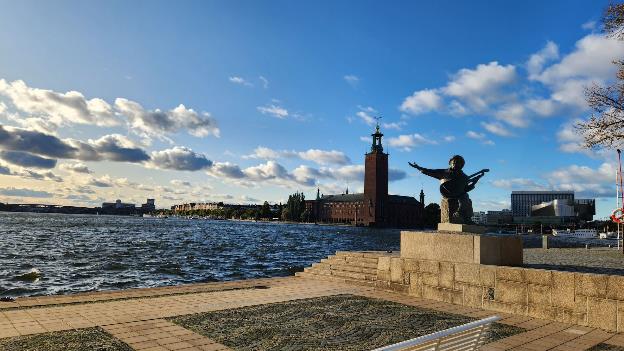
This statue, done by Willy Gordon, is famous too.
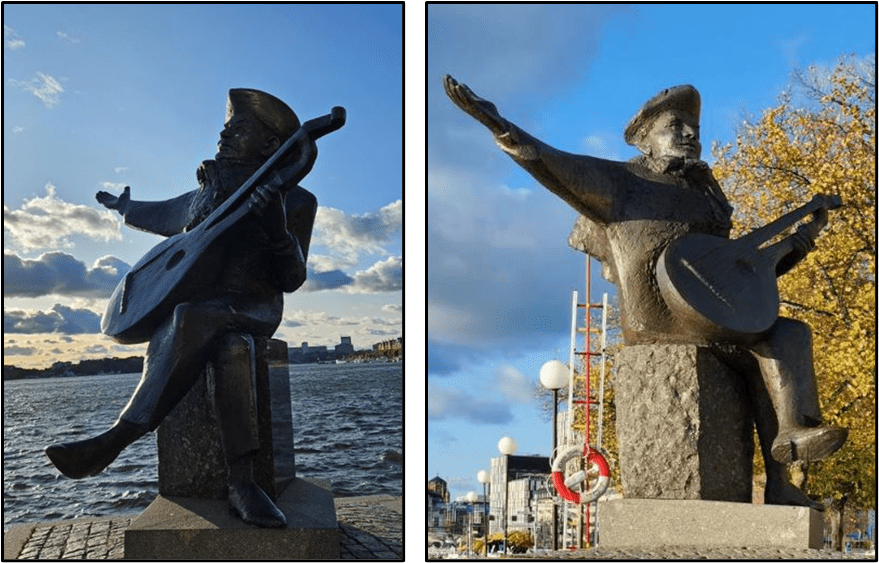
“Evert Taube’s terrace is a paved place on the western side of Riddarholmen in Stockholm. The terrace is located between the Wrangel Palace and Riddarfjärden and is part of the Northern Riddarholmen Harbour. On Evert Taube’s terrace has been Taube’s statue since 1990, sculpted by Willy Gordon. Evert Taube’s terrace was built in the early 1960s and was named in 1983 after the troubadour Evert Taube. In 1990, to commemorate the 100th anniversary of Taube’s birth, a bronze sculpture by Willy Gordon, depicting Evert Taube, wearing a sombrero and poncho, was erected. In one hand he holds his lute, with the other he points over Riddarfjärden and Södermalm, where he lived. Behind him rises Stockholm City Hall. The sculpture was a gift from the Friends of the Evert Taube Society. The plinth is carved of granite from Vinga, Taube’s birthplace.”
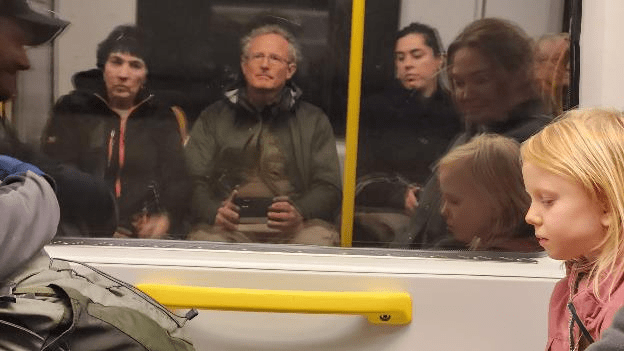
The temperature was dropping through 40°F at this point and there was a stiff breeze off the lake so we decided to call it a day. We took the subway home and I got this picture of us reflected in the window with some of our fellow travelers.
October 8, 2023 – Sunday: Preparing to Travel
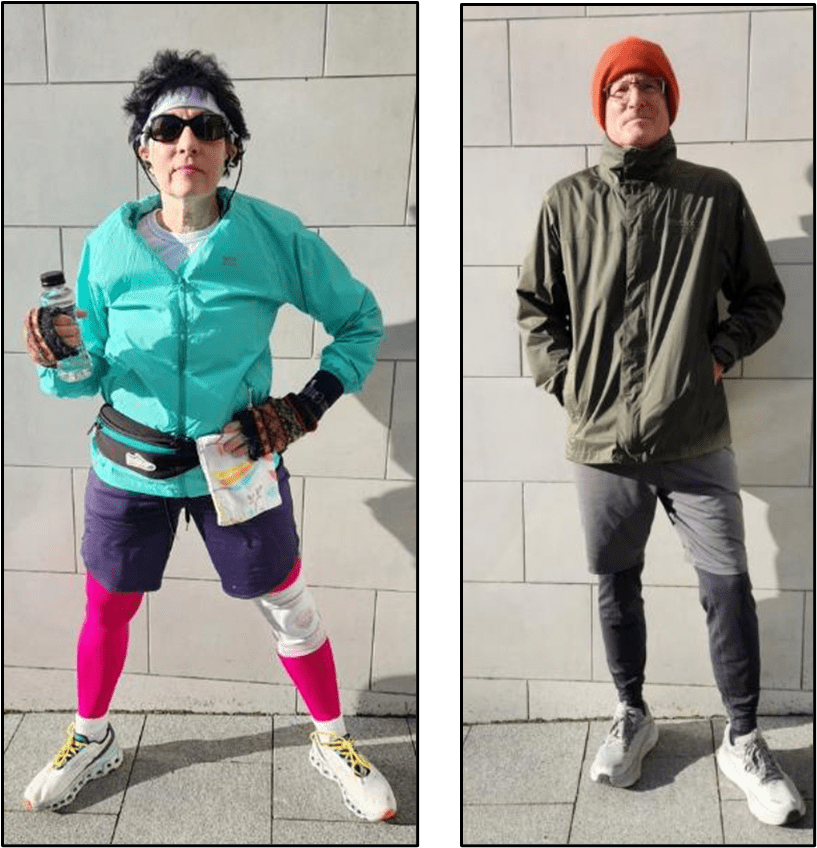
This morning, I went for a jog and Patti went for a run. The temperatures were in the low 40s, so we dressed up warmly. Here we are in our workout costumes — which of us is more colorful / fashionable?
For lunch we went to a nearby pizza restaurant which was quite good. Here’s Patti with our pizza pies.

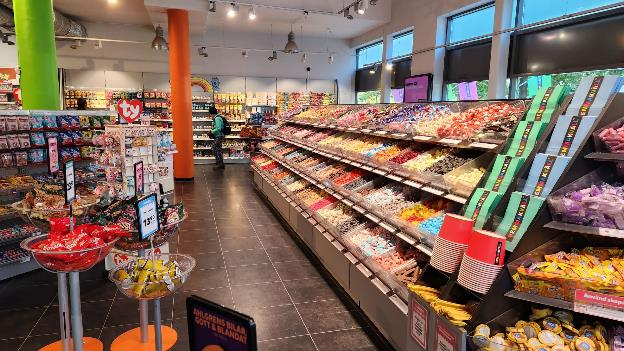
On our walk back home Patti wanted to stop into this candy store which makes a nice, colorful picture I think. You can see Patti at the end of the aisle.
For the rest of the day we did laundry, caught up on laptop work, and got ready for Copenhagen. For example, I downloaded the App that we’ll use to buy bus tickets in Copenhagen. It wouldn’t take my Chase Visa card but it did take the Schwab Debit Card so we should be good now to ride public transportation in Copenhagen.
 2024 TRAVEL TALES