This travel update is part three of our two-week stay in Stockholm, Sweden. It covers October 2 – 5. “Any text in quotes and Italics has been copied and pasted from some informational website like Wikipedia.”
October 2, 2023 – Monday: The Nordic Museum
“The Nordic Museum (Swedish: Nordiska museet) is a museum located on Djurgården, an island in central Stockholm, Sweden, dedicated to the cultural history and ethnography of Sweden from the early modern period (in Swedish history, it is said to begin in 1520) to the contemporary period. The museum was founded in the late 19th century by Artur Hazelius, who also founded the open-air museum Skansen. It was, for a long time, part of the museum, until the institutions were made independent of each other in 1963.”
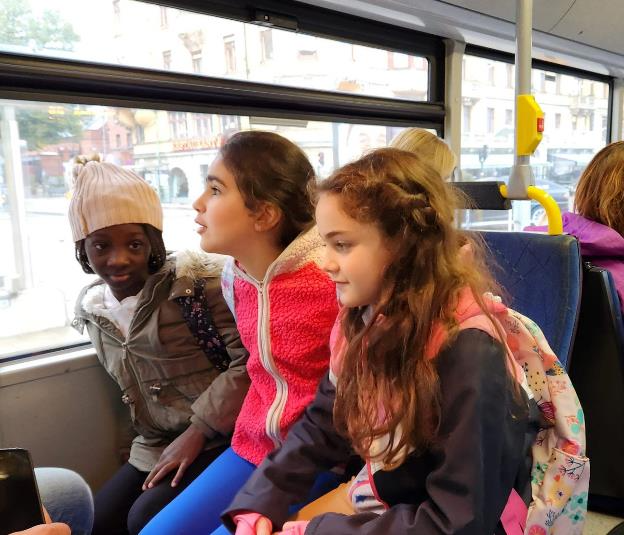
This sounded like a fun place to go so we went there today. On the tram a group of schoolkids got on. These three girls, obviously friends, shared a seat. We enjoy seeing kids looking bright and happy.
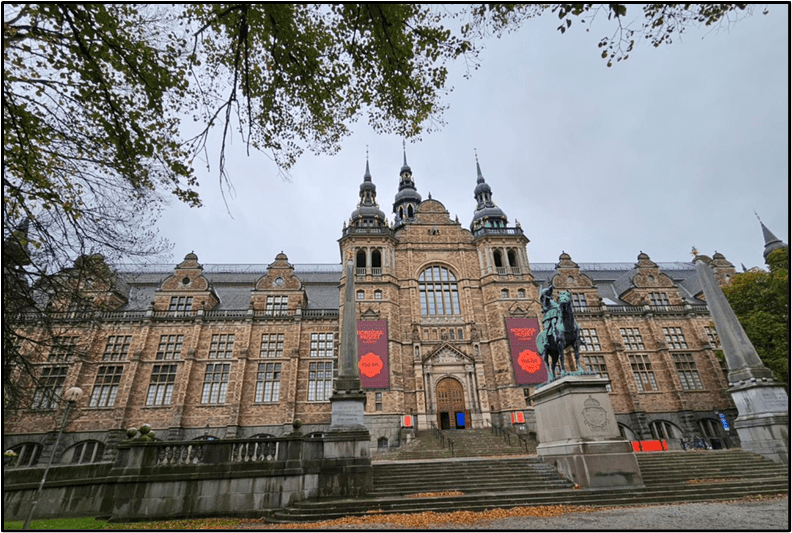
This museum building was built specifically to be the Nordic History Museum, unlike some other museums here that were originally palaces or schools.
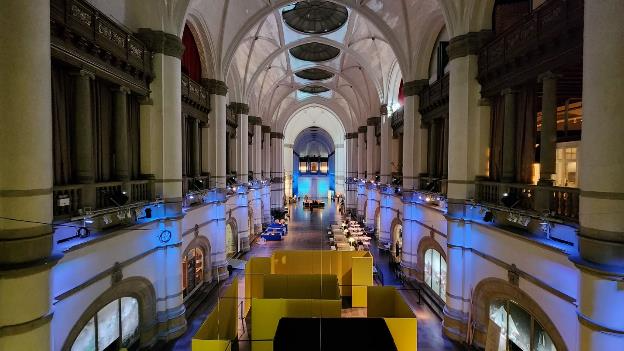
Inside, the Great Hall is three stories high and there is exhibition space around the perimeter of all three floors.
The first exhibition was a 1940s apartment that demonstrated how the new apartments were being built at that time. Here’s Patti in the kitchen.
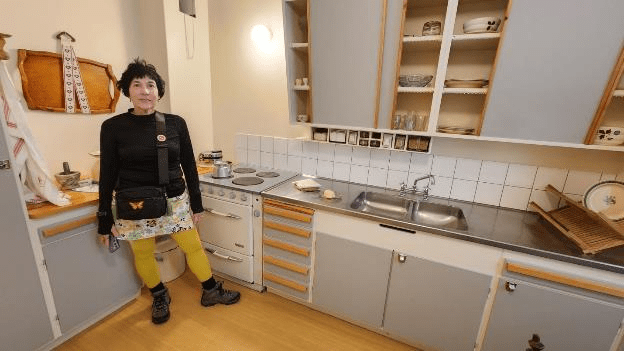
In the 1930s and 40s, Sweden built modern apartment blocks for families in order to improve their lifestyles. A new modern apartments had electric or gas heating, a living rooms and dining rooms, a kitches with modern appliances (stove, oven, refrigerator/freezer), multiple bedrooms, a bathroom with indoor plumbing, and a front porch or balcony. Families moving into these apartments typically moved from a place where they had a wood burning stove and an outhouse.
There’s a giant statue of King Gustav Vasa in the central rotunda, carved from wood. He was the king of Sweden from 1523 to 1560.
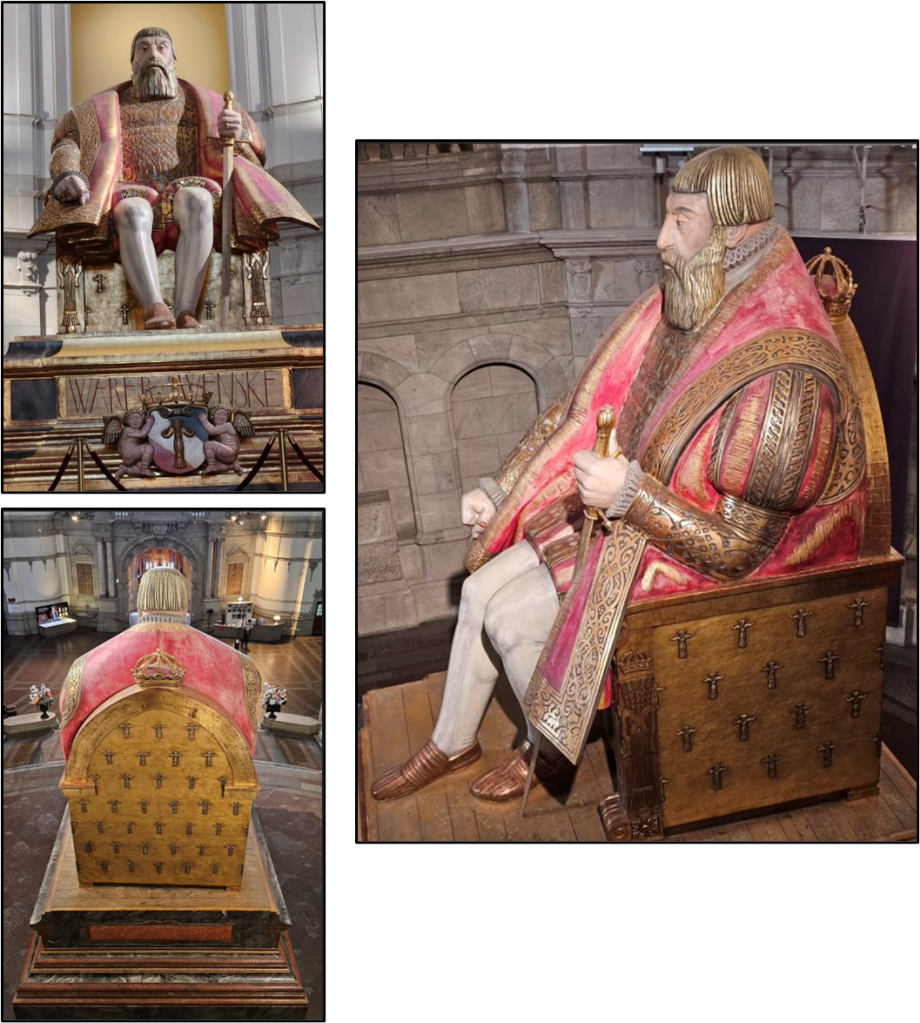
“The statue was created by the Swedish sculptor Carl Milles and was completed in 1925. Milles was assisted by the sculptor and craftsman Hjalmar Fredriksson. The statue is carved in oak and richly painted and gilded. The painting as well as the gilding were done by Olga Milles, wife of Carl. The King’s forehead is formed from a piece of oak wood from an oak tree that Gustav Vasa himself is said to have planted at his birth farm Rydboholm in Uppland.”
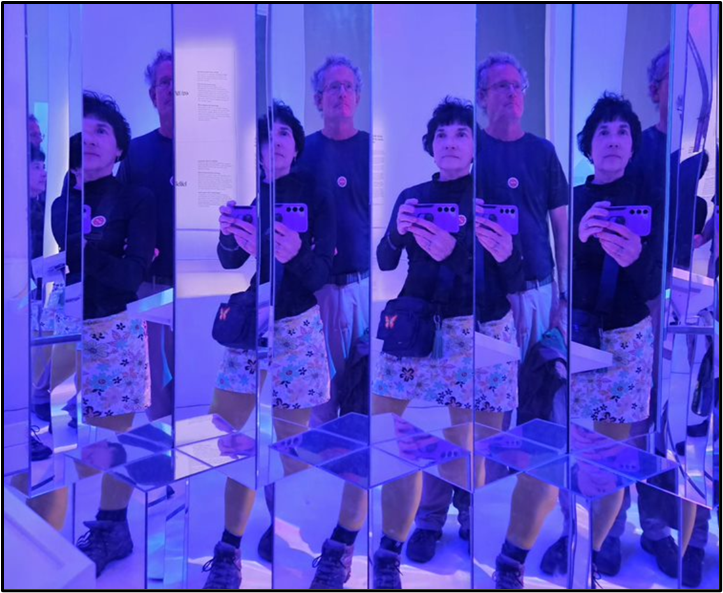
The next exhibition was about indigenous people of Sweden. There was a folded mirror in the room, so we took a customary reflection photo.
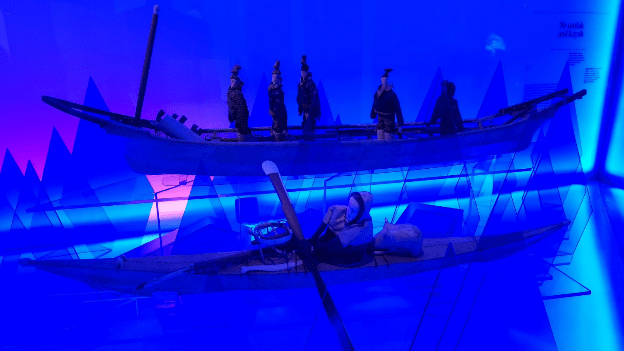
They had examples of kayaks and other kinds of boats.
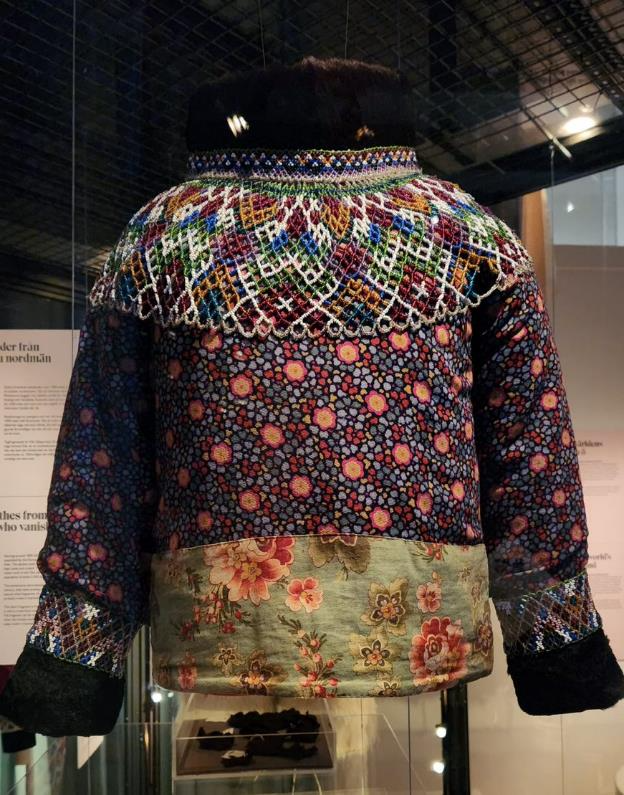
Also clothing like anoraks and wool sweaters.

I thought this sweater was pretty.
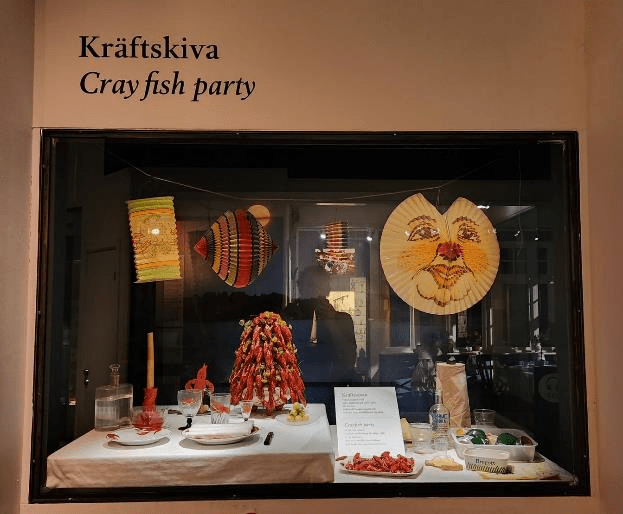
On the second floor there was an area showcasing Swedish holidays and parties. I guess sometimes they have Cray fish parties here.
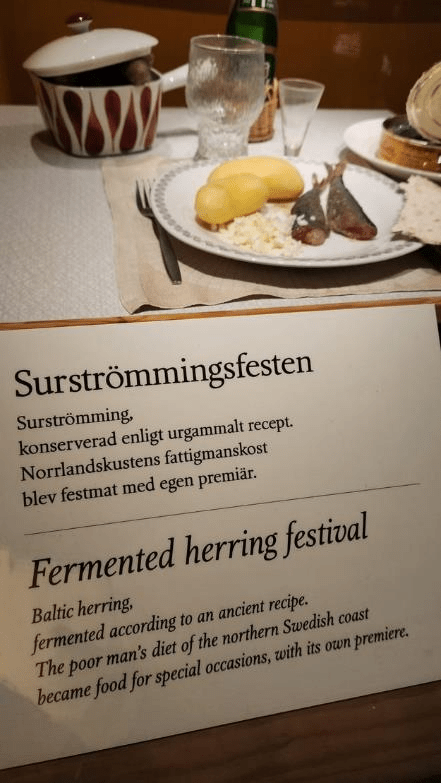
The Fermented Herring Festival sounded interesting.
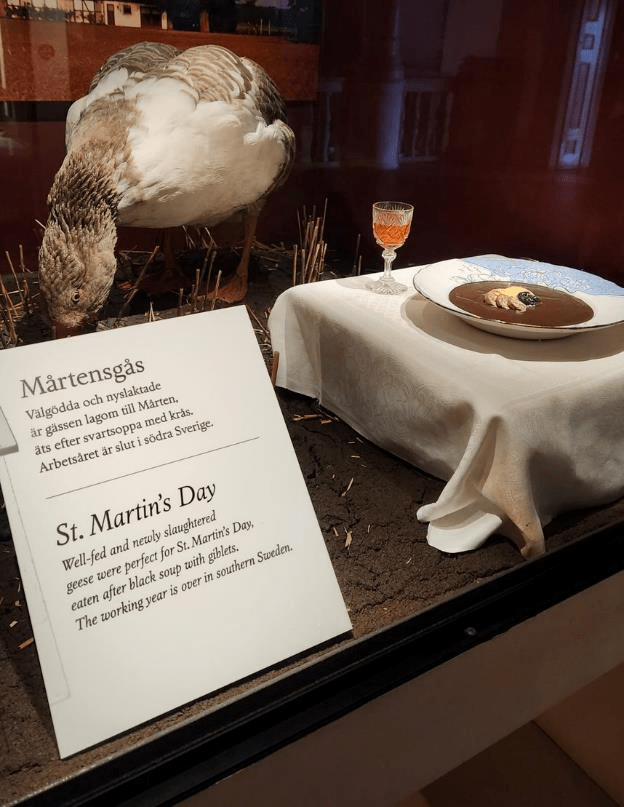
They had “Black Soup” on St. Martin’s Day.
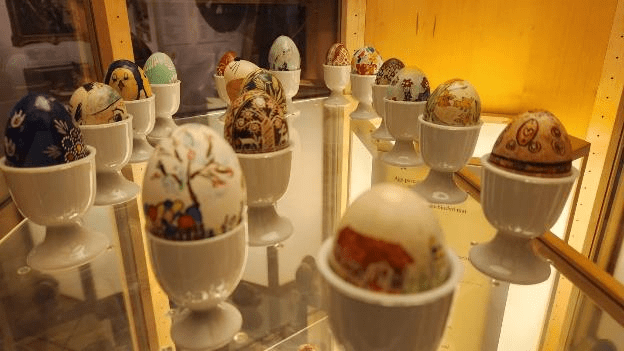
There were nicely decorated eggs for Easter.
Here’s a Christmas diorama.
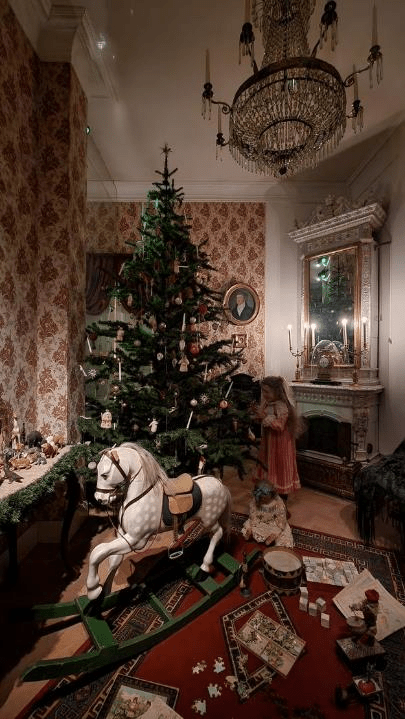
They had examples of tableware down through the centuries — 1890 through 1950 . . .

. . . and 1500 through 1640.

It was a nice museum and we enjoyed seeing all the Swedish cultural displays.
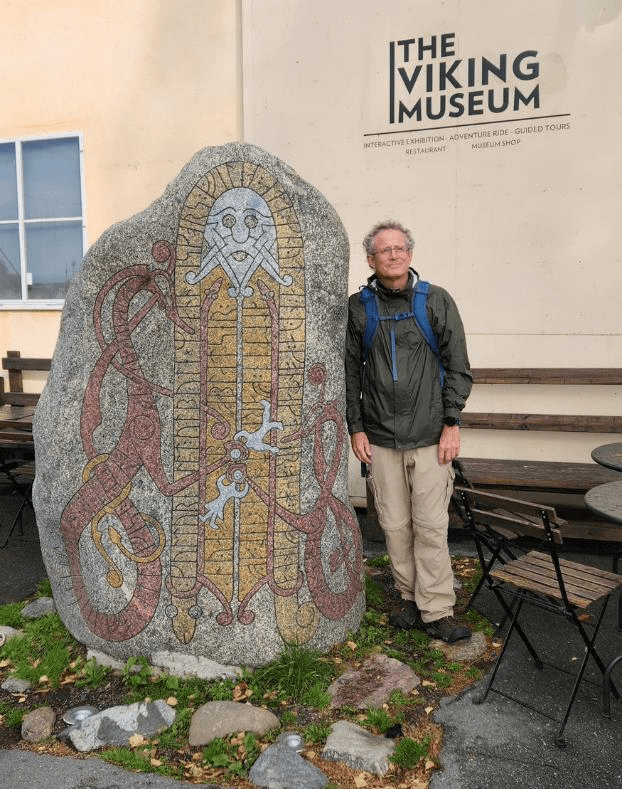
When we left the museum it was still afternoon so we walked around the surrounding area. Here I am with the runestone outside the Viking Museum.
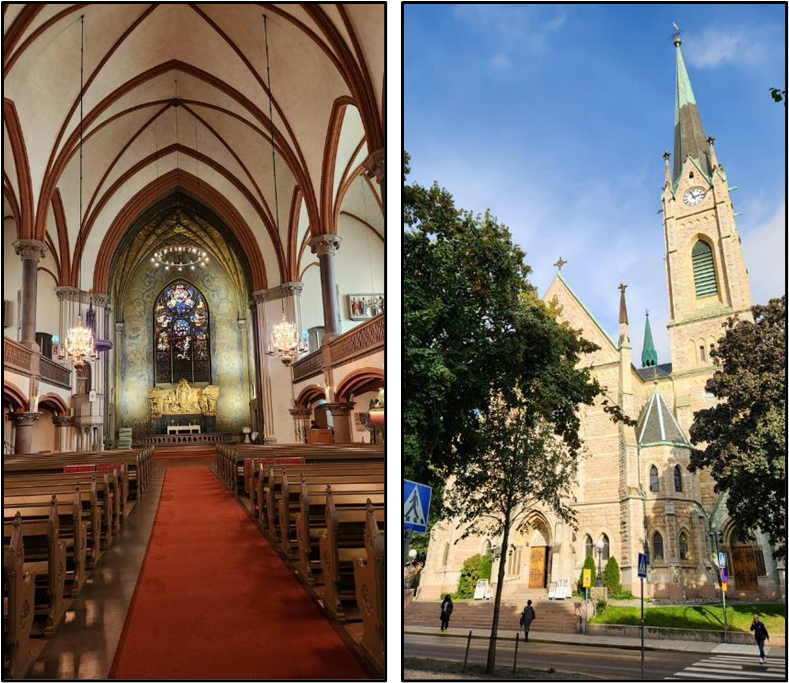
When we were ready to return to our Airbnb, we started out walking and went by Oscar’s Church which was very pretty outside and in.
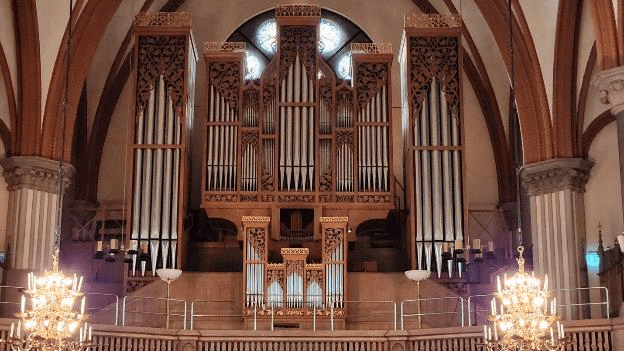
As usual, a beautiful organ occupied the loft space.
We also walked through one of the several large shopping malls located within the city centre.
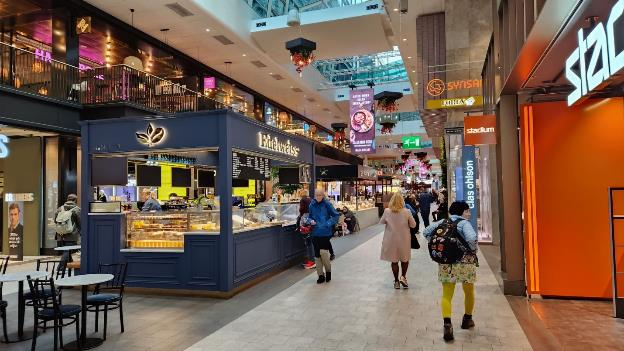
When we were done for the day, we took the metro, a train and a tram back to the Airbnb.
October 3, 2023: Tuesday: The Nobel Prize Museum
This is Nobel Prize Week in Stockholm! So, we went to the museum.
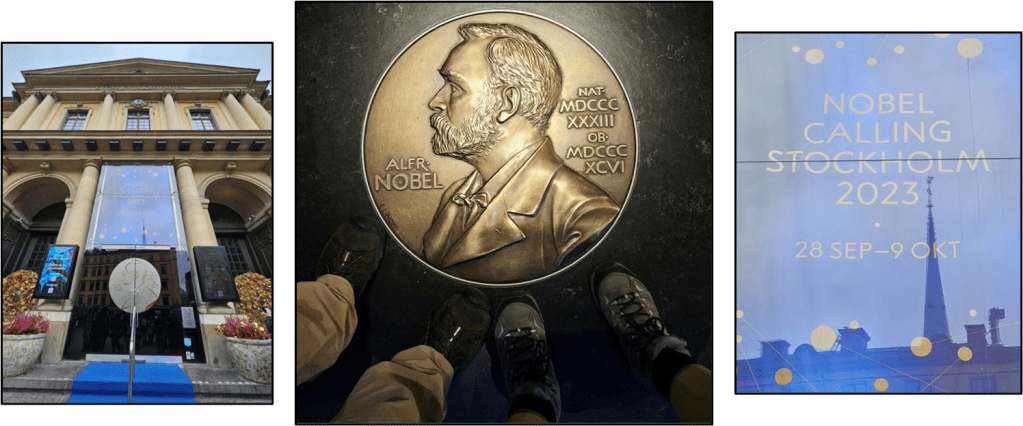
“The Nobel Prize Museum (formerly the Nobel Museum [Swedish: Nobelmuseet]) is located in the former Stock Exchange Building (Börshuset) on the north side of the square Stortorget in Gamla Stan, the old town in central Stockholm, Sweden. (The Swedish Academy and the Nobel Library are also in the same building.) The Nobel Prize Museum showcases information about the Nobel Prize and Nobel prizewinners, as well as information about the founder of the prize, Alfred Nobel (1833–1896). The museum’s permanent display includes many artifacts donated by Nobel Laureates, presented together with personal life stories.”
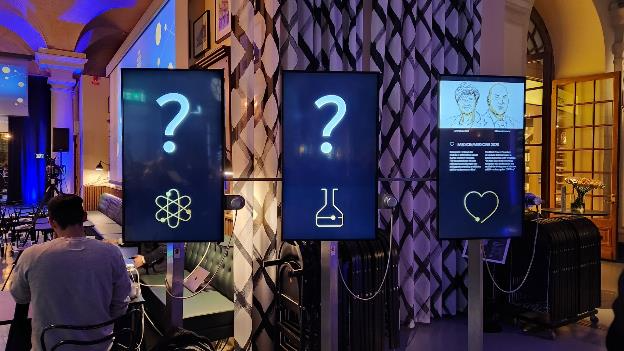
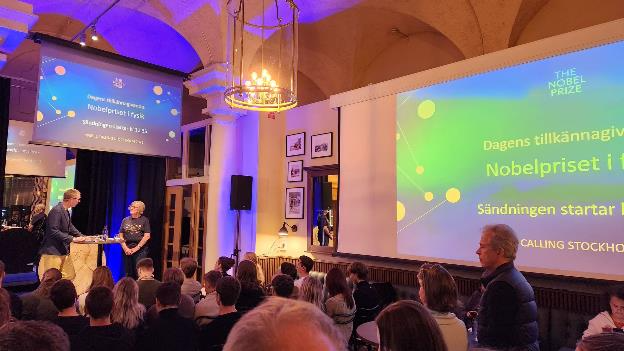
This week they are announcing the 2023 Nobel Prize winners, one per day, at 11:45 AM every day. They put the winners up on the monitors in the lobby. Yesterday they announced the winners in Medicine and today they announced the winners in Physics. Here’s the monitors before the announcement…
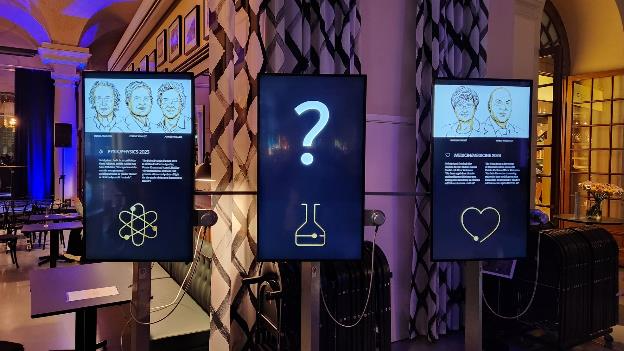
…and here’s after. You can see on the monitor on the left that they showed today’s winners.
We stood in a small hall where there were big screens showing the people making the announcement in real time.
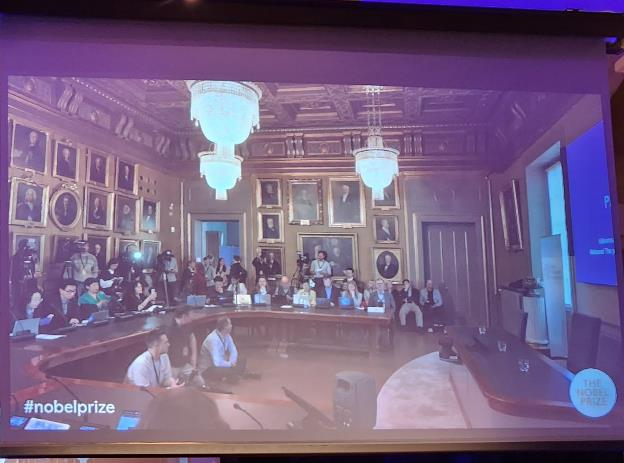
Here’s the room, shown on the big screen, where they made the announcement.
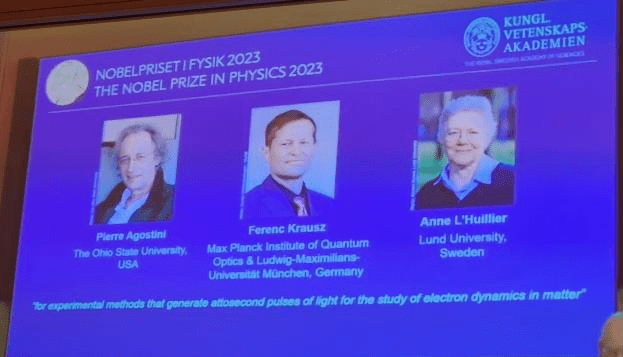
This year the physics prize was given to three people: “for experimental methods that generate attosecond pulses of light for the study of electron dynamics in matter”.
One of the winners works at Ohio State University! The guy on the left, Pierre Agostini.
In case you’re interested, an attosecond is a unit of time in the International System of Units equal to 1×10⁻¹⁸ of a second. It’s very small. Evidently at this level you can influence individual electrons in atoms by hitting them with the attosecond light pulses.
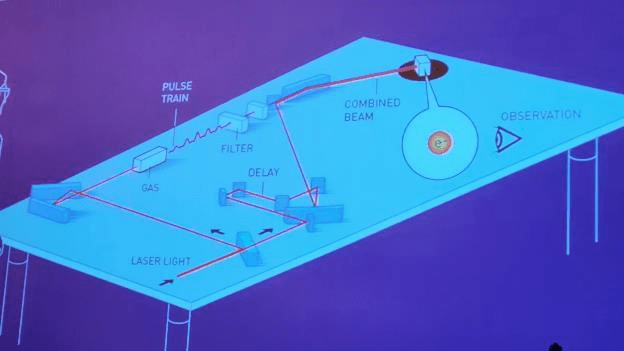
Two of the presenters gave about a 10-minute talk explaining an overview of the science, which I thought was cool. I understood maybe 5 or 10 percent of it. They had a nice graphic of this test stand showing the basic setup of the system.
After the announcement we spent a couple of hours in the museum reading about various prize winners down through the decades and about Alfred Nobel himself.
“Alfred Bernhard Nobel (21 October 1833 – 10 December 1896) was a Swedish chemist, engineer, inventor, businessman, and philanthropist. He is known for creating dynamite as well as having bequeathed his fortune to establish the Nobel Prize. He also made several important contributions to science, holding 355 patents in his lifetime. Nobel’s most famous invention was dynamite, an explosive using nitroglycerin; it was patented in 1867.”
It seems like he was a smart, creative guy who traveled a lot and valued people who could come up with new ideas. His will, establishing the Nobel Prize system, is said to be one of the most famous wills in history.
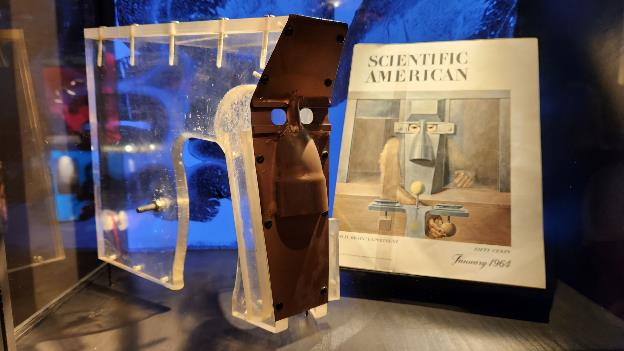
In one gallery they had information about some of the prize winners and items associated with them. Here’s a Monkey Training Box used by Roger Sperry in his research on the different functions of the two halves of the brain.
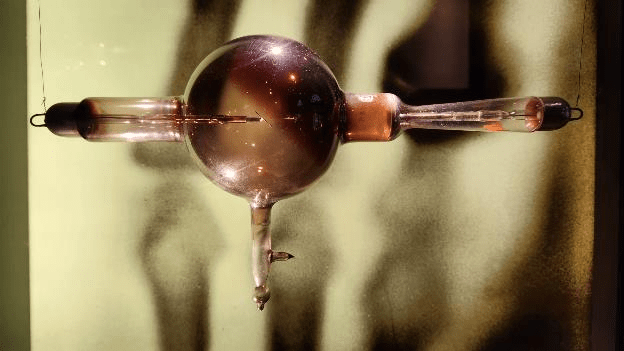
Here’s Wilhelm Röntgen’s original x-ray tube that he used in his discovery of x-rays.
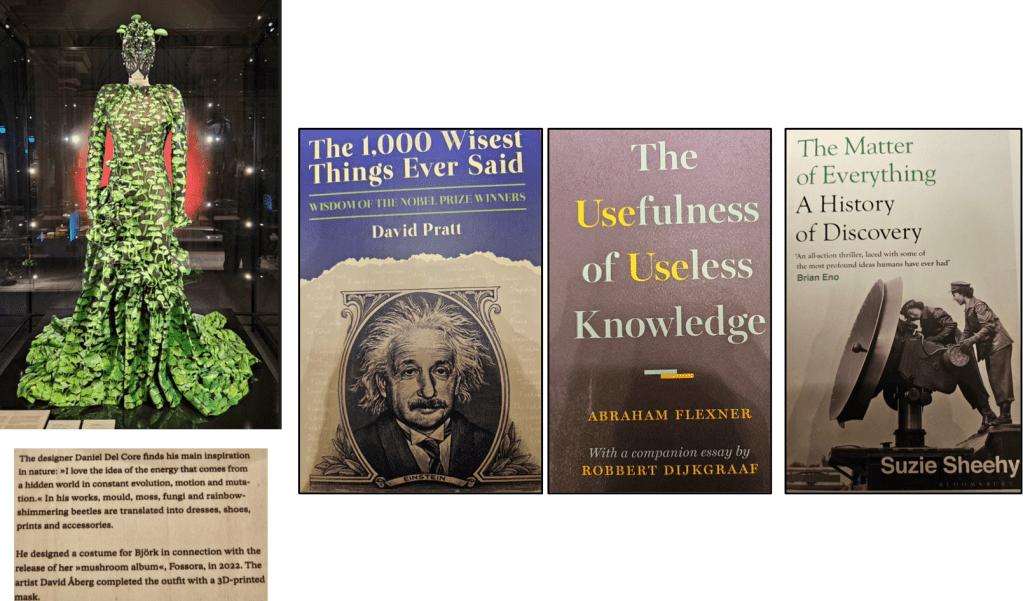
We watched several short stories about some of the winners and read about more of them in the overhead posters that move around the museum. There were also several exhibits at the museum. One exhibit focused on Fungi, and another showed some recommended reading (pictures below). We enjoyed our visit to this museum.
It was now time for lunch, so we decided to try a restaurant on the same square as the museum. We found a place and walked down some stairways to get two levels below street level.
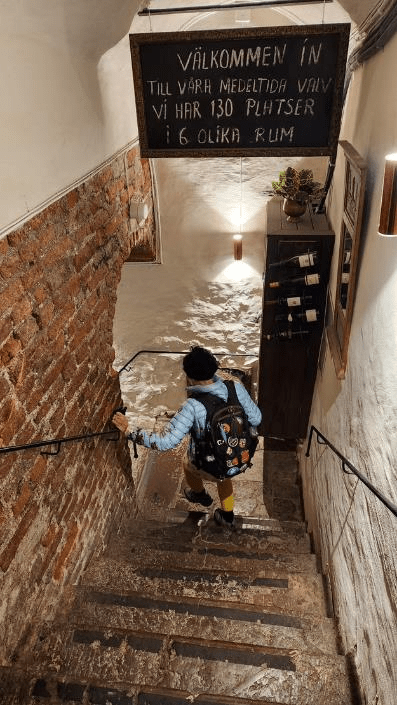
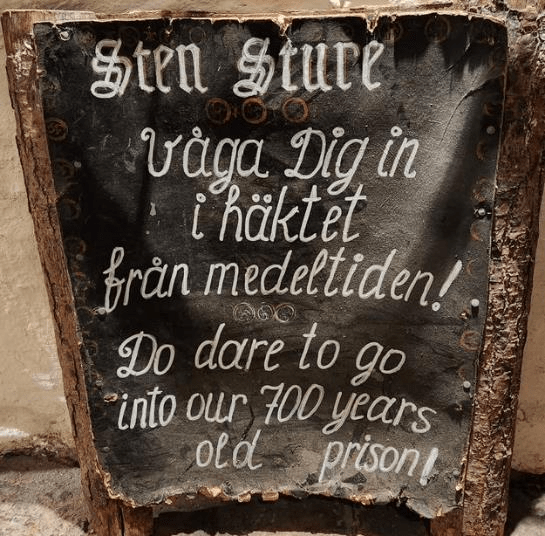
There was a scary sign on the stairs daring us to go into their 700-year old prison.
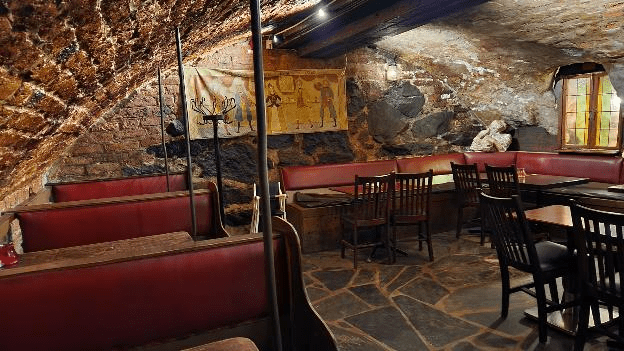
The restaurant is in the basement level that used to be used as a prison. The oldest construction is from the 14th century.
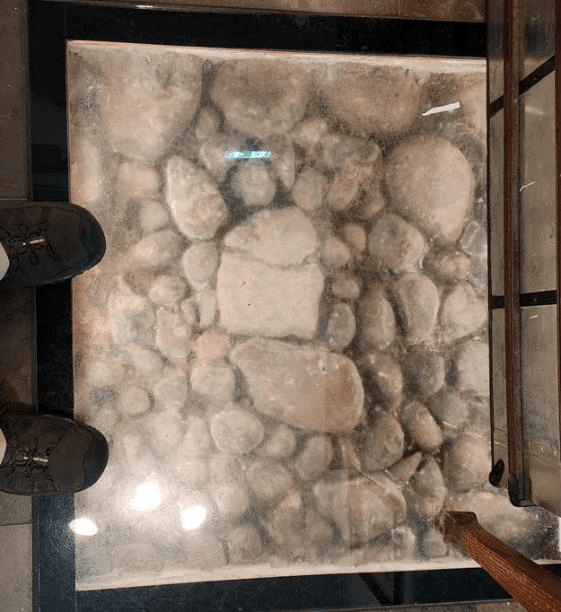
They had glass windows in the floor showing the original rock floor of the prison.
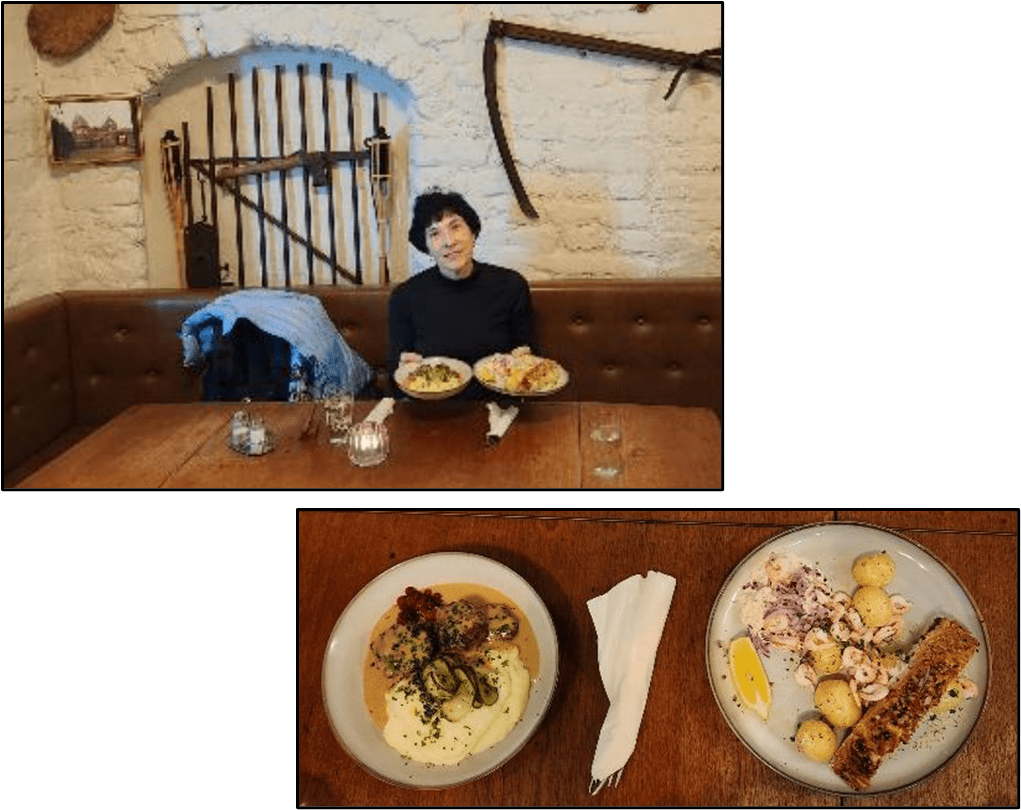
Patti ordered meatballs with mashed potatoes and lingonberry sauce. I ordered Smoked Salmon with boiled potatoes and Skagen. Skagen is a creamy shrimp salad popular in Stockholm. We both enjoyed our food, and the ambiance of the old prison was fun.
After lunch we walked through the Stockholm Cathedral. They gave us their “pray for free” deal. Normal entrance fee is 80 kroner (about $8USD) but if you say you’re just going in to pray you can get in for free.
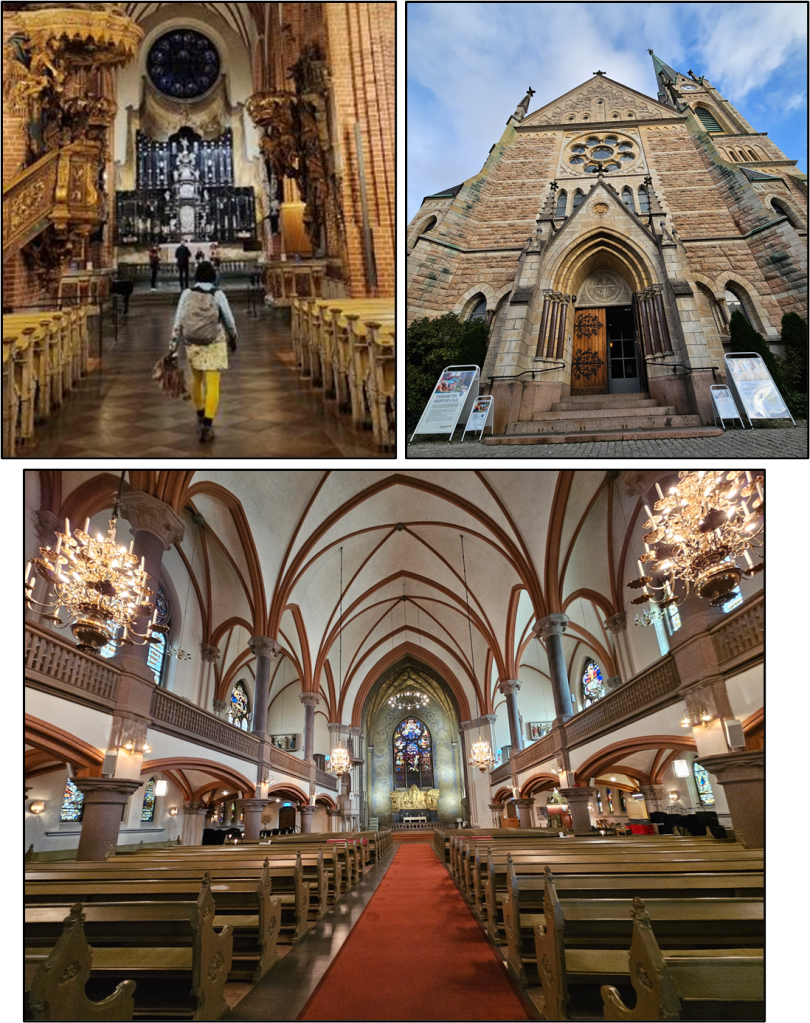
Then we did a little souvenir shopping and took the trains home.
October 4, 2023: Wednesday: The Swedish History Museum
This is a big museum, we decided to go on Wednesday because this is the day it stays open until 8PM.
“The Swedish History Museum is a museum located in Stockholm, Sweden, that covers Swedish archaeology and cultural history from the Mesolithic period to present day. Founded in 1866, it operates as a government agency and is tasked with preserving Swedish historical items as well as making knowledge about history available to the public.
The origin of the museum is the collections of art and historical objects gathered by Swedish monarchs since the 16th century. It has a number of permanent exhibitions and annually hosts special exhibitions tied to current events.”
The first gallery we went into was the Viking Age Hall. I was astounded at all the artifacts they had on display, and I learned more about the Swedish Vikings.
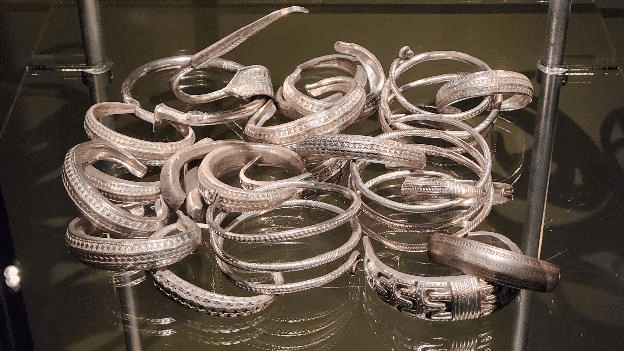
There were a lot of things that have been dug up in “hoard finds” and “grave finds”. I’ve read that Vikings usually buried their treasure hoards somewhere on their property and that there were thousands of Viking hoards in Sweden and Norway. Here’s a bunch of silver arm rings.
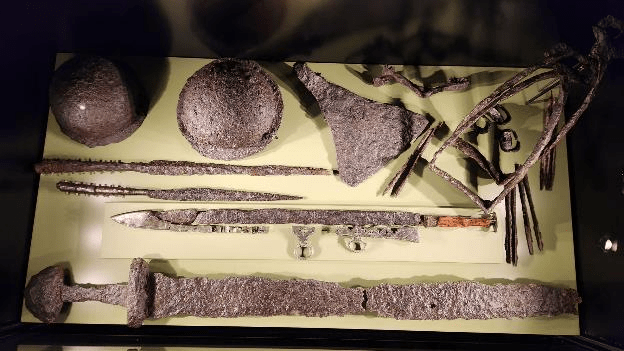
Here’s some iron implements.
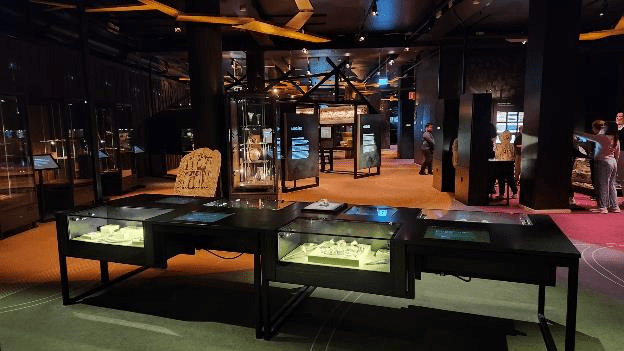
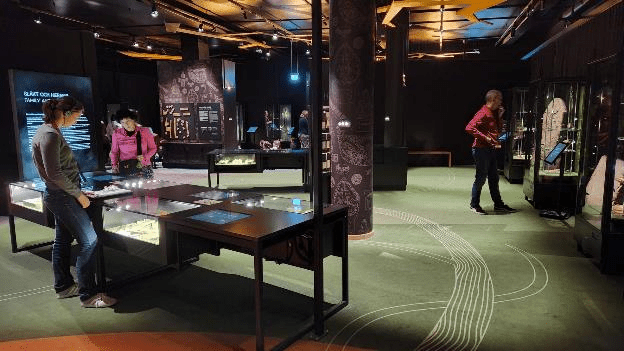
The hall was nicely designed with lighted black display cases and there was a lot of information in English.
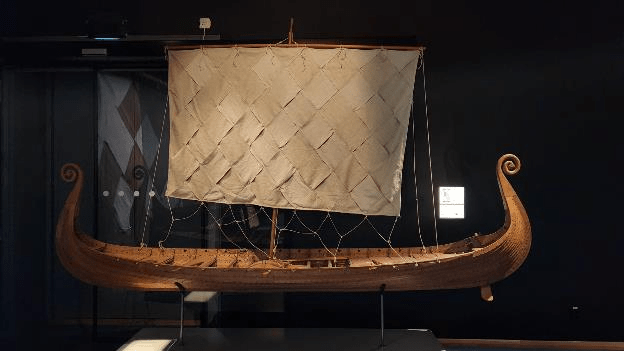
There were a couple of scale models of Viking long ships.
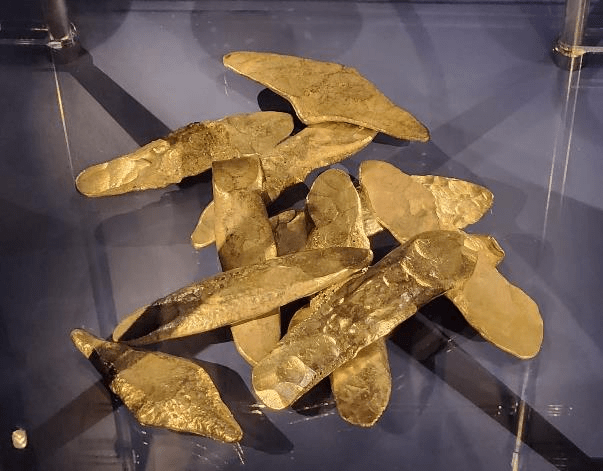
Here’s a hoard find of eleven tongue-shaped silver grivnas which was a currency back then.
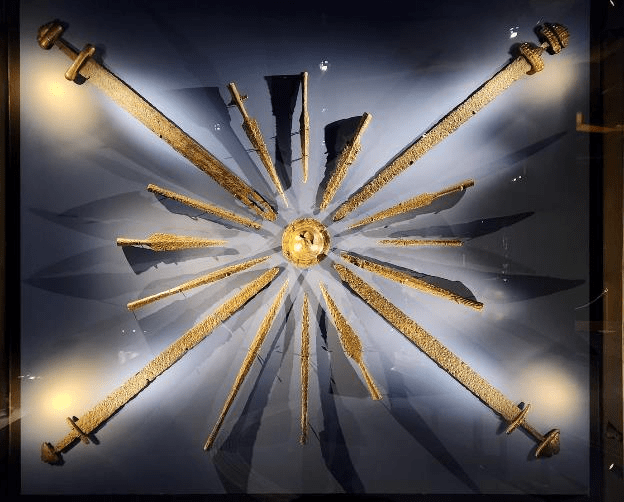
Here’s some iron weapons.
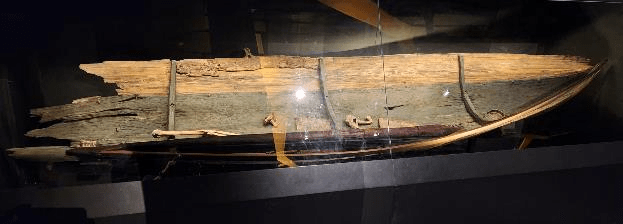
More prestigious Vikings were buried in “grave boats”, here’s one that they uncovered in Årby, Uppland.
After the Viking hall we went to the museum restaurant for lunch where I got the Viking Lunch (of course) and Patti got the lasagna. We sat at a table with an old Swedish couple and talked to them for a while. They are in their mid 80s, have been married for 62 years, and live in an apartment a couple of blocks from the museum. They come to the museum for lunch about once a week. He showed us a picture of their country cottage which is about an hour away, and of his grandson with their great granddaughter. They were fun to talk to. When I was finishing my meal he got up and got me a cup of coffee which, he explained, was free with lunch. He told us that in Sweden they don’t put sugar in their coffee, only milk. They were gracious impromptu hosts.
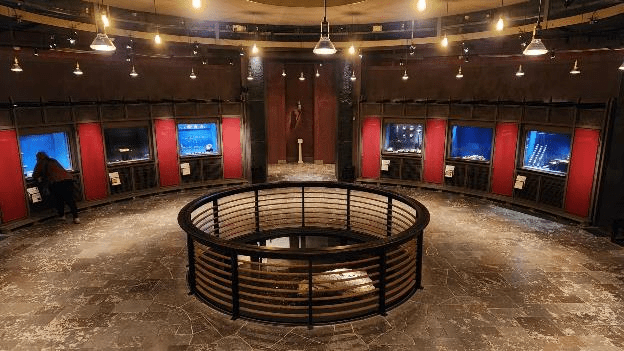
After lunch we went to the “Gold Room”, which was awesome. They have on display about 100 pounds of gold and several hundred pounds of silver that was made into jewelry and other kinds of decorations. Most of it has been dug up from hoards or graves.
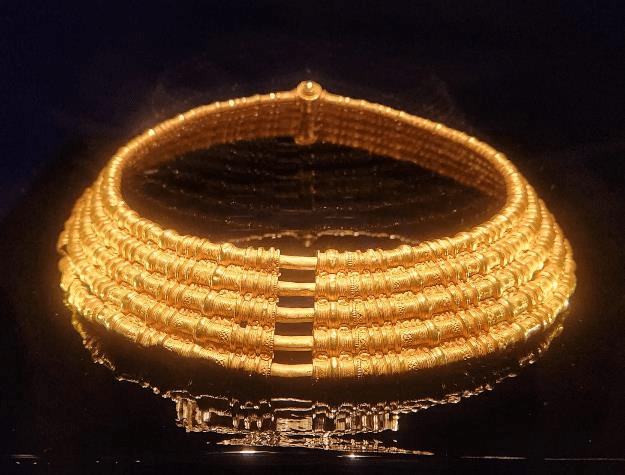
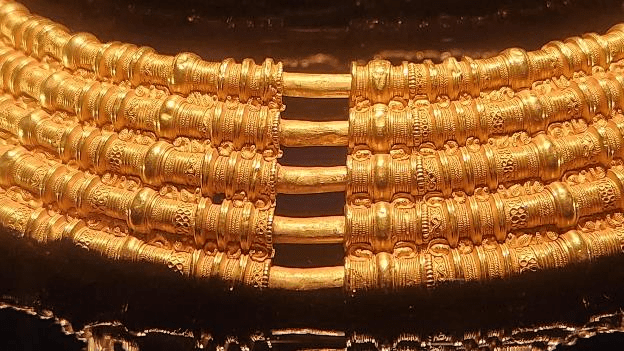
There are three gold neck rings here, which are particularly rare. This one is from Fårjestaden, on the island of Öland. The space between the five hollow rings is filled with a host of minute, highly stylized figures.
Here’s a closeup.
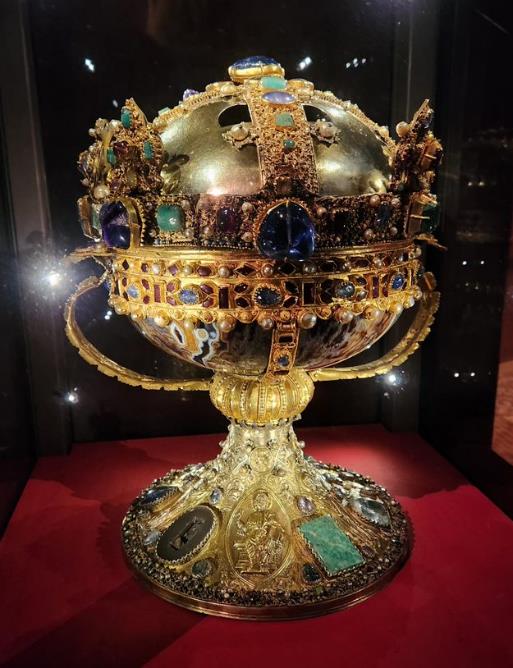
This reliquary, that was said to contain the skull of a saint, is also quite rare.
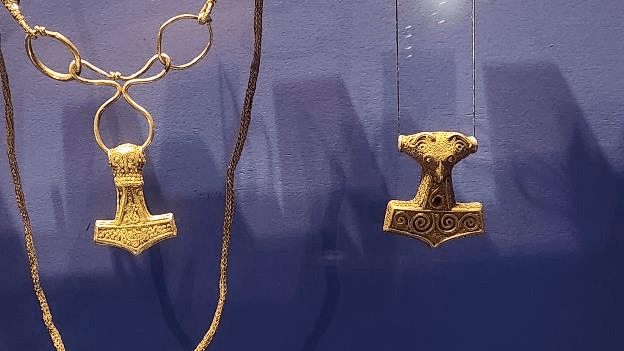
Two of the Thor’s hammer amulets on display looked quite a bit like the one I bought in Norway. I was happy about that, mine is at least somewhat authentic-looking.
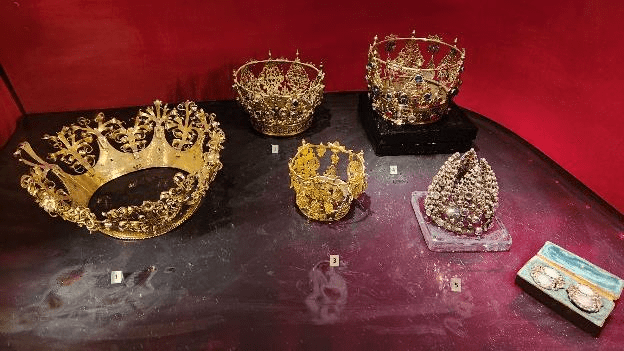
These are crowns that in medieval times were traditionally lent to a bride by churches on her wedding day. We didn’t know about this tradition when we got married, back in 2017. I’ll bet Patti would have enjoyed wearing a crown.
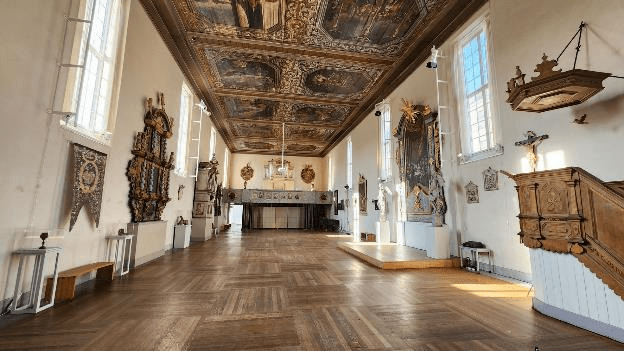
After the Hall of Vikings and the Gold Room we went through the rest of the museum. There were several rooms of medieval art.
There was a lot of information about the Massacre of Gotland in 1361 where 1800 Gotland farmers were killed by troops of Danish King Valdemar Atterdag. There was a display case with the bones of some of the farmers.
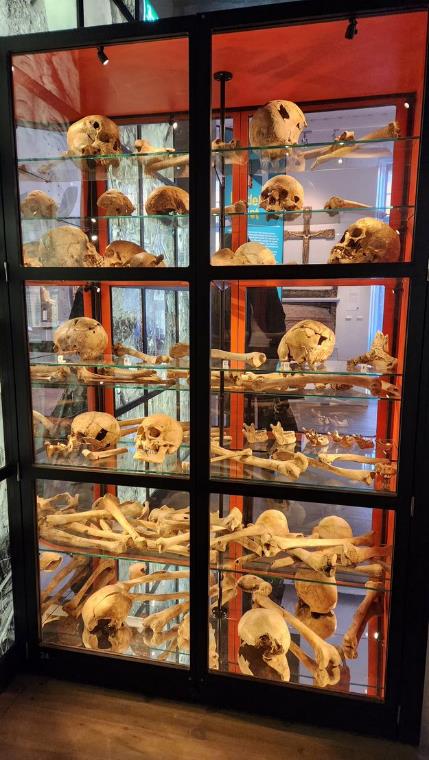
In this massacre, on the island of Gotland, the Danish force was comprised of professional soldiers but the Gotland farmers trying to defend the island were mostly children, old men, and cripples. The Gotlanders retreated to the city walls of Visby but their fellow Gotlanders inside the city refused to open the gates, so the farmers were slaughtered against the city walls by the Danes.
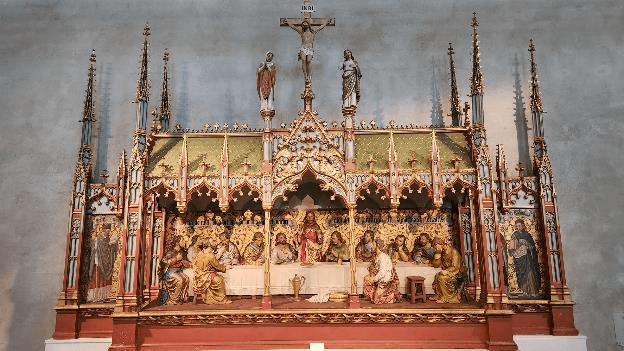
In another medieval gallery, this retable, a wooden carving of the Last Supper, was exquisite.
This is a really nice museum, we both enjoyed it.
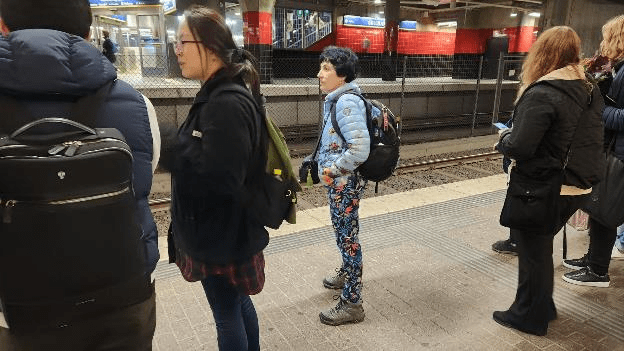
Around 6PM we were ready to head back to our AIrbnb, so we walked to the nearest subway entrance, stopping at a grocery on the way for some provisions. I have really been enjoying riding the subways here in Stockholm, the smells of creosote and ozone remind me of my life in New York City in the early 1980s when I rode the subway almost every day. Here’s Patti on one of the platforms. As usual, she’s very colorful compared to the locals.
October 5, 2023 – Thursday: A Day Off
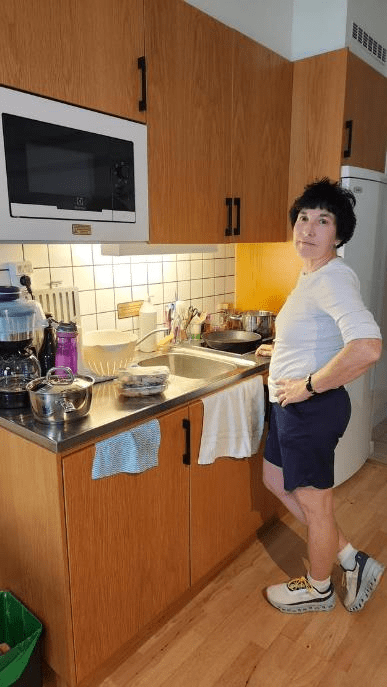
We’ve had three museum days in a row now so we decided to take today off. We took it easy this morning and I spent some time on the laptop updating our Travel Tales and completed some cost tracking spreadsheets. Around mid-morning we walked to the grocery store and Patti got supplies to make lunch. Here she is in the kitchen. preparing our meal of chicken, carrots and potatoes.
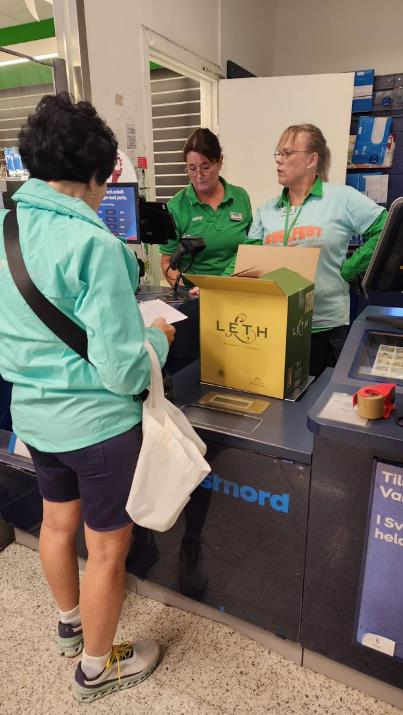
In the afternoon we walked over to the Coop grocery store because Patti wanted to ship a box of things back to the US. The PostNord outlets, the official government post office in Sweden, are in grocery stores, just like in Norway. Similar to Norway, the shipping process was easy and relatively inexpensive compared to other countries from which we’ve shipped boxes back to the states. There were two women who worked with Patti on this because this is not something they often do, but they seemed to enjoy the challenge. Here’s Patti at the PostNord. We got the empty box from the liquor store across the street. Shipping cost was about $70USD for a 12-pound box.
We spent the remainder of the day mostly relaxing. It’s good to take a day off.
 2024 TRAVEL TALES