This update is part two of our two-week stay in Stockholm, Sweden. It covers September 28 – October 1. “Any text in quotes and Italics has been copied and pasted from some informational website like Wikipedia.”
September 28, 2023 – Thursday: Djurgården
We walked around the island of Djurgården today.
“Djurgården is a tranquil island known for the Vasa Museum, featuring a 17th-century warship, and the Skansen open-air museum, which has craftspeople and reconstructed homes depicting Swedish life through the decades. Fans of Swedish pop music browse memorabilia, old records and costumes, at ABBA: The Museum. Ferries dock next to Gröna Lund amusement park, known for its thrill rides and summer concerts.”
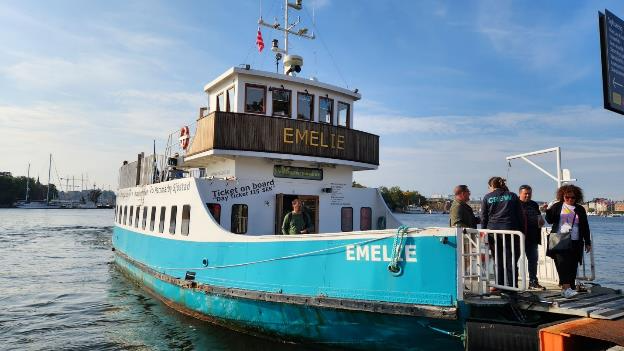
I wanted to take the ferry boat instead of the Tram/Subway/Bus connection so we walked about ¼ mile to our local ferry dock where the Emelie sails once per hour. Here’s the boat.
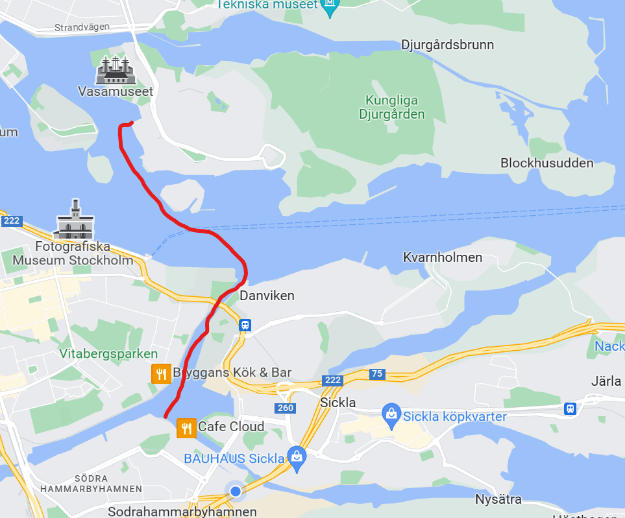
I’ve drawn the ferry route on this map in red, it took about 15 minutes to get to the dock at Djurgården.
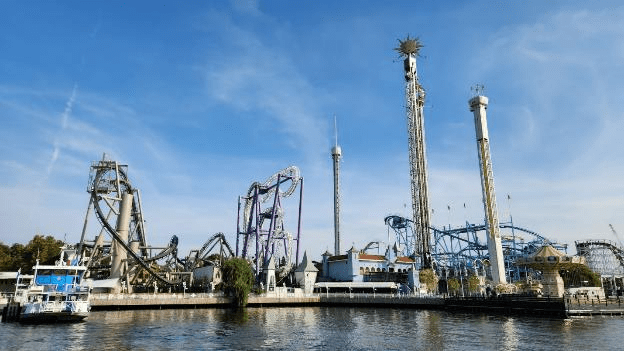
The ferry docked next to the big amusement park, Gröna Lund, which wasn’t open during the day.
From there we set out walking. We went through Prins Eugens Waldemarsudde which is a “castle-like palace museum containing the collection of Prince Eugen & hosting temporary exhibits.”
There was a typical outdoor café.
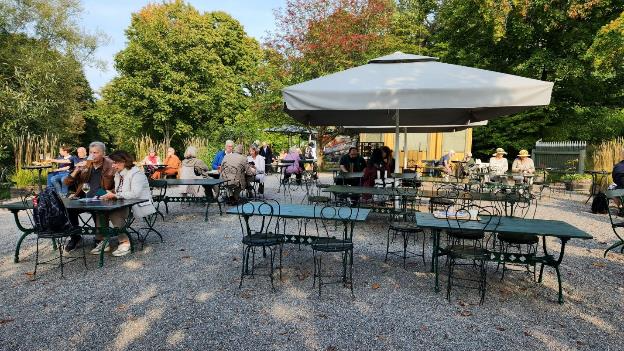
We enjoyed watching a table of older women who were wearing fancy hats. Maybe it’s some kind of club.

We’ve been seeing lots of swans around Stockholm. Here are four on the shore.
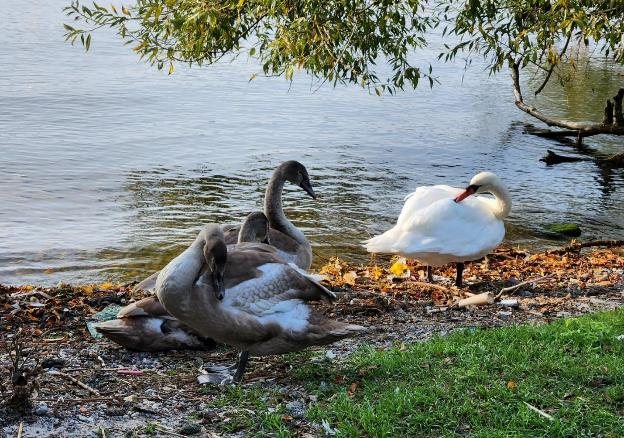
The brown ones are juveniles.
“Cygnets are grey when they hatch with black beaks and gradually turn brown over the first six months at which time they learn to fly. By one year old they are predominantly white but the beak remains grey/pink. Full white plumage and orange beak come with maturity.”
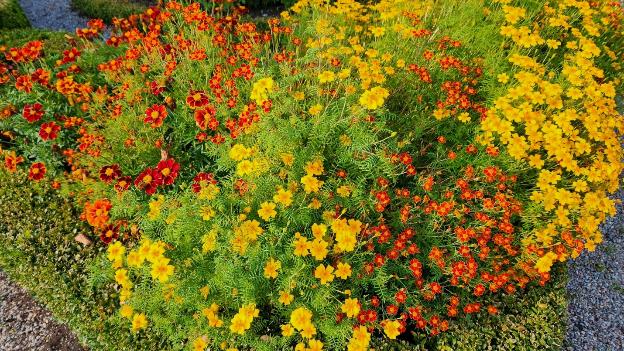
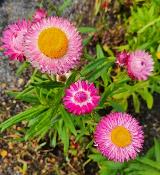
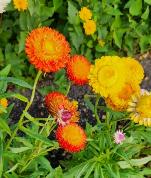
Prince Eugene’s house is very nice and there are lots of pretty flowers and statues.
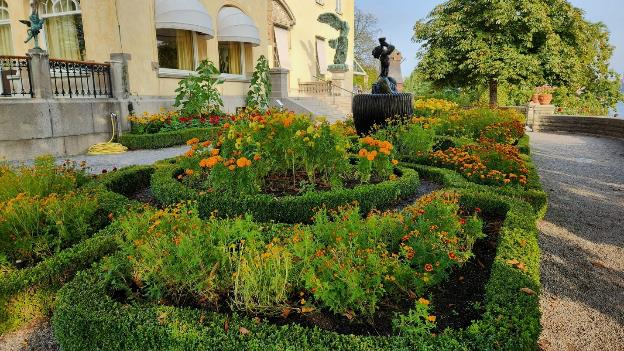

There was also an old windmill that had lost its sails. It was originally used to grind flax.

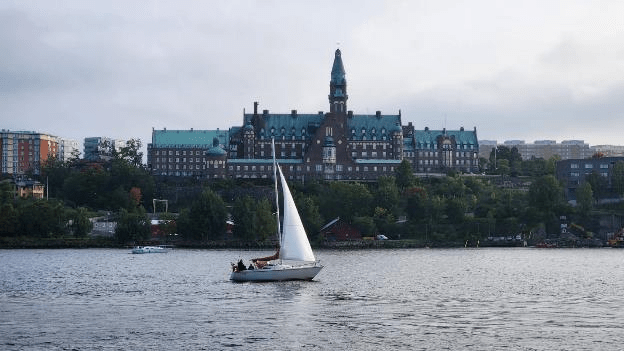
I enjoyed watching all the boats on the waterway. The big building in the background here is a hospital.
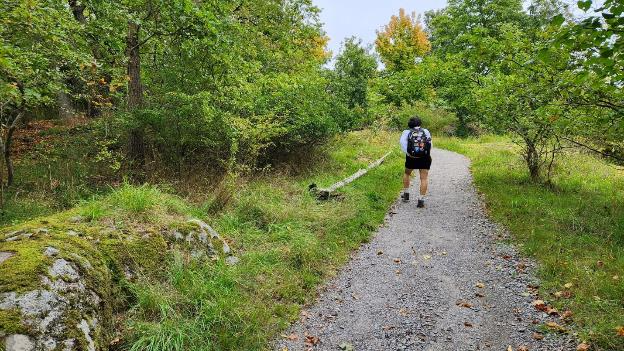
Sometimes our path led up into the woods.
We decided to catch the 5:28 PM ferry to return to our dock so we walked on back across the island. We ended up getting on the 5:08 PM which went up to the Nybrokajen dock then returned us to our dock. The ferry just goes back and forth all day. While we were up near downtown on the ferry we had nice views of some of the buildings.


We also passed this Lightship.
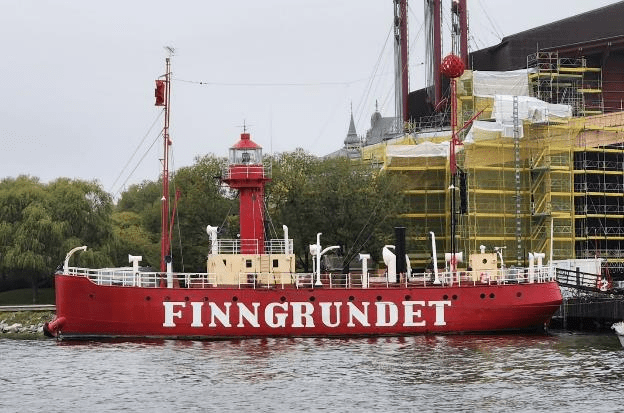
“The Lightship Finngrundet is a lightvessel built in 1903 and now a museum ship moored in Stockholm, Sweden. She was the second Finngrundet lightvessel, built in Gävle, Sweden in 1903 and replacing one dating from 1859. She was stationed on the Finngrund banks in the Baltic Sea 40 nautical miles (74 km) northeast of Gävle during the ice-free part of the year. She was extensively modified in a refit in 1927 at Öregrunds Ship och Varvs AB, the original paraffin light being replaced with an AGA beacon. The fog bell was augmented with a “nautophone” fog signal and an underwater fog signal.”
For some reason I think lightships are cool.
As the ferry went through a narrow passage there was a vertical rock wall on one side with people climbing it.
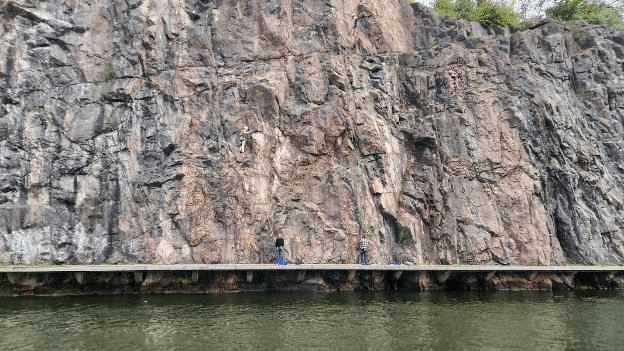
Here’s a closeup of one of the climbers.
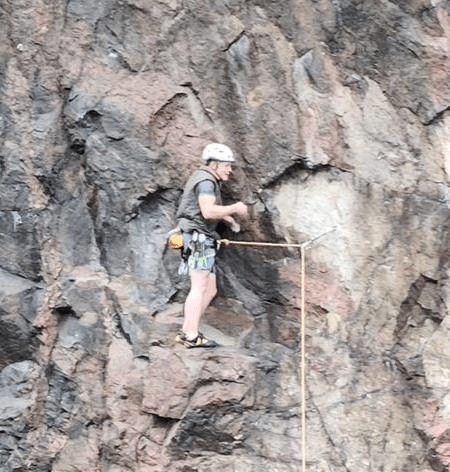
We had been chatting with the ferry boat girl and she said that wall climbing was a physical education requirement when she went to school. She did it inside on a climbing wall but evidently a lot of people practice their climbing skills on this cliff. I’d be afraid to try it.
September 29, 2023 – Friday: A Day Off
We took today mostly off to catch up on things. We went for jogs this morning then ate lunch. In the afternoon Patti walked to a nearby mall to do some shopping and I stayed home and updated my travelogues. When Patti got home she made pasta for dinner using the fresh tortellini we got at the grocery store earlier today.
September 30, 2023 – Saturday: Skansen
We went to Skansen today.
Skansen is the oldest open-air museum and zoo in Sweden located on the island Djurgården in Stockholm, Sweden. It was opened on 11 October 1891 by Artur Hazelius (1833–1901) to show the way of life in the different parts of Sweden before the industrial era.”
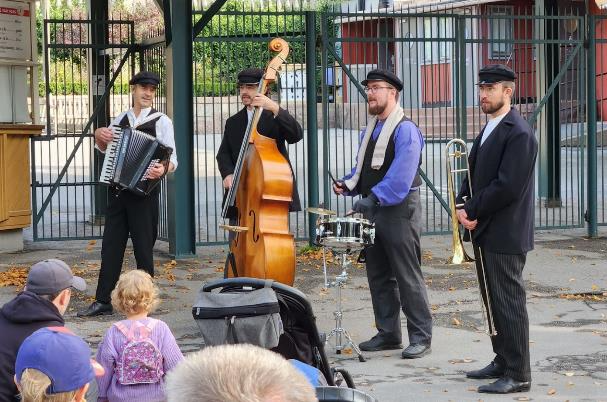
We took the ferry boat Emelie to get there. It’s fun riding a ferry to get around the city. While we waited in line for tickets a quartet entertained us with folk music. I couldn’t hear too much of it with my cochlear implant but the drummer did keep good time.
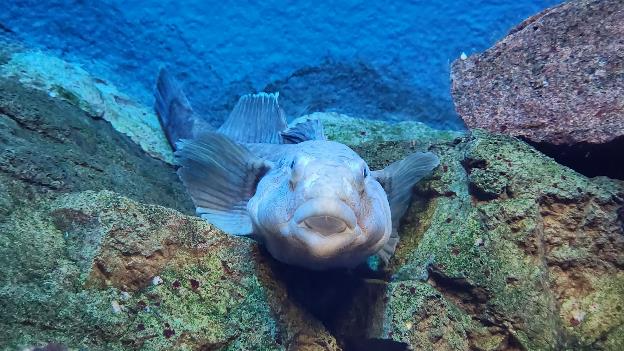
The first thing we went into was the Baltic Sea Science Center which was very interesting. We learned about the Baltic Sea, how it is brackish, not as salty as the Atlantic Ocean. Some sea creatures can’t survive in the low salinity of the Baltic Sea such as the worms that eat wooden sailing vessels which is why the old wooden sunken ships in the Baltic are usually well preserved. They had several nice aquariums. I got a good picture of this Sculpin.
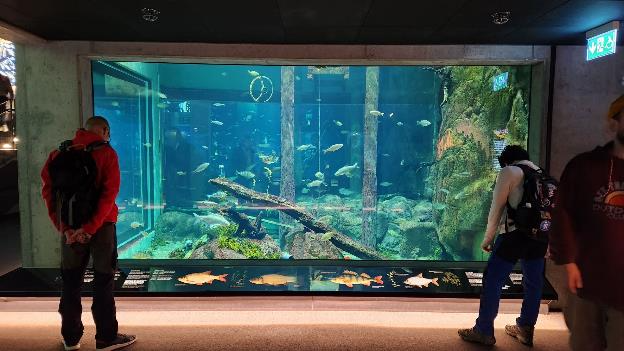
This big tank had local fish.
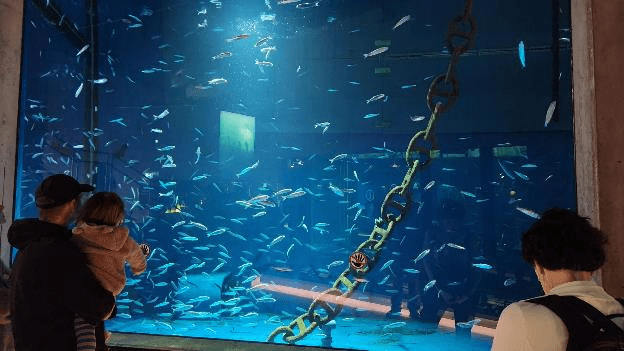
This tank was full of herring.
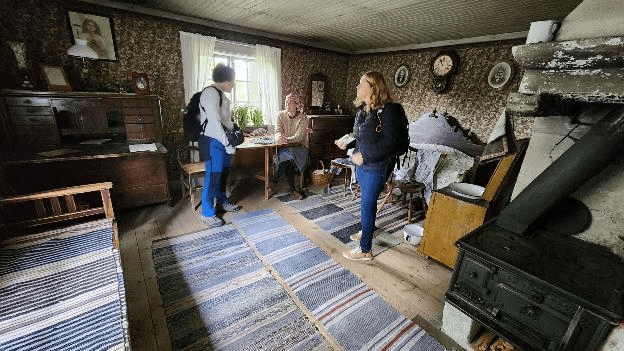
After the Baltic Sea Science Center we went out into the park to see the old buildings that have been moved there from other places in Sweden. Here’s an old building where a farming family lived. You can see Patti talking to the woman in period clothing. She was explaining what life was like back then. The wood-burning stove had a fire in it and the room was noticeably warmer than outside.
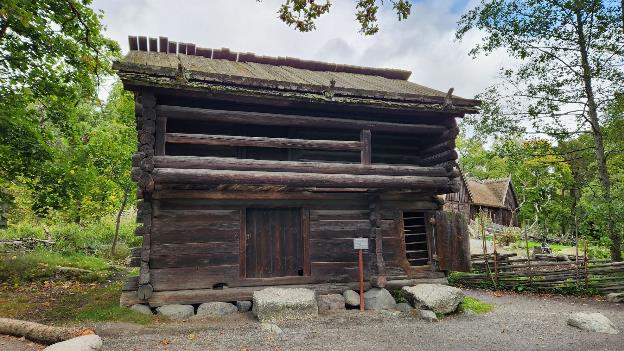
Some of the buildings were older construction, made of logs like this one.
There were quite a few animal enclosures throughout the park. This one had local Swedish pigs. They have more hair on them than most modern pigs.

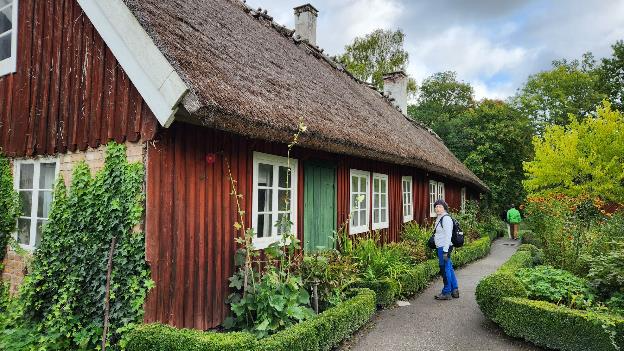
This farmhouse had a thatched roof.
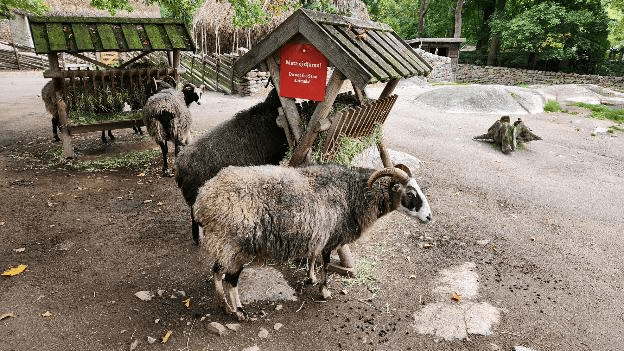
These Swedish sheep, called Gute Sheep, shed their wool in the spring which allows the farmers to just pull the wool off of them instead of having to shear it.
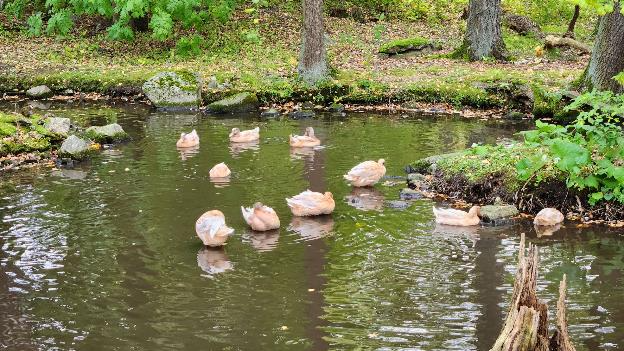
The Swedish Yellow Ducks were domesticated in the mid-1500s, the farmers got meat and eggs from them.
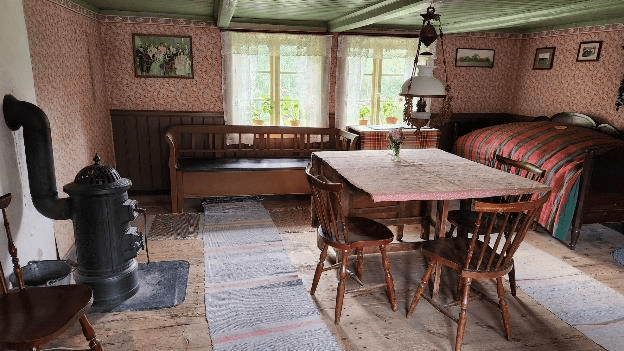
This farmhouse had a nice living room will wallpaper and family photos on the walls.
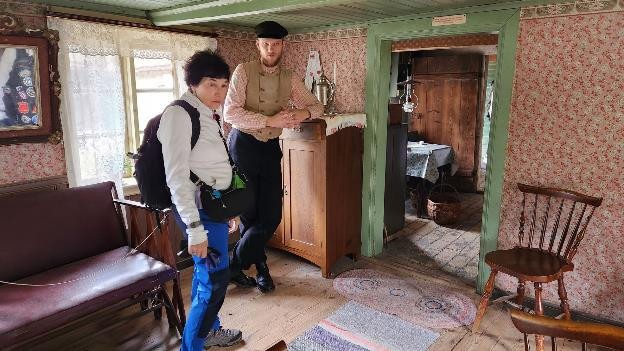
Patti talked to this tall Swedish fellow for a few minutes. He was very knowledgeable about this farmhouse.
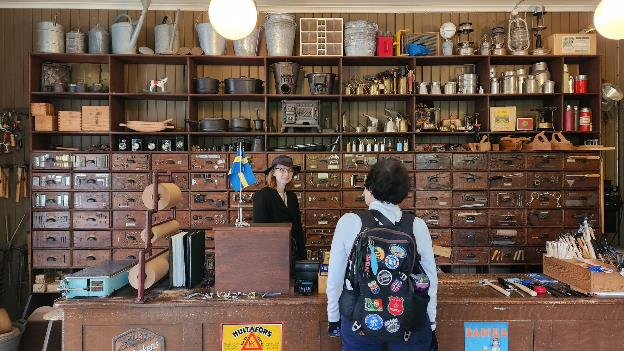
In the recreation of old town many of the stores were open and we could talk to the proprietors about their wares. Here’s the pharmacy.

Here’s the general store.
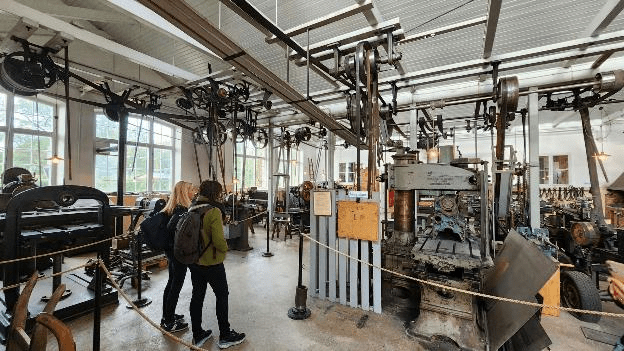
Here’s an engineering workshop. I loved watching the belt drives work. Several of the power takeoffs were functional. This is how power was transferred to various machines in the shop, before every machine had its own electric motor.
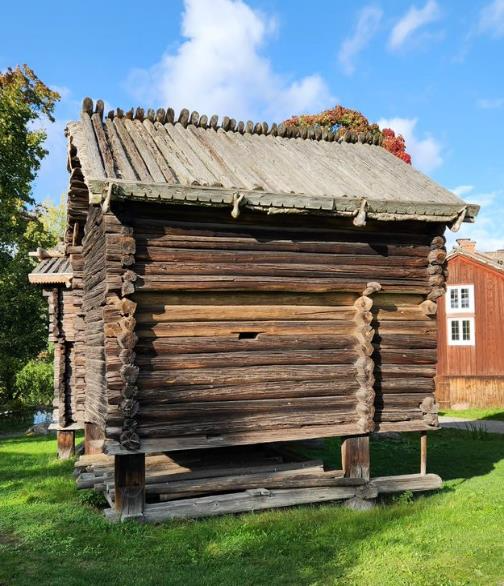
Storehouses like this one were built up off the ground to keep out vermin and keep the contents dryer.
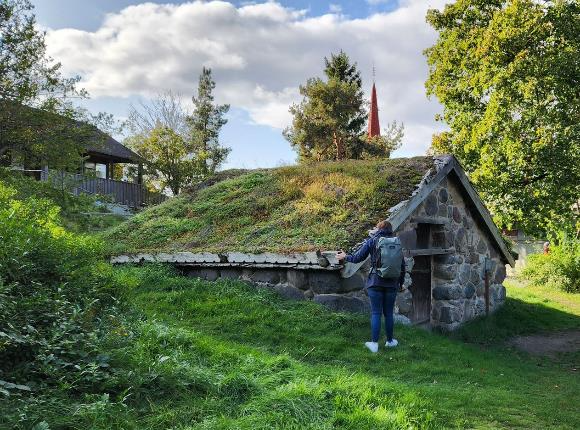
This low building made of stone had a sod roof and was built partially into a hill.
Several buildings had fires in the hearth that warmed the whole room.

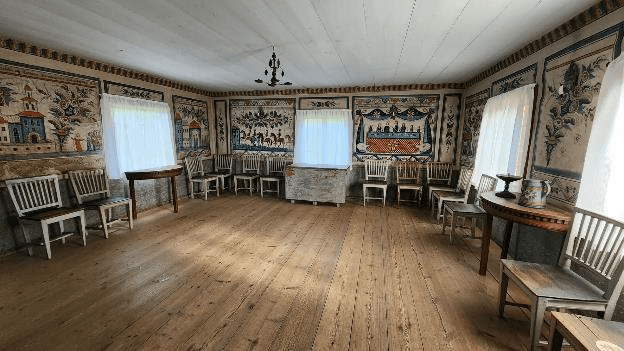
This old farmhouse had very nice wall paintings.
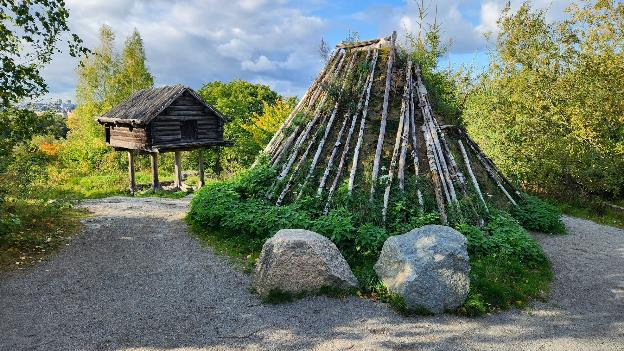
There was a Sami area, the Sami are the indigenous people of Scandinavia. Their huts look like teepees and their storage buildings were way up off the ground.
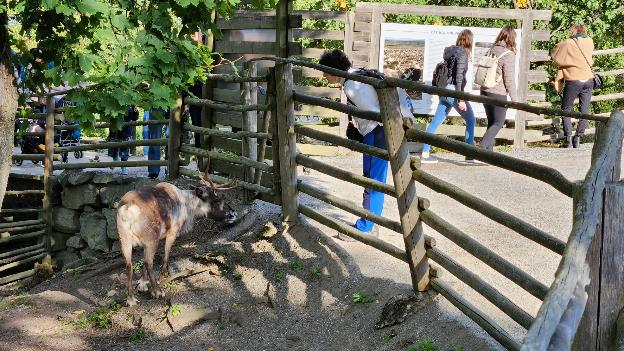
We got to the wild animal section of the park, here’s Patti looking at a reindeer.
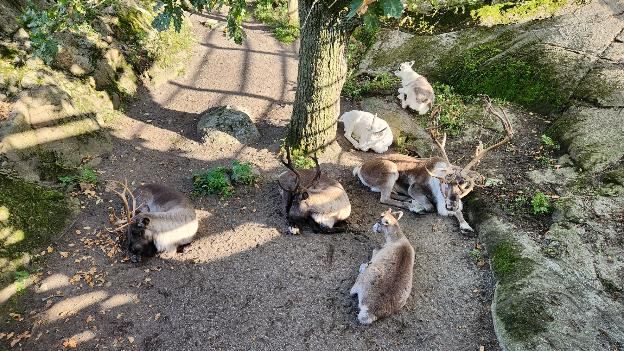
Several reindeer were resting.
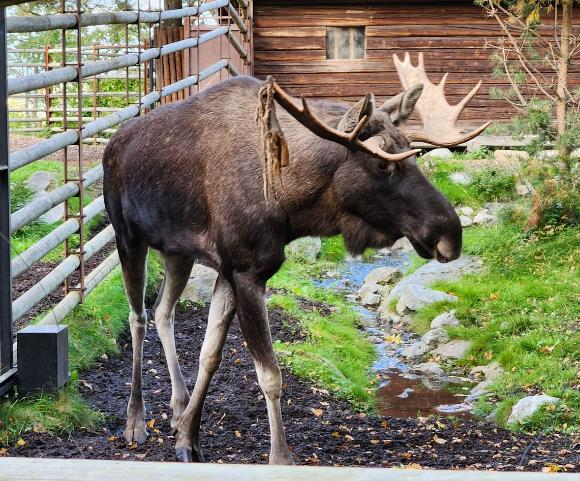
And there were Moose! These were the first moose that we’ve seen in Scandinavia.
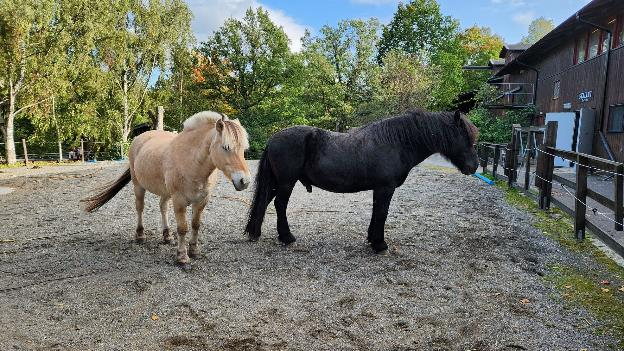
These Fjord Horses originate from western Norway where they’ve been bred since the Viking age.
There were several Scandinavian Brown Bears in the bear habitat. They were fun to watch because they were walking around, playing with things and rubbing their backs on tree trunks.

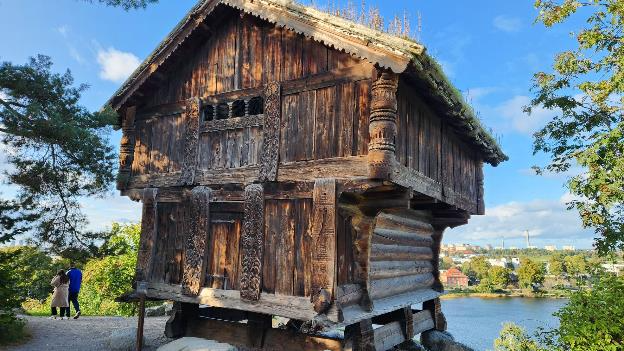
I liked the decorations on this storehouse that comes from a farm in Telemark, Norway. It’s one of the oldest buildings in Skansen, parts of it date from the 14th century.
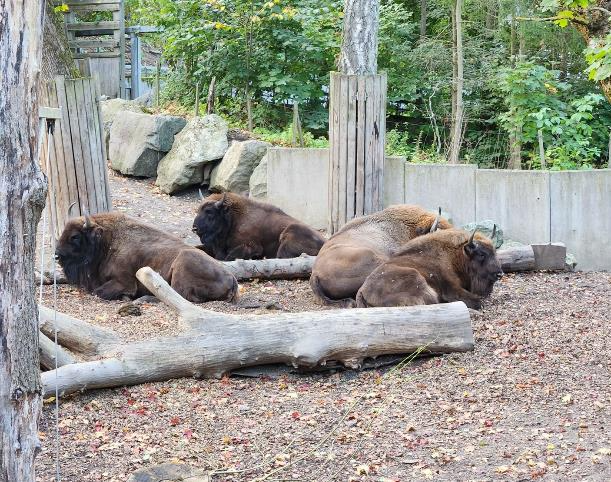
Here are some European Bison, we’d never seen these before. They look a lot like American Bison.
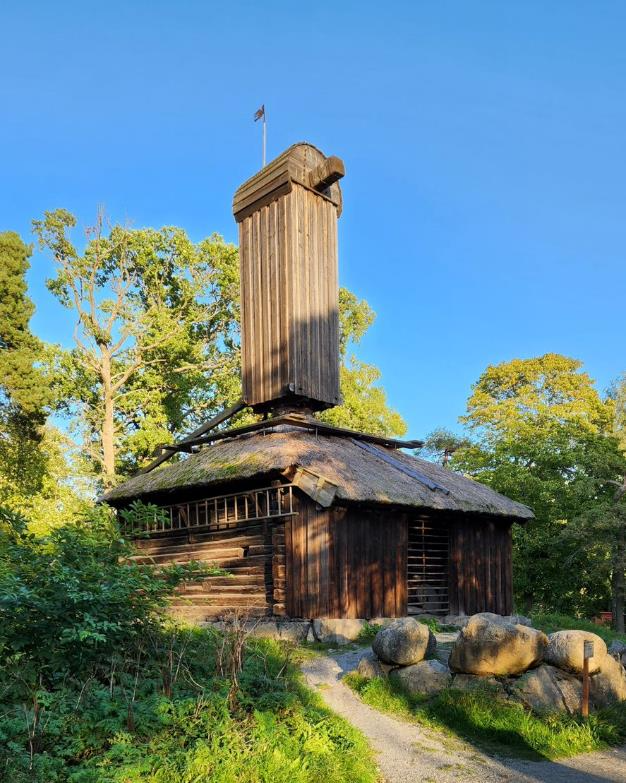
Here’s an old windmill without its sails.
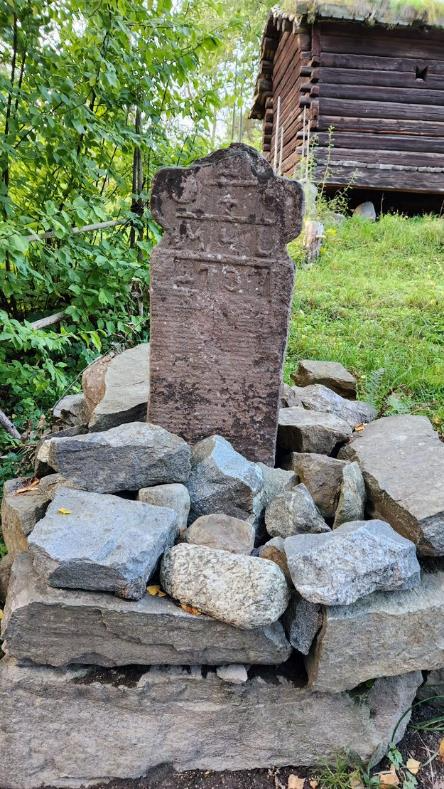
There were a lot of mile markers along the trails, this one was made in 1737.They were set in rock cairns to hold them up. In the middle of the 17th century the government decreed that milestones should be set up at regular intervals on all major roads in Sweden.
So, Skansen was very interesting and we enjoyed seeing the place. At the end of the day we took the ferry back home.
October 1, 2023 – Sunday: A Day Off
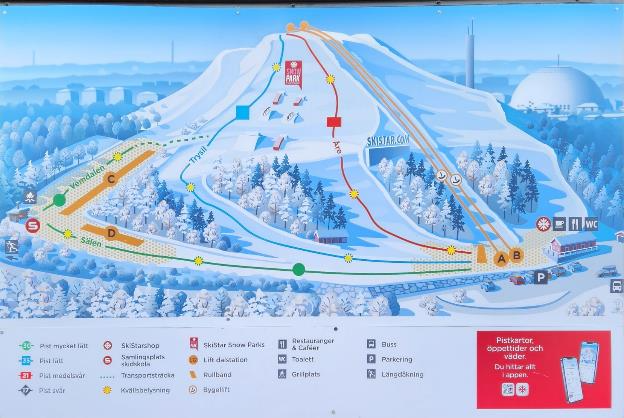
We stayed home today and caught up on stuff including more planning for October and November. In the afternoon I took a walk over to a nearby ski park called Snow Park. Here’s a map of the place.
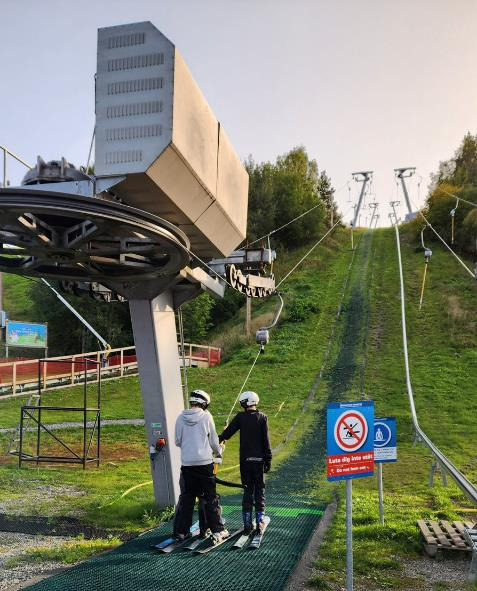
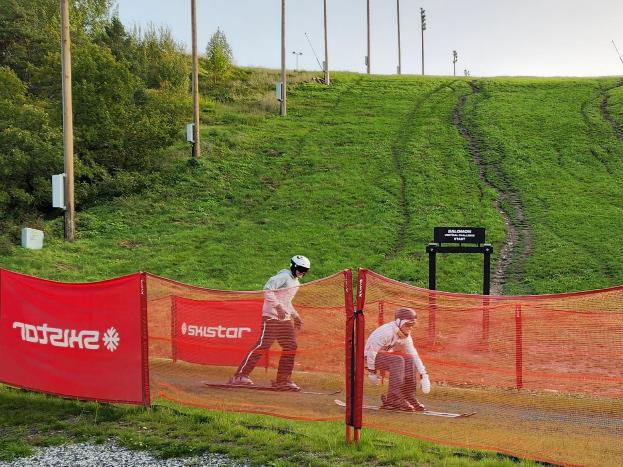
The skiing surface, when there is no snow, is made of a green plastic similar to astroturf. People were taking the lift up the hill then skiing back down.
 2024 TRAVEL TALES