This travel update is part four of our two-week stay in Bergen, Norway. It covers September 21 – 24. “Any text in quotes and Italics has been copied and pasted from some informational website like Wikipedia.”
September 21, 2023 – Thursday: A Slow Day
Patti requested a day off today. We have a deal that if one of us is tired of going out and doing stuff we can request a day or two off. We use these days to relax and catch up on things like email, travelogue updates, financial tracking, future travel planning, etc.
We have an excellent view from the windows in our apartment that looks out over the water. I decided to do a series of photographs with the same view, taken from our kitchen window, as night turned into day. I named them as one might see in an art gallery.
“Darkest Night”
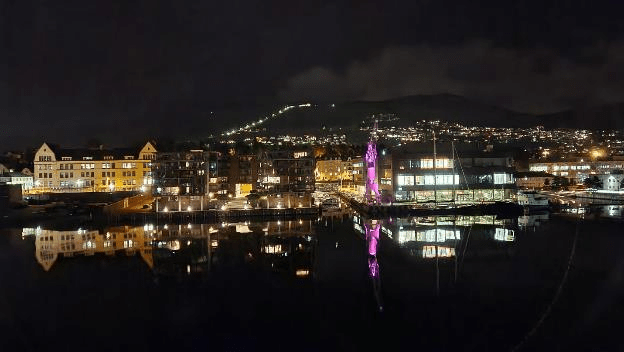
“Approaching Dawn”
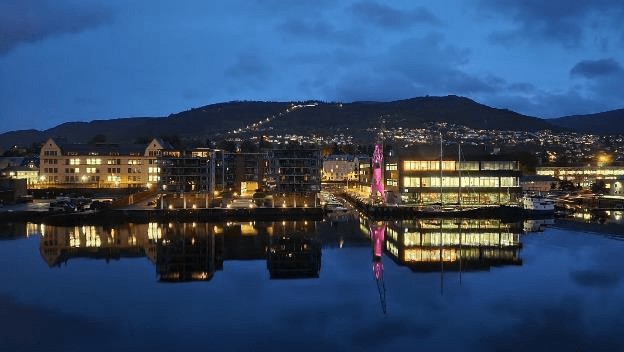
“In The Gloaming”
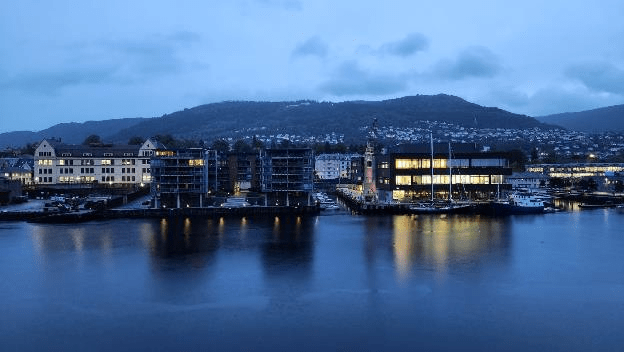
“Morning’s Arrival”
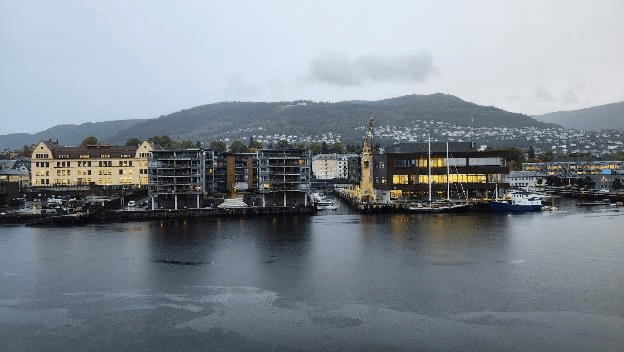
In case you’re curious about the buildings, the one on the right is a business school, the two similar ones in the middle are apartment buildings, and the yellow one on the left is the Bergen Technical Museum.
We both went out for a run earlier in the day and then spent the afternoon catching up on laptop work and other stuff.
September 22, 2023 – Friday: KODE
Today was our day to go to KODE, which is several art museums.
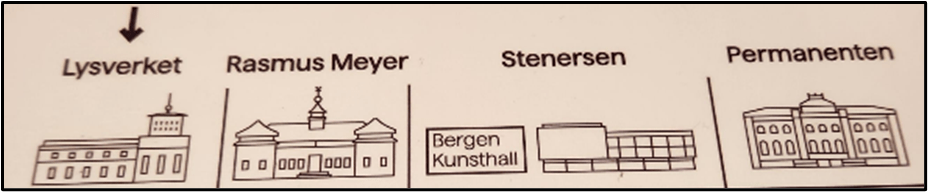
“KODE Art Museums and Composers’ Homes, or simply KODE, is one of the Nordic region’s largest museums for art and music. The museum comprises four museum buildings in Bergen city centre along Lille Lungegårdsvann (Lysverket, Rasmus Meyer, Stenersen and Permanenten), and the composers’ homes of Ole Bull, Harald Sæverud and Edvard Grieg. KODE manages a total of around 50,000 objects, which include visual arts, sculpture, installation art, handicrafts, musical instruments, furniture and design. The museum also manages a total of 17 cultural-historical buildings with various historical interiors and approximately 900 acres of park and natural areas. KODE curates several temporary art exhibitions annually, of both older art, decorative arts and contemporary art, and arranges around 400 concerts annually.”
Shown below is a map of the four main buildings that are all next door to each other.
We walked into the first building on the left, Lysverket, bought our tickets for the day, and went to the one gallery that is open in this building and saw the installation by Børre Sæthre called “Last Dance”. It’s one room with a large tree-like white thing in the middle and shiny silver disks on the walls.
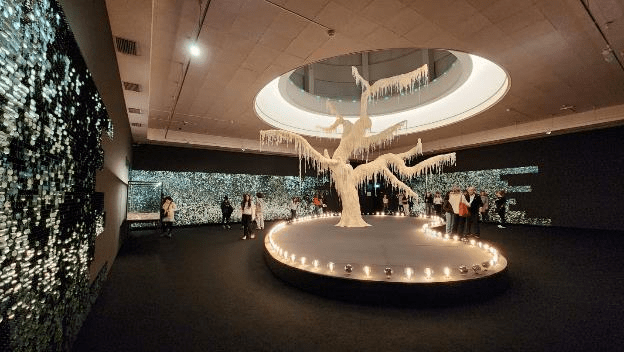
I struggle to understand art like this but here is a little info about it from the museum website.
“Børre Sæthre (b. 1967) is one of Norway’s most prominent artists, known for his monumental and sensuous installations. With references to queer culture, film history and escapism, Sæthre creates installations that completely envelop the audience. This summer he will occupy the futuristic Tårnsalen at Kode with a site-specific installation.
Last Dance is the final part of a trilogy that sheds light on the phenomenon of “cruising” in a historical perspective, and with a socio-political look back at the consequences of the AIDS crisis for queer culture.”
Next, we went next door to the Rasmus Meyer building that has two floors of classical Norwegian paintings. This was more accessible for us. The very first room was awesome, it was the banquet hall of a rich Norwegian that’s been moved to the museum. The artwork is by Mathias Blumenthal.
“Blumenthal is considered to be one of Scandinavia’s important artists in the 1700s and the one who replaced the Baroque and introduced the Rococo into Norwegian art.”
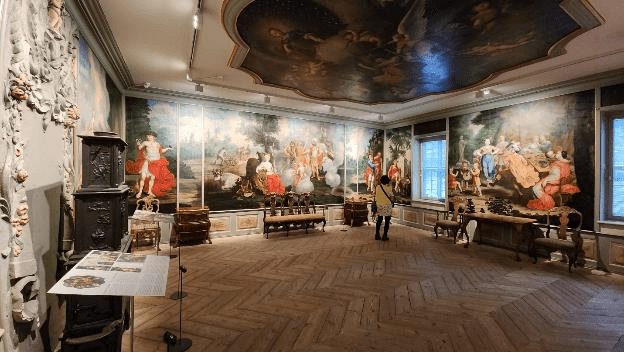
The walls had large paintings and we spent quite some time reading about the meanings of the various paintings. For example this mural is called “War And Peace”:
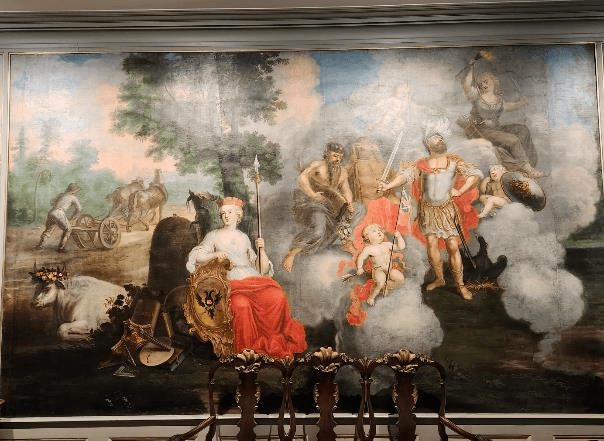
“War and peace
In this mural, the powers of war and peace are pitted against each other.
To the left of the motif sits a woman with a masonry crown. She personifies the urban community. Around the peaceful city goddess, art and science flourish, and the peasant can calmly plow the field without worrying about the horrors of war.
The white bull is the Greek god Zeus in disguise. According to myth, he received a flower wreath from Europe, the goddaughter of which later gave his name to the continent.
The soldier, to the right of the subject, has drawn his sword ready for battle and around him stirring up battle.
The goddess of war Athena’s shield is adorned by Medusa’s terrifying face, and at the warrior’s feet, Zeus is dressed in another of his many figures – an eagle with lightning in its claws.
One of the putti holds Britain’s naval flag, another holds the laurel wreath – which here becomes a symbol of the victor.
The enormous economic cost of warfare is illustrated by coins flowing out of what looks like a cornucopia.
Through a cleverly conceived motif, Blumenthal has crafted a densely packed political commentary on the shifting situations and conflicts of interest that characterized 1700th century Europe.”
The next gallery introduced us to Johan Christian Dahl, the Father of Norwegian Painting.
“Johan Christian Claussen Dahl (24 February 1788 – 14 October 1857), often known as J. C. Dahl or I. C. Dahl, was a Danish-Norwegian artist who is considered the first great romantic painter in Norway, the founder of the “golden age” of Norwegian painting, and, by some, one of the greatest European artists of all time. He is often described as “the father of Norwegian landscape painting” and is regarded as the first Norwegian painter to reach a level of artistic accomplishment comparable to that attained by the greatest European artists of his day. He was also the first to acquire genuine fame and cultural renown abroad. As one critic has put it, “J.C. Dahl occupies a central position in Norwegian artistic life of the first half of the 19th century.”
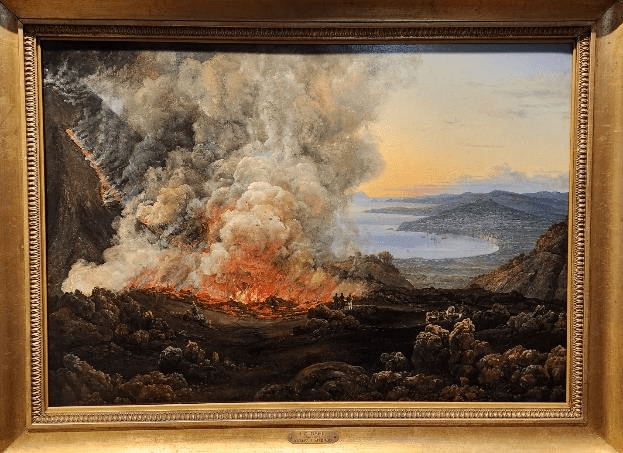
We did like his landscape paintings, here’s one he did of Vesuvius in Eruption in 1821 when he was in Italy.
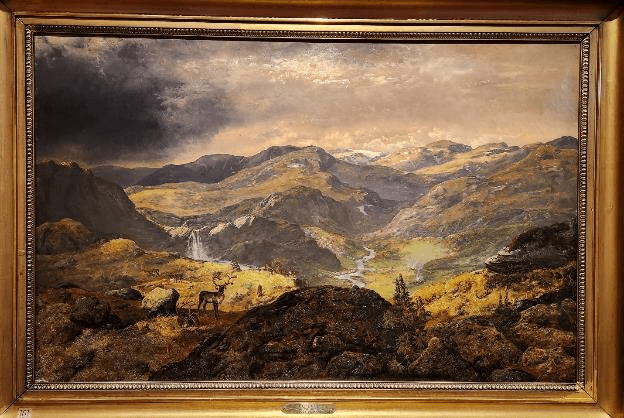
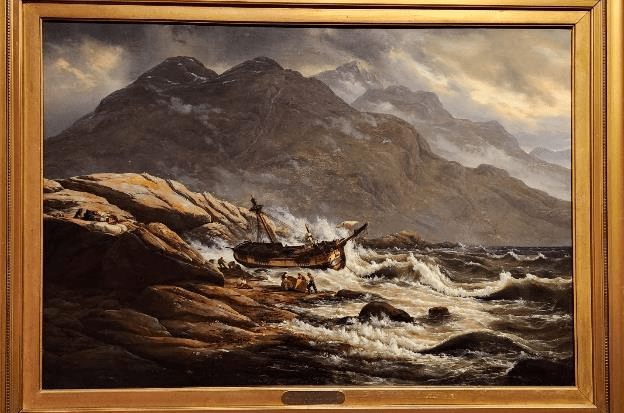
His paintings of Norwegian landscapes were beautiful.
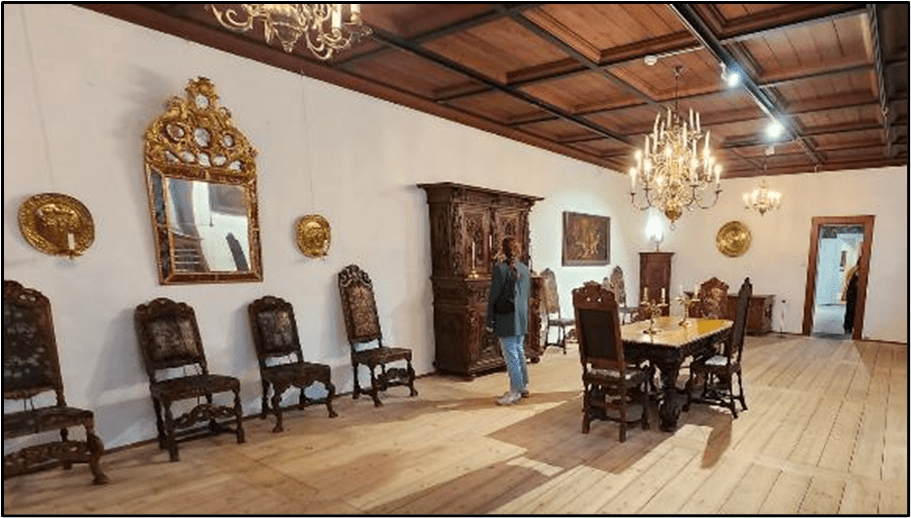
The next gallery was a Baroque dining room with furniture from around 1600 AD.
We saw landscapes by other Norwegian artists like this one “Hunting at Königsee” by Thomas Fearnley painted in 1841.

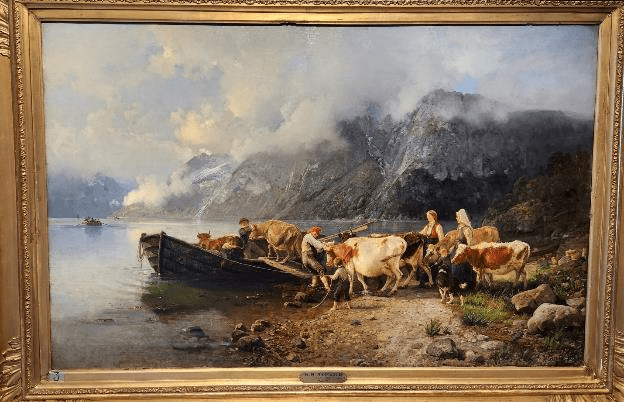
We both like this one “Fjord Landscape With Cattle” by Anders Askevold, 1869.
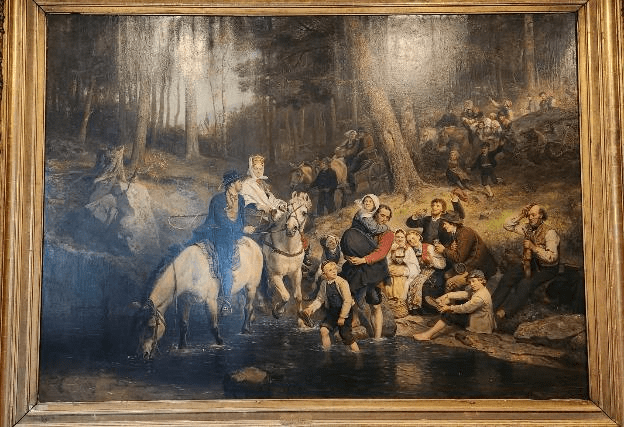
And this one “Wedding Procession through the Forest” by Adolph Tidemand, 1873.
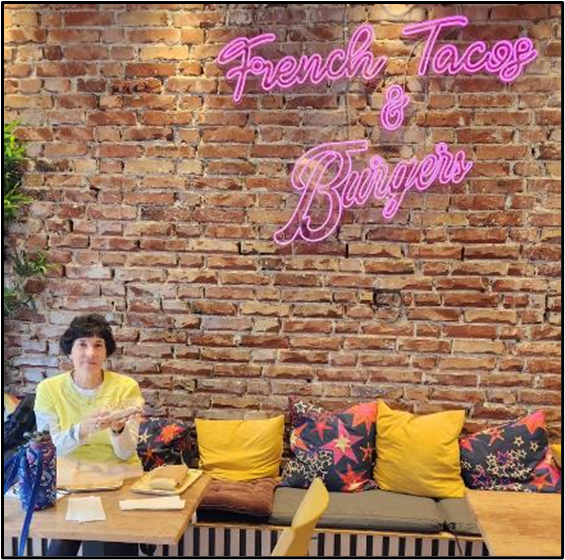
We spent quite some time enjoying these paintings and finished up the first floor of this building, then decided to go get lunch. We’d walked by a French Taco restaurant the other day and decided to try it. Here’s Patti in the restaurant.
What is a French Taco?
“A French Taco, or matela (French for “mattress”) is a fast food dish which usually consists of a flour tortilla grilled and folded around a filling of French fries, cheese, and meat, among other deli ingredients. More similar to a burrito than to a taco, and claiming inspiration from Mexican cuisine, it originated from the region of Rhône-Alpes in France in the early 2000s, before becoming popular among teenagers and young adults in all of France and abroad.”
We’d never heard of French Tacos before but we both liked them. The restaurant proprietor was from Algeria but has been in Norway for 25 years. We talked to him for a while about French Tacos and Algeria. When we were in Morocco last year we were, at one point, close enough to Algeria to see it in the distance, but were told not to go there by our driver, Mohammed.
After lunch we went back to the Rasmus Meyer building and up to the second floor that has more modern artwork. In particular there were several rooms with paintings by Edvard Munch.
“Edvard Munch 12 December 1863 – 23 January 1944) was a Norwegian painter. His 1893 work, The Scream, has become one of Western art’s most acclaimed images. He was a prolific yet perpetually troubled artist preoccupied with matters of human mortality such as chronic illness, sexual liberation, and religious aspiration. He expressed these obsessions through works of intense color, semi-abstraction, and mysterious subject matter.”
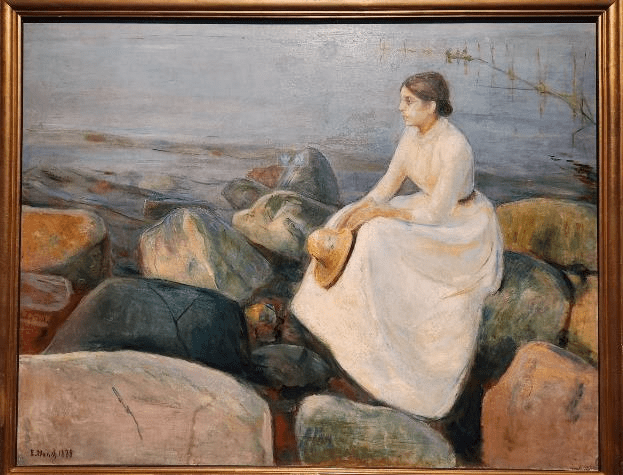
I liked this one that he painted of his sister, Inger on the shore of the coastal village of Åsgårdstrand.
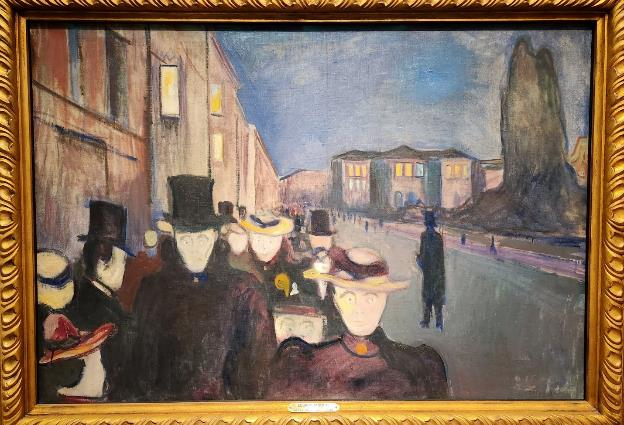
This one, “Evening On Karl Johan”, is the first one where he used the masklike faces, staring straight ahead, for which he is known.
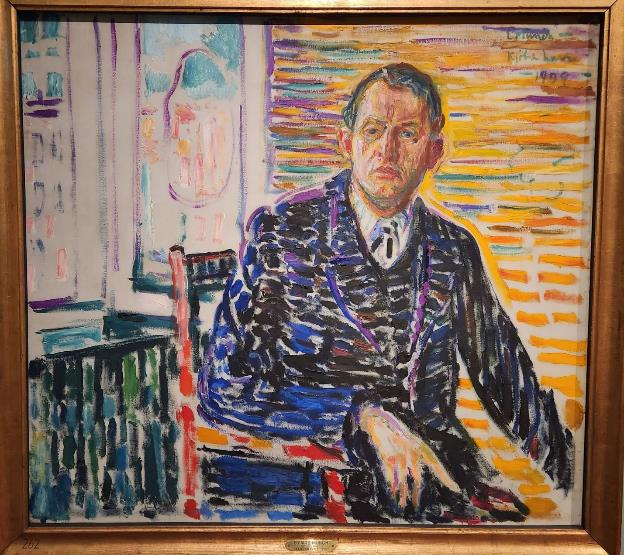
Here’s a self portrait he did in 1909 in the clinic where he was recovering from an emotional breakdown.
Next, we walked through galleries showing other Norwegian contemporary artists. I liked this one, “By the River Thames London, 1911” by Anders Svarstad.

This one was pretty “The Family in the Garden, 1903” by Thorvald Erichsen.
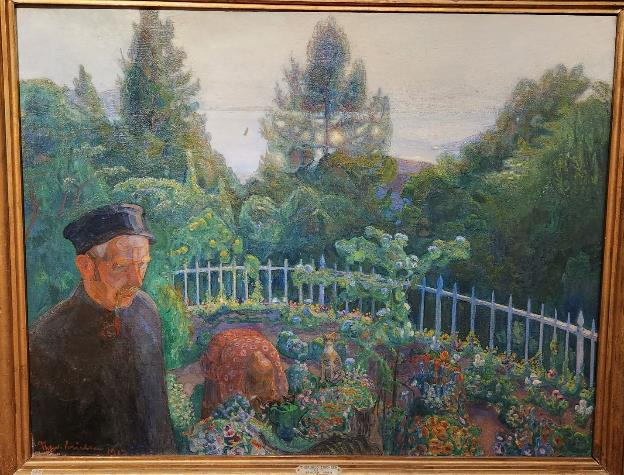
This one was very nice “Midsummer Eve Bonfire, 1915” by Nikolai Astrup.

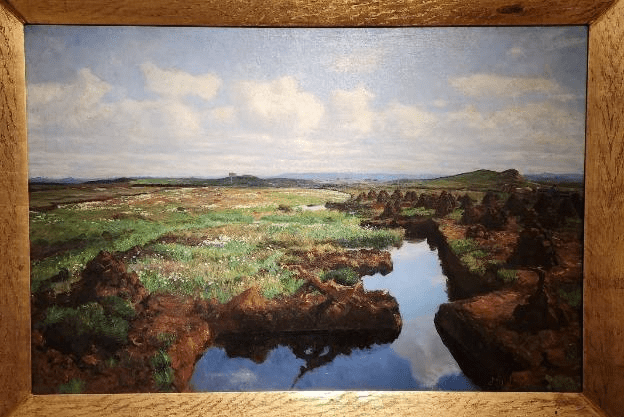
Here’s “Peat Marshes at Jæren, 1897” by Kitty Kielland.
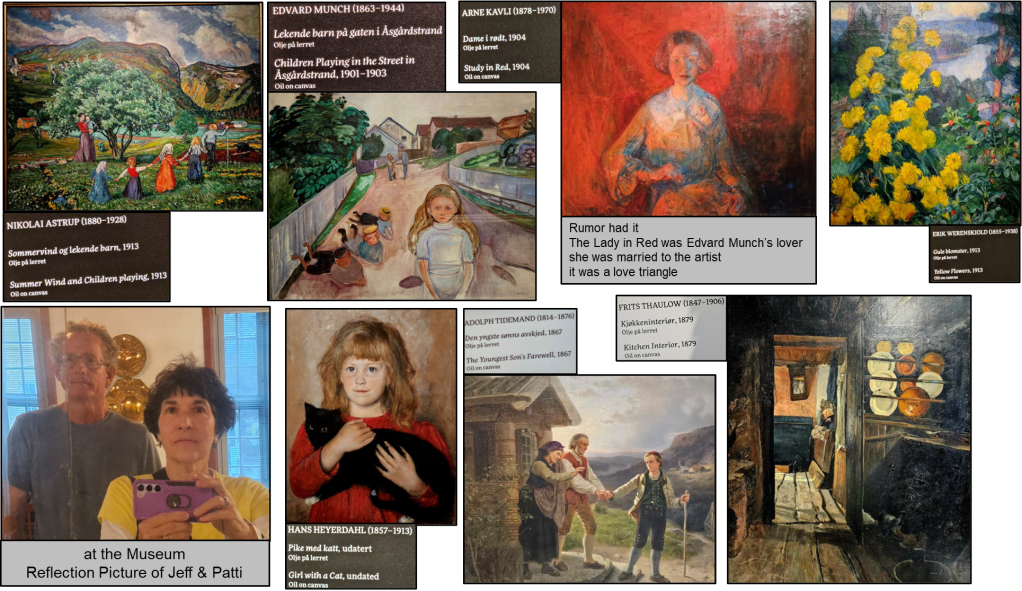
Shown below are some of Patti’s favorite paintings at the museum.
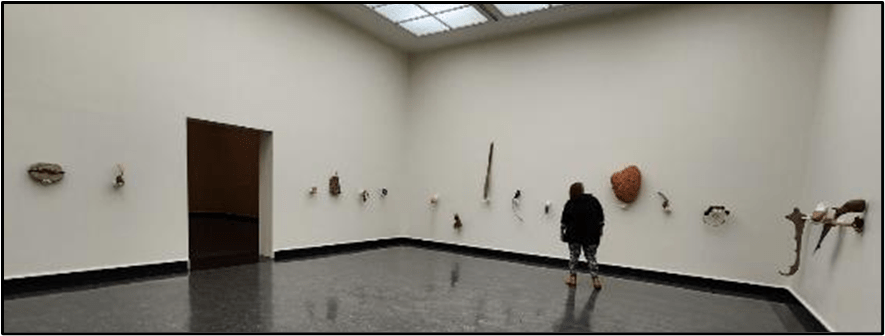
After seeing everything in this building, we went to the third building, where there is an exhibition of modern art by Ahmed Umar called “Glowing Phalanges”.
“The Norwegian-Sudanese artist Ahmed Umar focuses on identity, religion and cultural values through a number of artistic expressions. He uses his personal experiences as tools to convey stories of concealment and alienation, but also of liberation and taking ownership of one’s own history. Umar works with, among other things, sculpture, textiles, painting, photography and performance. The materials and techniques are multifaceted, just like the stories they convey.
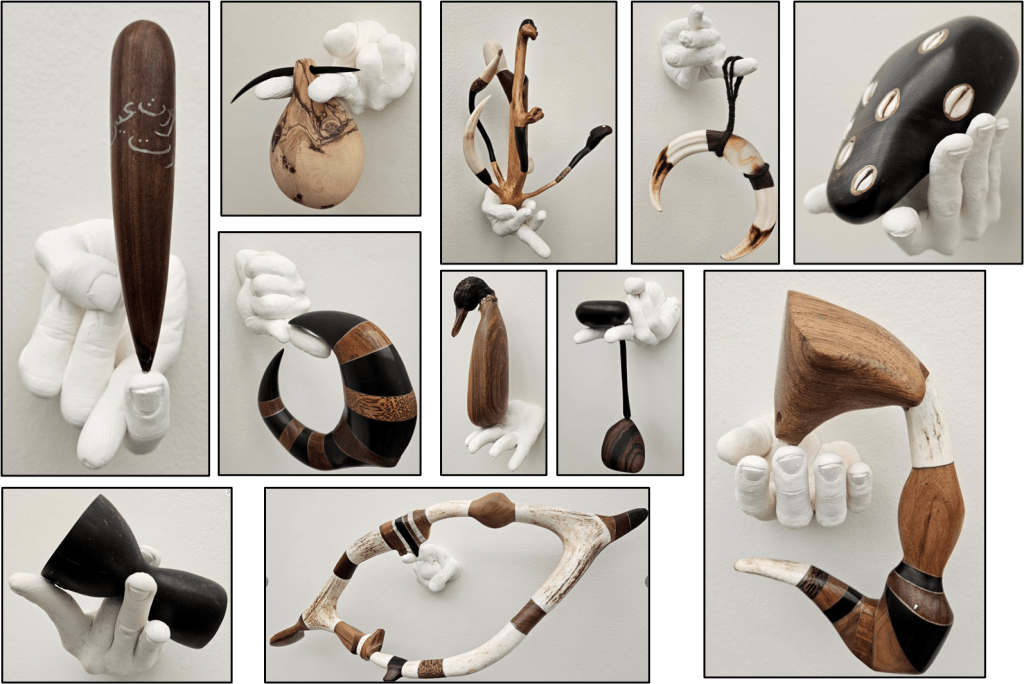
The exhibition presents 99 sculptural prayer beads in various materials and formats. The materials originate from commercial souvenirs from African and Asian countries, which Umar has long collected. These often caricatured human and animal figures are made of hardwoods, bones, teeth, leather and ebony and have long been imported to Norway and Europe through missionary activities and tourism. This has led to a depletion of natural resources and a restriction on the creative freedom of local artisans. For the exhibition, the artist has also incorporated organic materials from Norwegian geography, including reindeer horns and a 60-year-old whale skeleton, which points to our own country’s exploitation of natural resources.”
Each “prayer bead” had its own place on the wall.
Here are closeup views of several of them.
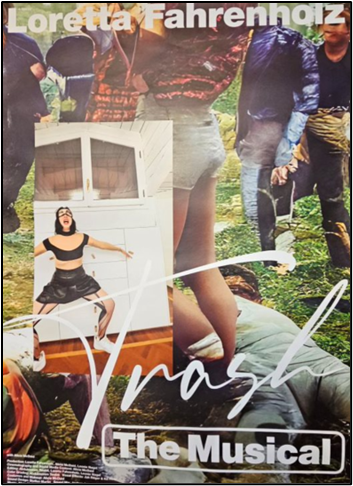
The final thing to see in this building was a movie called “Trash — The Musical” a 37-minute-long film featuring a solo performance by a provocative “performance” artist and actor. Patti ended up watching the full length of the film, although she said it was pretty disgusting. She said she stayed to watch it in its entirety because it was so shocking. I left after about five minutes. In my opinion, it was creepy and disgusting.
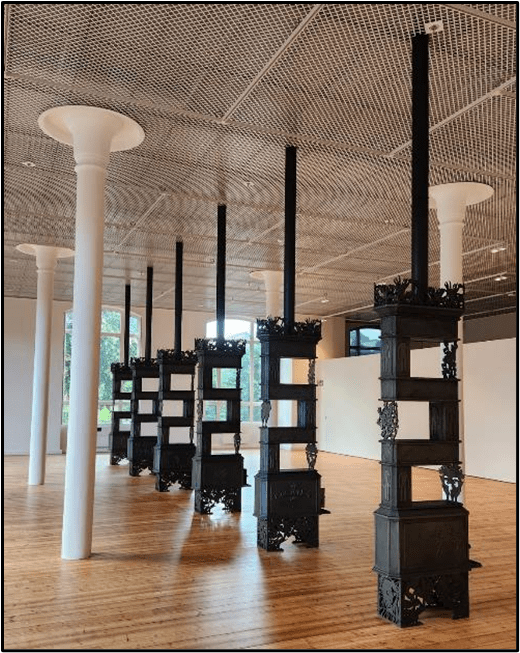
While Patti finished watching Trash — The Musical, I went over to the fourth building that had just one gallery with art by Ida Ekblad called “STRANGE FREEDOMS SHALL BE SOUGHT” — the exhibit was comprised of several old woodburning room heaters. I wasn’t impressed.
By about 4:45pm, we were finished at the museums, and so we headed back to our Airbnb. It started to rain for about the last 10 minutes of our walk. We managed to stay dry all day, but, at the very end got wet again. That’s Bergen weather for you.
September 23, 2023 – Saturday: The Hall and the Tower
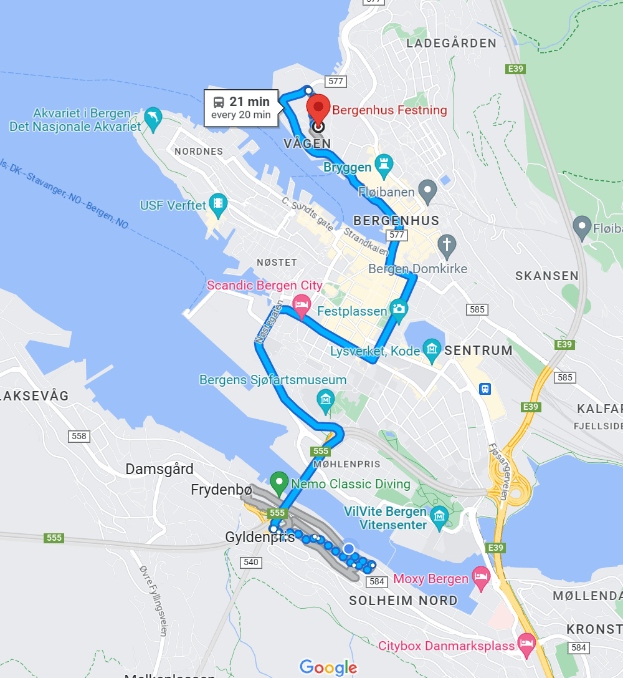
Today we went into two Medieval buildings that are now museums, King Haakon’s Hall and the Rosenkrantz Tower. These two buildings are enclosed by the walls, bastions, and battlements of the Bergenhus Fortress. It was another rainy morning so we took the bus down to the entrance to the harbor where the buildings are, as you can see on this map.
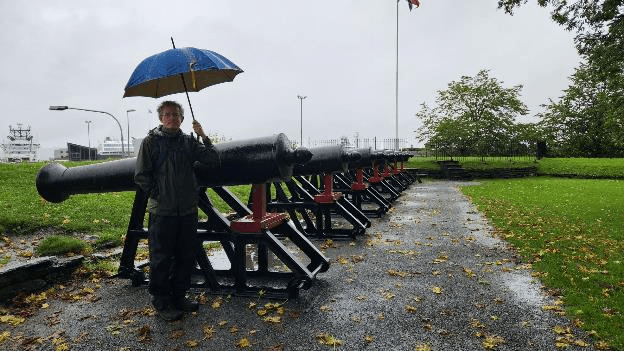
Before we got to the buildings we passed this lineup of canon inside the fortress walls.
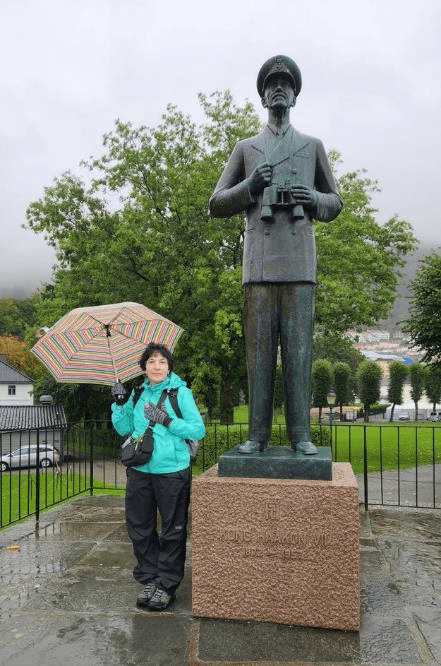
And this statue of King Haakon VII.
Then we bought our tickets for both buildings ($40USD for both of us) and went into the great hall.
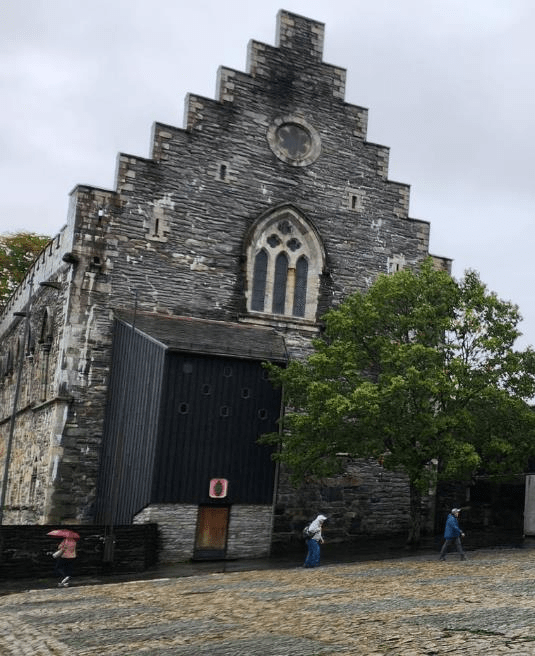
“Haakon’s Hall (Norwegian: Håkonshallen) is a medieval stone hall located inside the fortress. The hall was constructed in the middle of the 13th century, during the reign of King Håkon Håkonsson (1217–1263). In medieval times, it was the largest building of the royal palace in Bergen. It is the largest secular medieval building in Norway and the likely inspiration to similar great halls that were built on the royal estates in Oslo and Avaldsnes.”
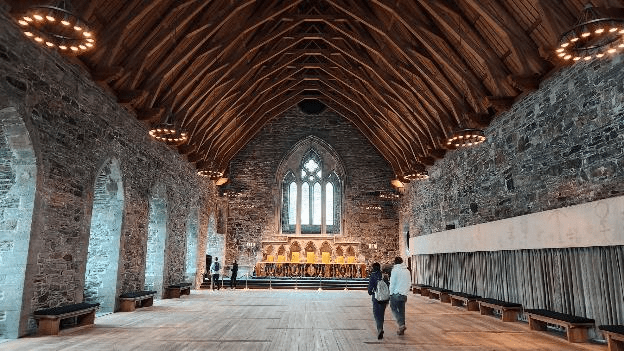
The hall is really impressive, with stone walls and wooden roof beams. Here it is from the courtyard.
And here it is on the inside.
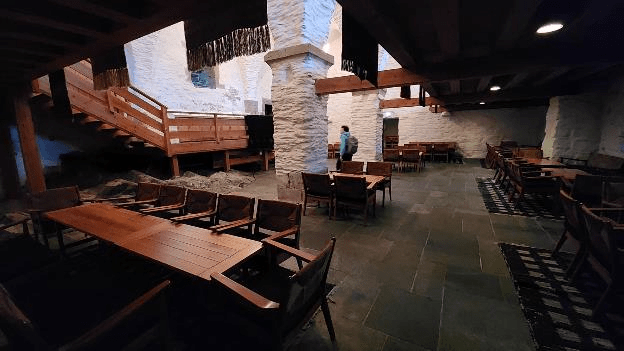
The level below the hall has stone arches and they’ve built a lot of wooden platforms furnished with tables and chairs that can be used when they have an event here.
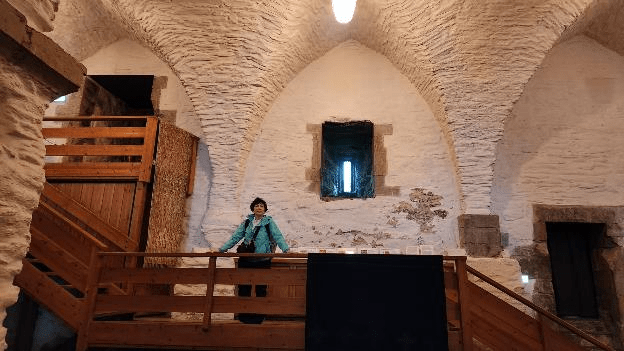
When you look at the windows you can see how thick the walls are.
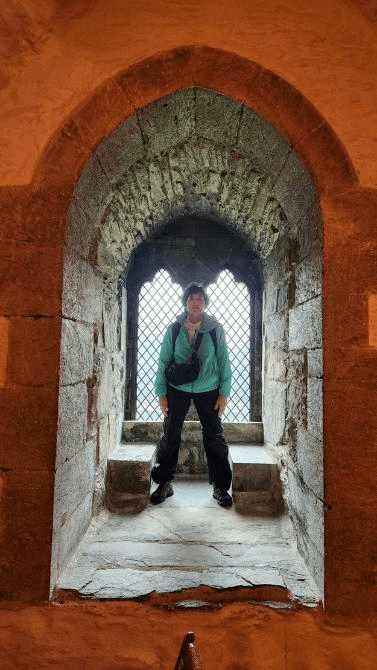
After the hall we went into the tower.
”Rosenkrantz Tower (Norwegian: Rosenkrantztårnet) is a tower that derives its name from governor Erik Rosenkrantz (1519-1575) who was governor of Bergenhus Fortress from 1560 to 1568. During his administration, the tower received its present shape and structure. The oldest part of the building is made up of a medieval tower built during the reign of King Magnus the Lawmender in the 1270s as part of the royal castle in Bergen.”
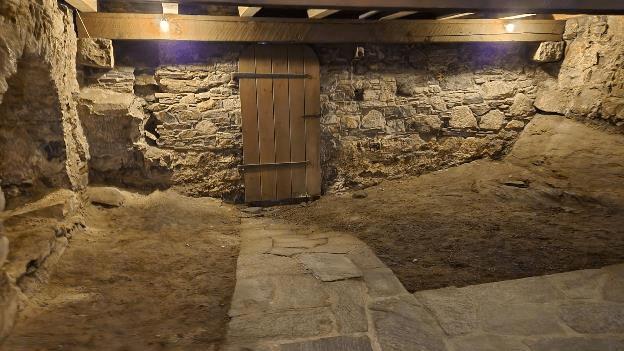
The tower has seven floors. We started in the basement which had earthen floors and low ceilings with thick wooden beams.
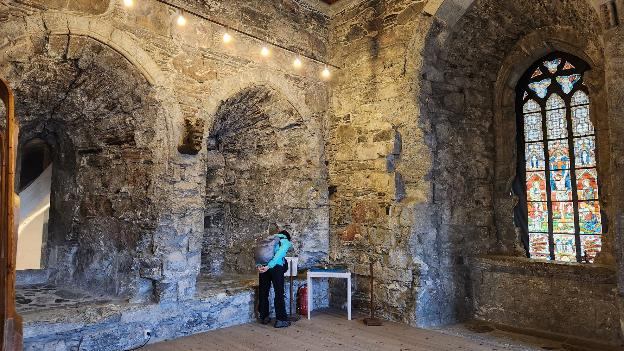
We climbed stairs to get to the chapel that had a nice stained glass window.
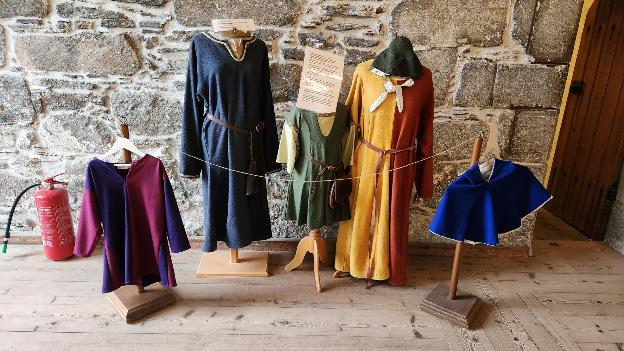
Another room had a display of period clothing.
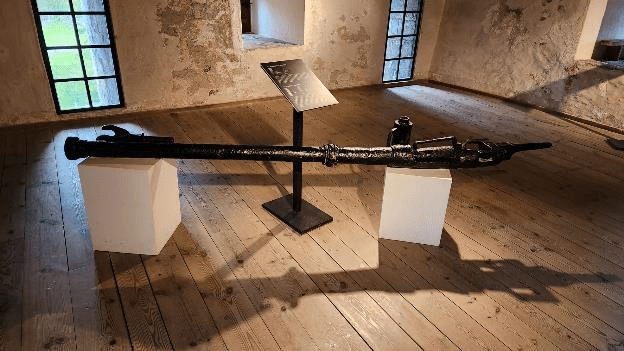
Another room had weaponry like this ½ pound Falconet with a 4.2 centimeter caliber.
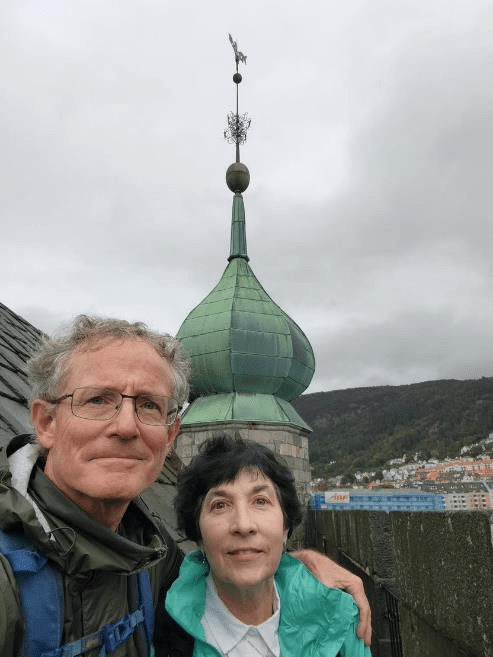
Up on the roof we got our selfie with the copper dome. It had stopped raining at this point.
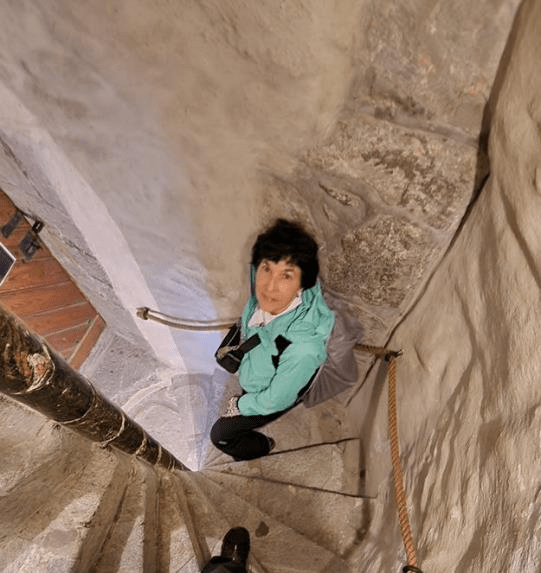
We took the spiral staircase back down.
We enjoyed these Medieval buildings. We read a lot of history about Bergen too and about various military alliances between Norway and Denmark down through the centuries.
The buildings closed at 2PM and then we got some street food for lunch. Patti got a baked potato…
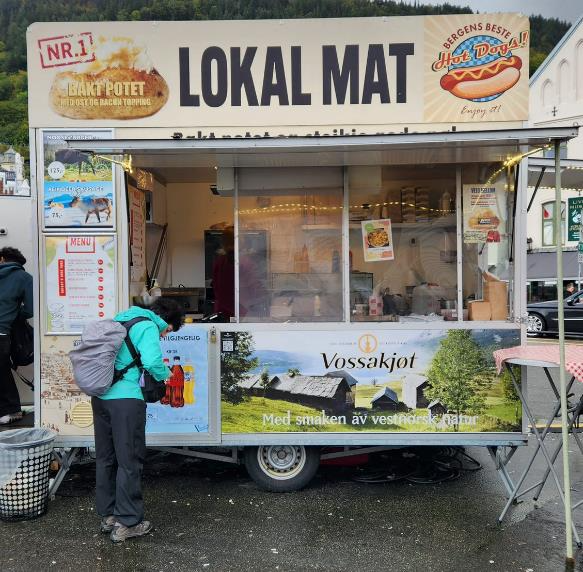
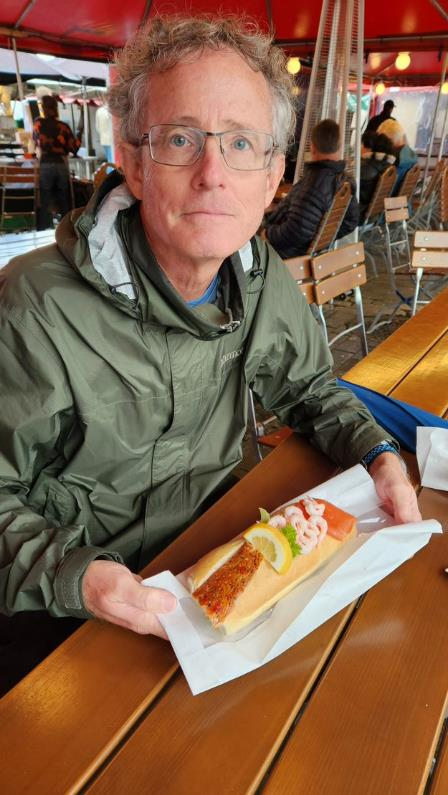
…and I got a seafood sandwich with smoked salmon, grilled salmon, and boiled shrimp.
Then, since it still wasn’t raining, we walked back home taking a different route from previous walks. We walked by the National Theater and some nice statues, monuments, and fountains.
Just before we got back home it started raining again, but we had our raincoats, rainpants, and umbrellas so it was OK.
September 24, 2023 – Sunday: Getting Ready to Travel
Tomorrow we’re taking trains to Stockholm, Sweden so today we planned to mostly stay home and get some housekeeping done. We went out for a run this morning (Jeff jogs ~ Patti runs). Upon our return, Patti prepared lunch while I did some laptop work.
We went to bed fairly early because tomorrow is a long travel day — about 15 hours on two trains.
 2024 TRAVEL TALES