This travel update is part three of our one-week stay in Stavanger, Norway. It covers September 9 – 10. “Any text in quotes and Italics has been copied and pasted from some informational website like Wikipedia.”
September 9, 2023 – Saturday: Happy Anniversary!
Six years ago today we got married at my house in Finneytown, a suburb of Cincinnati, Ohio. Shown below are pictures of us on our wedding day.


And here’s a selfie Patti took of us today. I probably look at least 6 years older, but now I have the protection of my new Thor’s hammer amulet to wear around my neck.

The same month we got married, September 2017, I sold my house, we moved what was left of our stuff (after we got rid of 90% of it) into a storage unit in Sarasota, Florida, and began our nomadic lifestyle. Now, 6 years later, we’re in Norway.
We decided to take a day off from touristing today and catch-up on things. This morning I updated my travelogues for Stavanger and Patti did some cleaning. She cleaned her backpack, hiking shoes, and did some laundry. She cleans things more than I do. I let her wash my khaki pants today even though I’ve only worn them for nine days. I put on my gray pants and made a note in my calendar, so I’ll know how long I’ve worn the gray ones when Patti next asks to wash my pants. It’s an ongoing humorous thing for me to see how long I can go before Patti wants to wash my pants.
For lunch we walked down to Istanbul, a kebab restaurant about a mile away from home where we had a decent meal. On our way home we went by this pretty church, St. Johannes.
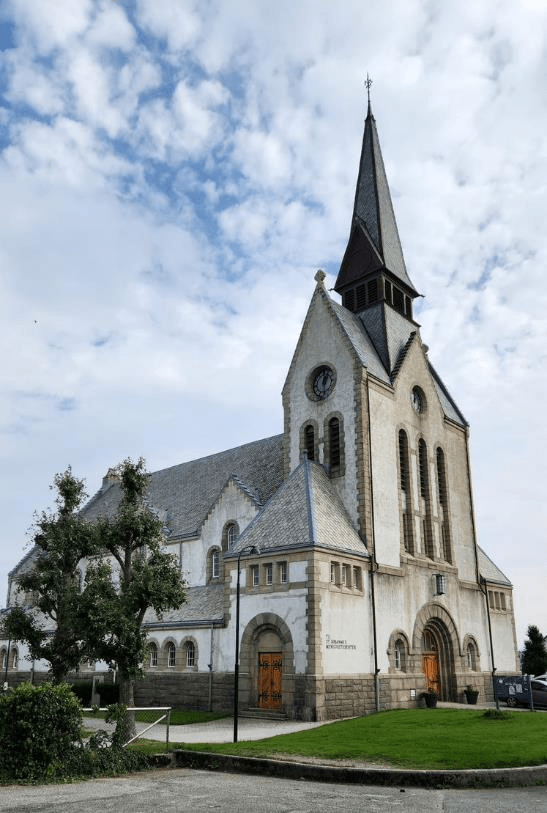
“St. Johannes Church (Norwegian: St. Johannes kirke) is a parish church of the Church of Norway in Stavanger Municipality in Rogaland county, Norway. It is located in the Johannes neighborhood in the borough of Storhaug in the centre of the city of Stavanger. It is one of the two churches for the St. Johannes parish which is part of the Stavanger domprosti (arch-deanery) in the Diocese of Stavanger. The white, plastered brick church was built in a long church style in 1909 using designs by the architect Hans Jacob Sparre. The church seats about 700 people.”
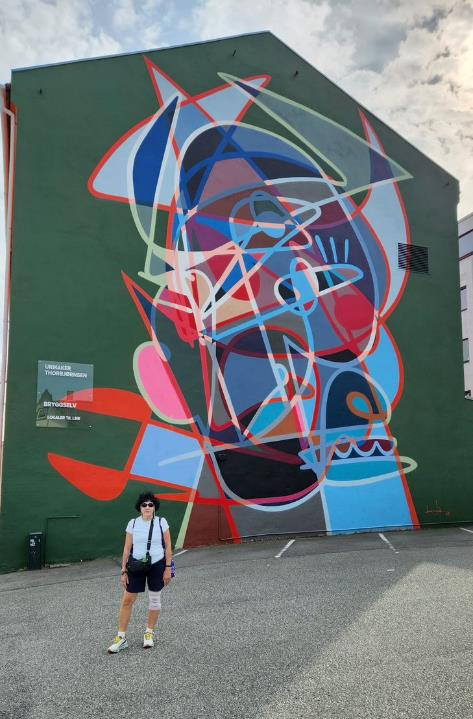
We also went by some nice wall murals, I particularly liked this one.
Again I noticed that the cobblestones on a lot of the streets look very much like the ones we saw around Portugal.
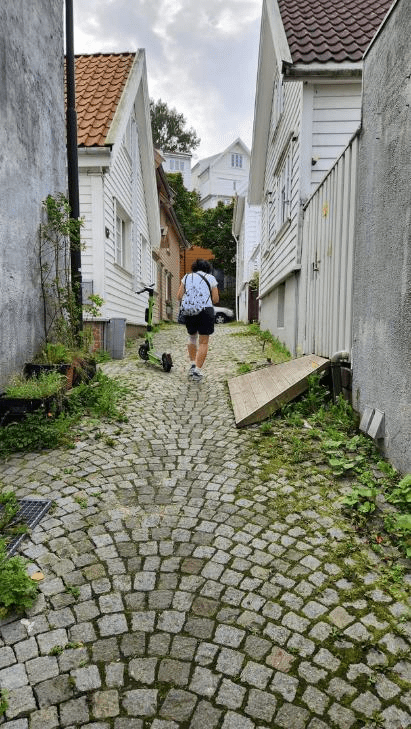
We’ve read that Portugal bought Bacalao (salt cod) from Norway, and that Norway now has bacalao recipes that it got from Portugal. I wonder if Norway also got their cobblestone techniques from Portugal?
This afternoon we went for jogs along the water then just did miscellaneous catchup and planning stuff.
September 10, 2023 – Sunday: The Petroleum Museum
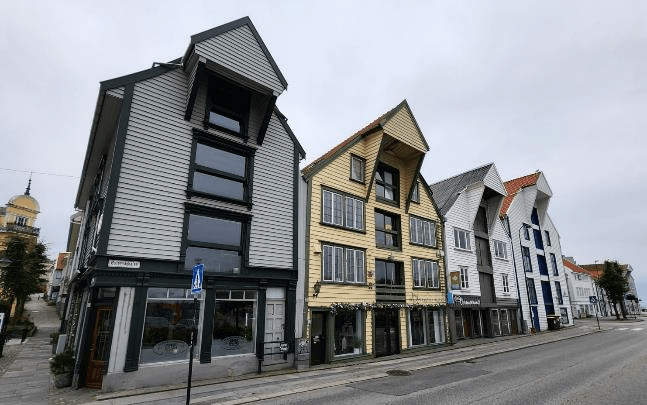
Believe it or not the Norwegian Petroleum Museum is a popular tourist attraction in Stavanger. So our plan today was to walk down there and check it out. We saw some more of these wooden warehouse buildings on the way. They seem to be iconic of many towns in Norway.
Next to the museum there was some old petroleum industry equipment that had been turned into a playground. You can crawl through an old oil pipe!
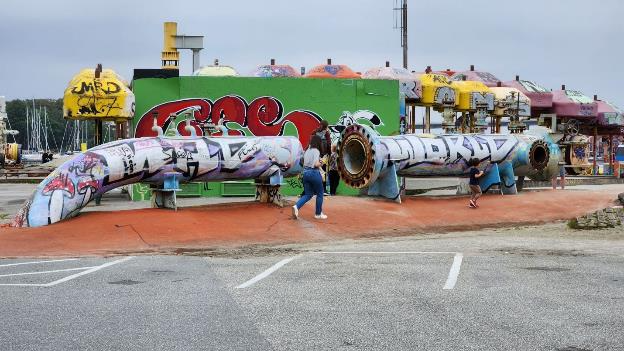
This piece of equipment was a splicer. They could lower it to the sea bottom and put it over two pipes that they wanted to splice together then pump out the water and welders could be in there, sometimes 400 feet under water, to weld the splice. That’s not a job I would want, but now kids can crawl through it.
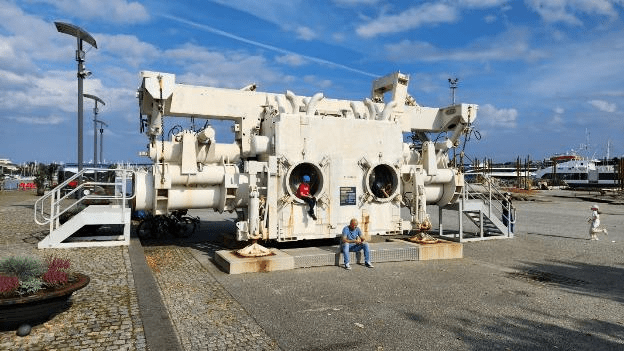
This old “hole opener” is out front too and you can see the monolithic museum building behind Patti in this picture.
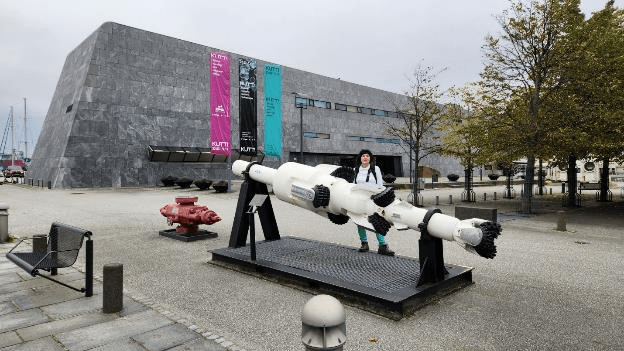
And here’s me with what is said to be the largest drill bit in the world.
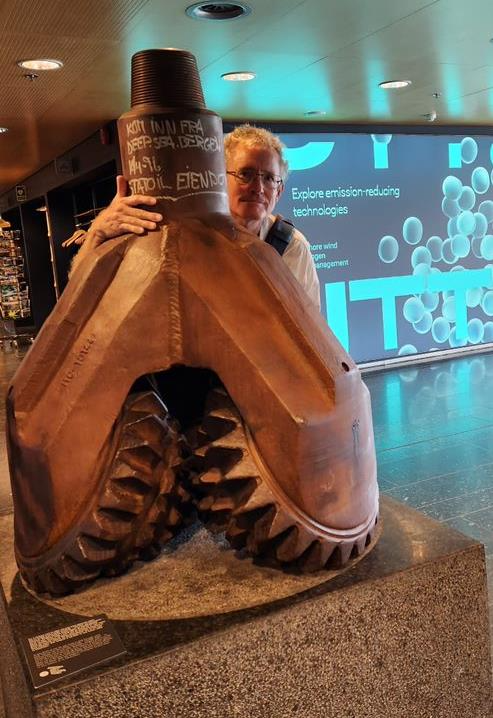
It turns out this is a free day at the museum, so instead of paying $15 USD each it was gratis. There was a lot of information about the Norwegian petroleum industry. This was a long wall with a timeline of the industry from which we learned a lot.

To summarize, in the 1960s Norway decided to try to find oil on their continental shelf. In the 1970s they found oil and started pumping it. In the 1980s Norway was getting rich off oil. In 2020 Norway was the 4th richest country per capita in the world. They’ve found a lot of oil and gas deposits and expanded their undersea territory through various treaties and have made a lot of innovations in how to better get the oil out from beneath the sea floor. The government has, over the years, tried to structure the oil industry so it will do the most good for Norwegians.
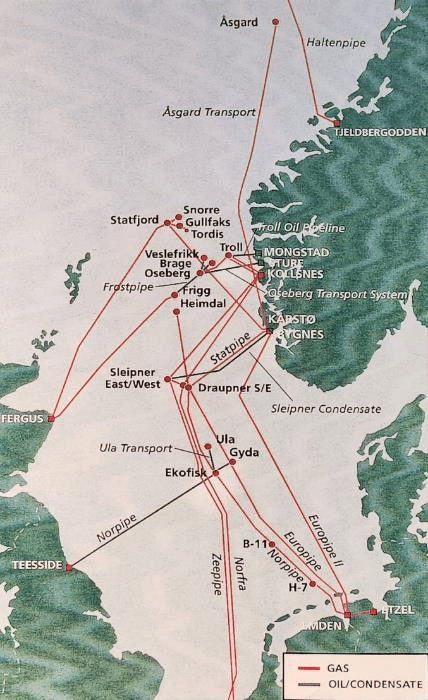
This picture shows how they’ve run many hundreds of miles of pipelines under the ocean to deliver oil and gas to Europe and the UK. I had not idea that there were undersea pipelines.
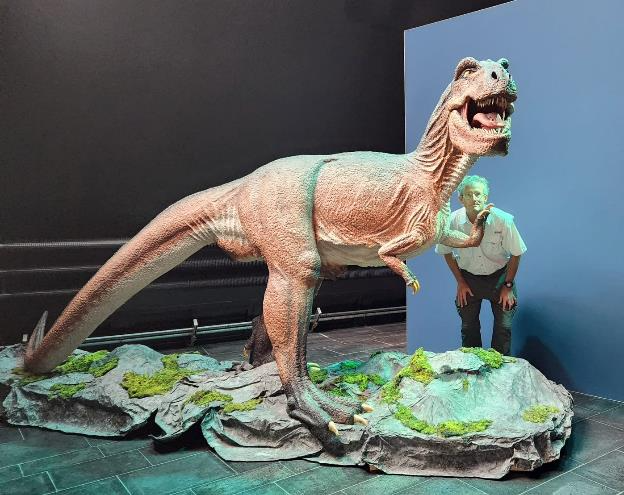
This doesn’t have anything to do with oil but there was a dinosaur replica, probably a young Allosaurus, that I got my picture with, I just couldn’t resist.
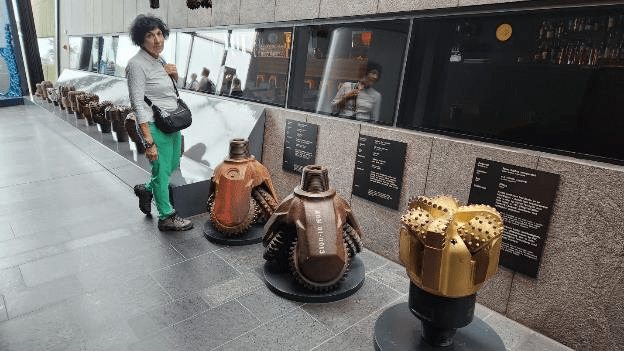
Here’s Patti with a lineup of drill bits.
These display cases had small models of the various methods of getting oil as they evolved through the decades, it was really interesting.
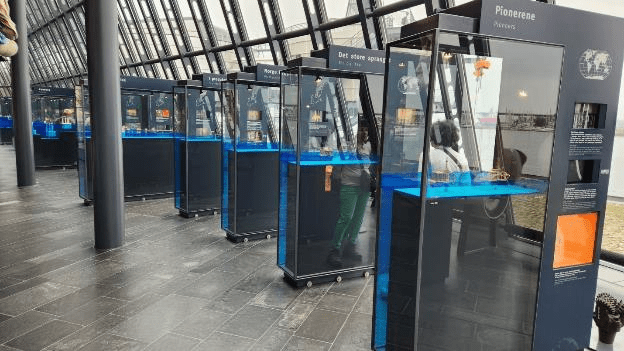
Here’s a closeup of one of them.
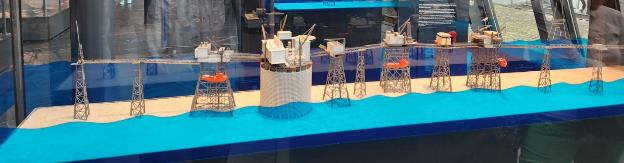
They also had larger scale models of some of the platforms.
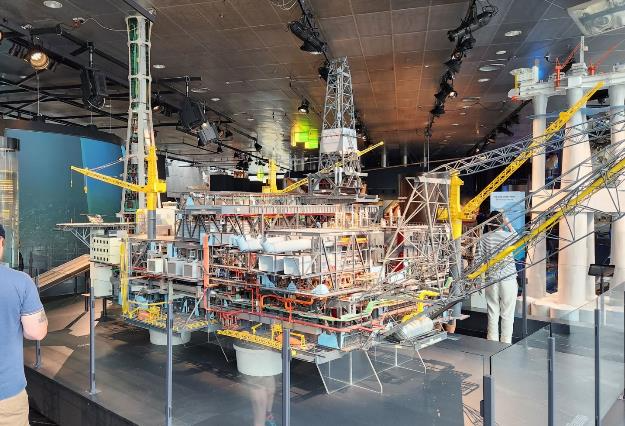
This model was built in 1978 to assist the detailed design of Statfjord B platform.
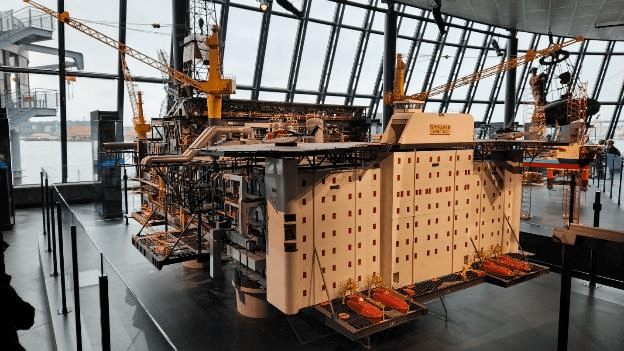
There were also models of some of the support ships that they use.

Here’s a model of one of the newer platforms, Troll A.
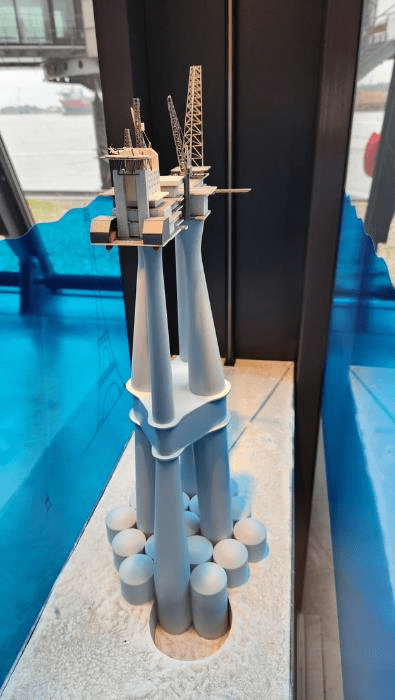
“Troll A is the tallest structure ever moved. It measures 472 meters from its concrete skirts to the tip of the flare stack. It is designed to stand on Europe’s largest producing offshore gas field for 70 years.”
There was a nice restaurant at the museum and we had lunch there when we got hungry. I had the Fish Soup and a salad and Patti had a burger and fries.
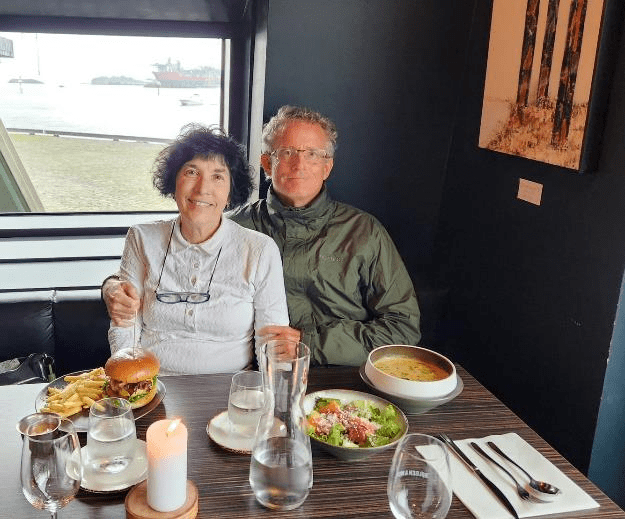
It was fancier and more expensive than places we usually eat, but we figured it was our anniversary meal. It cost about $70 USD and was very tasty.
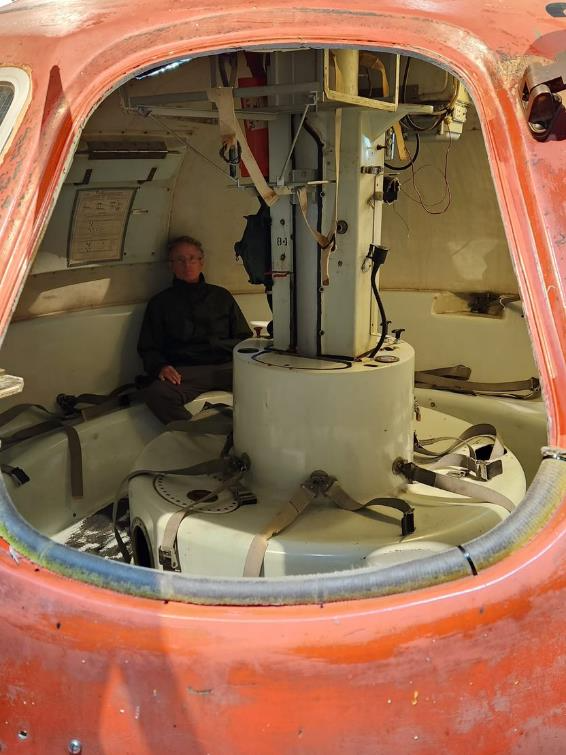
After lunch we continued on through the museum and I liked this escape pod they could launch from an oil platform.
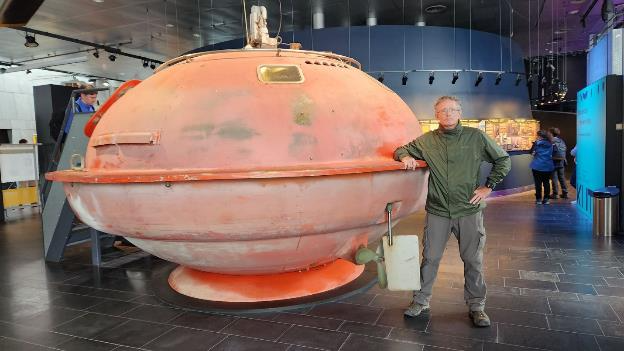
It seats 28 people and has its own propulsion and rudder. It was pretty roomy inside.
It was a fascinating museum and we were glad we’d gone. Here’s a few more Norwegian oil facts.
“Norway is a small player in the global crude market with production covering about 2 per cent of the global demand. Norwegian production of natural gas covers approximately 3 per cent of global demand, however, as an exporter Norway is a significant player. Norway is the third largest exporter of natural gas in the world, behind Russia and Qatar. In recent years, Norway has supplied between 20 and 25 per cent of the EU and United Kingdom gas demand. Nearly all oil and gas produced on the Norwegian shelf is exported. Combined, oil and gas exceeds half of the total value of Norwegian exports of goods. This makes oil and gas the most important export commodities in the Norwegian economy.”
Norway invests their oil income and gives it to Norwegian citizens as a pension or welfare.
“The Government Pension Fund Global, also known as the Oil Fund, was established in 1990 to invest the surplus revenues of the Norwegian petroleum sector. In September 2023, it has over US$1,477 billion in assets, and held 1.4% of all of the world’s listed companies in 2019, making it among the world’s largest sovereign wealth funds. In December 2021, it was worth about $250,000 per Norwegian citizen. It also holds portfolios of real estate and fixed-income investments. Many companies are excluded by the fund on ethical grounds.”
I thought it was refreshing to see a country with extra income investing it for the good of their citizens.
A few more interesting facts about Norwegian energy:
- Norway exports 95% of the oil and gas it produces.
- Hydropower regularly accounts for more than 90% of total Norwegian power production, with the small remainder made up by thermal and wind.
- Norway encourages citizens to buy electric cars.
- The Norwegian fleet of plug-in electric vehicles is the largest per capita in the world.In December 2016, Norway became the first country where five in every 100 passenger cars on the road were plug-in; attained 10% in October 2018, and reached 25% in September 2022.
- The fleet of electric cars is one of the cleanest in the world since about 98% of the electricity generated in the country comes from renewable energy sources, mainly hydropower.
- In 2016, through its National Transport Plan 2018–2029 (NTP), a goal was set for all sales of new cars, urban buses and light commercial vehicles by 2025 to be zero emission vehicles.
One issue I see is that, although Norway is quite a “green” country, using almost all renewable and non-polluting energy sources, they make a huge amount of money selling oil and gas to other countries. Those other countries then use the Norwegian oil and gas to pollute the atmosphere. Obviously Norway enjoys the tons of money they make from selling oil and gas and don’t want that income to stop, but they also make a big show of wanting to reduce carbon emissions and otherwise “save” the ecosystem. At some point are they going to decide to reduce or stop their oil income in order to be more environmentally friendly? Even though that would make them a much poorer country?
After the museum we walked back home and saw more interesting wall murals like this one.
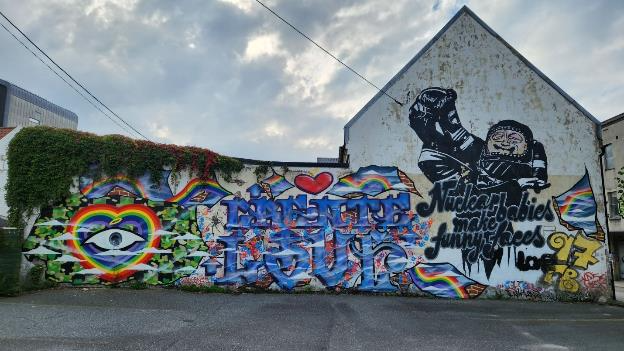
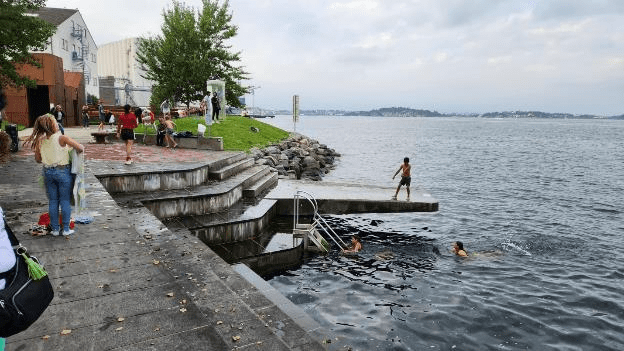
And we walked by a swimming area. We’ve talked about swimming in the fjords and have felt the chilly water with our hands. So far, however, we’ve not taken the plunge.
When we got home we finished up a little laptop work then relaxed. Tomorrow we’re taking the bus to Bergen.
 2024 TRAVEL TALES