This travel update is part three of our one-week stay in Trondheim, Norway. It covers September 2 – 3. “Any text in quotes and Italics has been copied and pasted from some informational website like Wikipedia.”
September 2, 2023 – Saturday: Nidaros Cathedral
We planned to go to the Cathedral and museum complex yesterday, but beginning September 1, they begin “winter hours” and now close at 3pm, so we went there today. On the way we saw signs for a road race, and then began to see the runners. It turns out that today is the day for the Trondheim Marathon.
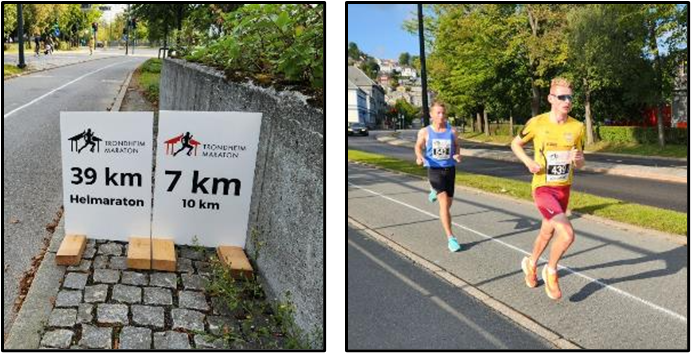
“Trondheim Marathon is Norway’s oldest marathon, and is held every autumn. The main focus for Trondheim Marathon is public health and they emphasize being an event for everyone from 0-99 years of age. The event includes everything from the Children’s Mini Marathon, 5 km, 10 km, half marathon and full marathon, to the Family Relay, Team Marathon and the Trondheim Trippelen. In 2019, there were a total of 7,700 participants. The course is almost flat and mainly runs on asphalt in the center of Trondheim. The full marathon consists of four laps and there is a lot of entertainment and life along the entire course.”
I tend to be a grumpy old man about races like these that close off streets in downtown areas and make it hard or impossible to get around the popular areas of a city on race day. The Flying Pig Marathon in Cincinnati was particularly heinous for me because I was almost late one Sunday morning to a gig as church music director when my regular route to church was closed and I had to take a different and longer way to get there. So, when I saw the runners today, I mentally prepared for difficulties getting where we wanted to go. Fortunately, getting to our destination wasn’t too difficult. The race was routed on some sidewalks that we needed to walk on, but we were able to just get over to the side when runners went by. Race Officials in yellow vests waved to us to get off the sidewalk when necessary.
We arrived at the ticket desk at the cathedral gift shop around 9:30 and bought the combination ticket for three venues, the Cathedral, the Crown Jewels, and the Palace Museum. The tickets were about $24 USD each.
The Cathedral was very nice, rivaling, in my opinion, the biggest ones we’ve seen in other European cities.
“Nidaros Cathedral is a Church of Norway cathedral located in the city of Trondheim in Trøndelag county. It is built over the burial site of King Olav II (c. 995–1030, reigned 1015–1028), who became the patron saint of the nation, and is the traditional location for the consecration of new kings of Norway. It was built over a 230-year period, from 1070 to 1300 when it was substantially completed. However additional work, additions and renovations have continued intermittently since then, including a major reconstruction starting in 1869 and completed in 2001. In 1152, the church was designated as the cathedral for the Catholic Archdiocese of Nidaros. In 1537, during the Protestant Reformation, it became part of the newly established state Church of Norway. It is the northernmost medieval cathedral in the world.”
The western façade is the most famous side. It has lots of statues of saints and other biblical characters in recessed niches.
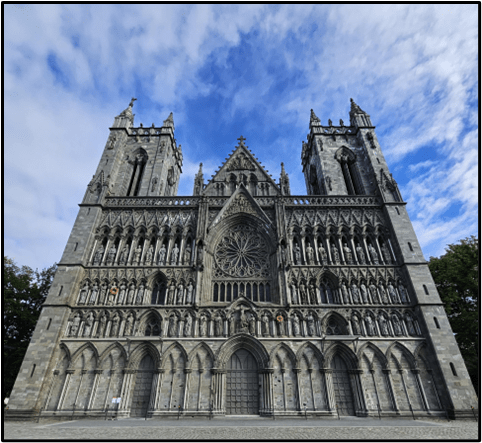
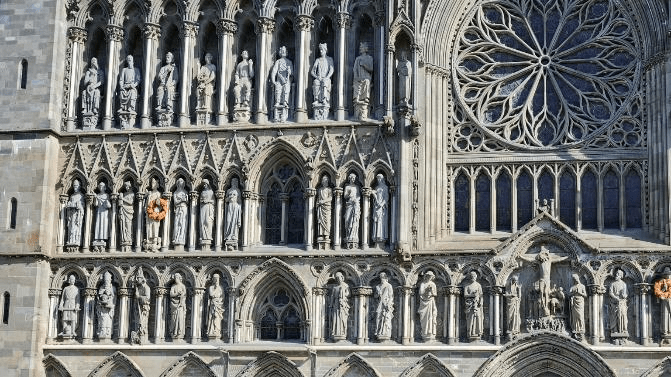
Here’s a closer view of the left side so you can see some of the statues.
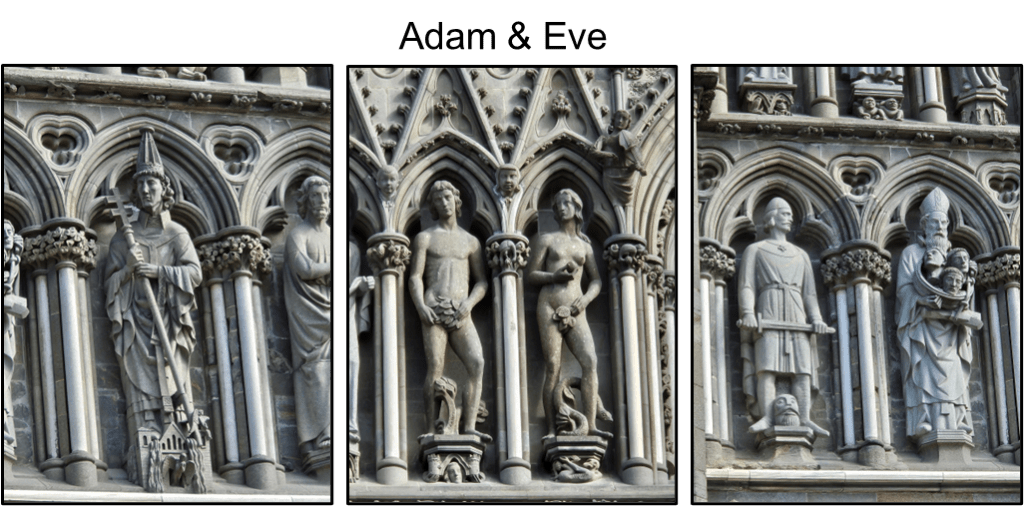
Below are close-up pictures of some statues, including a naked couple using leaves to hide their private parts — it looks as though serpents are slithering under their feet, and the female is holding an apple!!!
The inside of the Cathedral is huge with the typical arches and ribbed, vaulted ceilings.
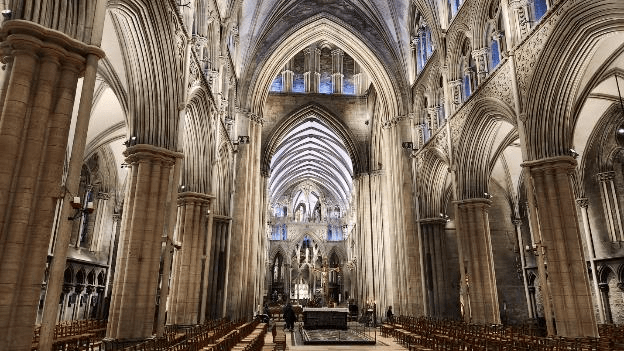

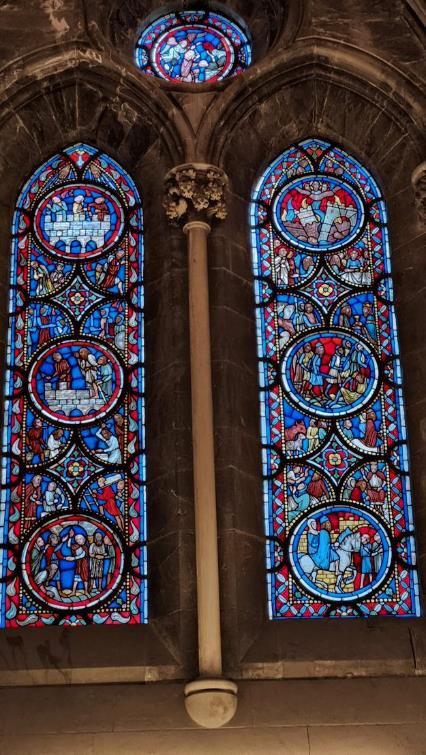
The Cathedral is known for its hundreds of stained-glass windows.
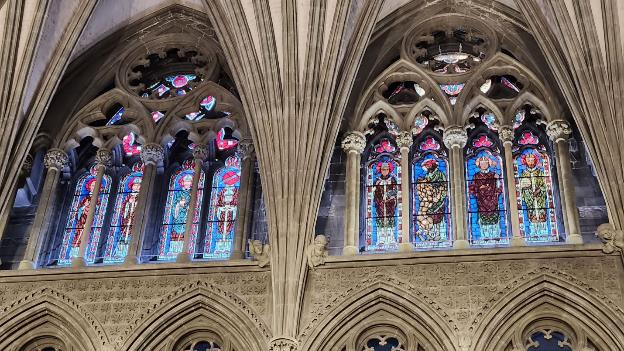
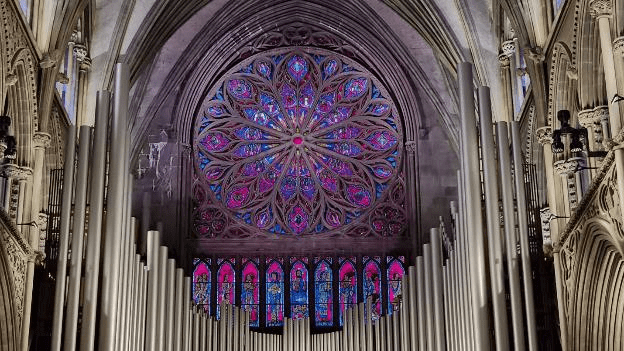
Here’s the rose window with saints underneath (stained glass windows) and framed at the bottom by the big organ pipes.
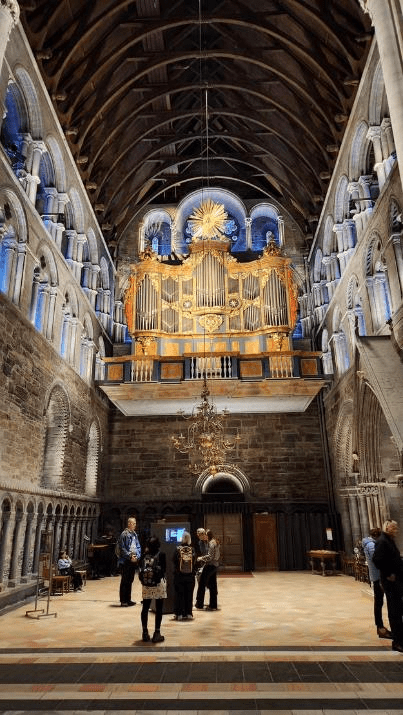
The north side of the transept had an older Baroque organ that was recently restored. It’s finished in gold and was brightly lit.
This niche was interesting. The decoration is made of oiled Birch wood and was done by a Sámi artist in the traditions of the Sámi people.
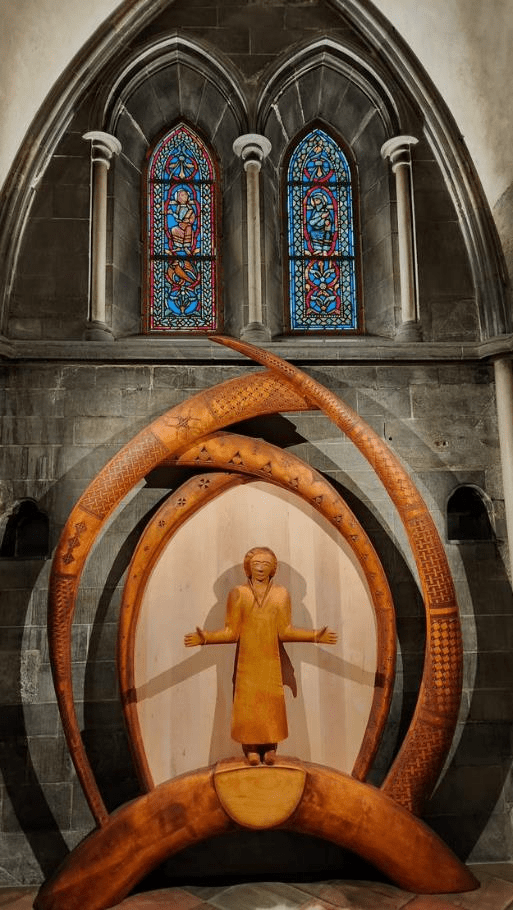
The Sámi are considered to be the indigenous people of Norway.
“The Sámi are the traditionally Sámi-speaking people inhabiting the region of Sápmi, which today encompasses large northern parts of Norway, Sweden, Finland, and of the Kola Peninsula in Russia.”
After our visit to the Cathedral, we went next door into the Archbishop’s Palace where the Crown Jewels are held. We went to see the Crown Jewels first. They are in the basement in rooms with low vaulted ceilings.
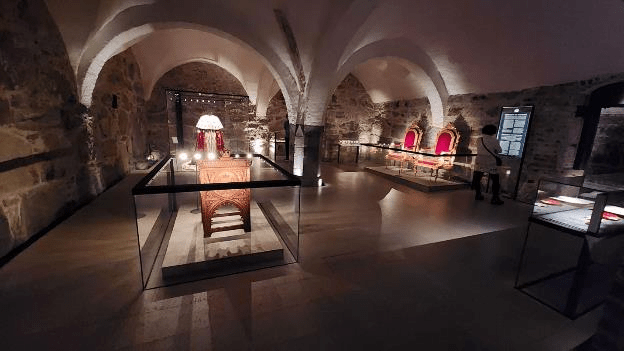
Here are the crown, scepter and orb of the King of Norway.
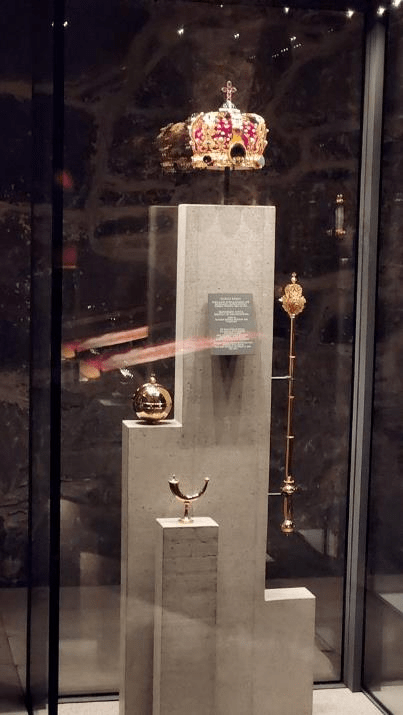
The room also had the King’s sword, the Queen’s crown, and the Prince’s coronet. Everything was very shiny and studded with jewels. There was some information about how these things are used at coronations, but most of the time they’re on display here.
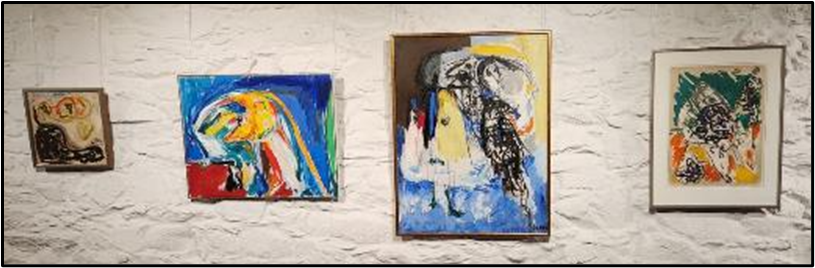
The upper floor of this museum had artwork by a Danish artist named Asger Jorn.
Asger Oluf Jorn (3 March 1914 – 1 May 1973) was a Danish painter, sculptor, ceramic artist, and author. He was a founding member of the avant-garde movement COBRA and the Situationist International. He was born in Vejrum, in the northwest corner of Jutland, Denmark, and baptized Asger Oluf Jørgensen.
I don’t understand contemporary art very well, but these paintings were colorful.
Next, we went into the Palace Museum which has lots of artifacts from the Archbishop’s Palace from centuries past.
The Archbishop’s Palace in Trondheim (Norwegian: Erkebispegården i Trondheim) is a castle and palace in the city of Trondheim, located just south of the Nidaros Cathedral. For hundreds of years, the castle was the seat, residence, and administrative center of the Archbishop of Nidaros. The castle is one of the largest medieval stone structures in Scandinavia and the oldest walls are likely from the 13th century. The Archbishops of Nidaros expanded the castle gradually, with great halls and residential areas being built over time. Norway’s last Archbishop, Olav Engelbrektsson, attempted to make a final stand and defend the castle during the Reformation but eventually fled into exile.”
I got this picture of the palace seen from the air, off the internet. It is arranged in a quadrangle, has orange roofs, and is right next to the cathedral.

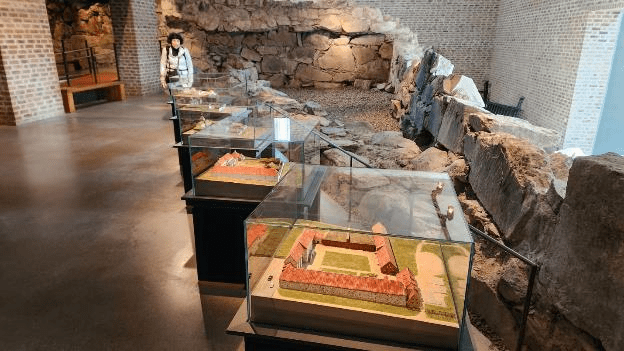
Numerous archaeological excavations beneath the Bishop’s Palace have taken place throughout the years. During the 1990s, 120 archaeologists from 12 countries uncovered approximately 160,000 finds / artifacts, including the foundations of over 100 buildings. In the basement area are exposed walls from several different periods, along with models of the palace as it was built and re-built over the centuries.
I liked this drinking horn that belonged to Aslak Bolt in the 15th century.
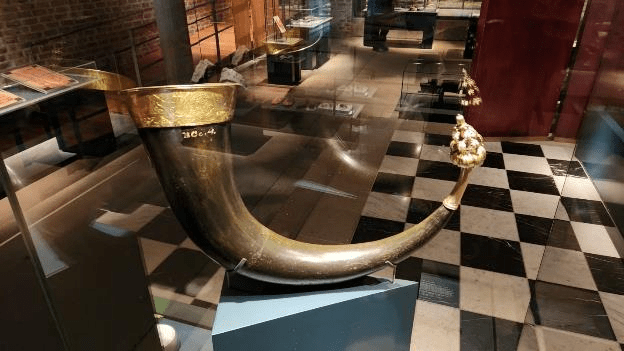
”Aslak Harniktsson Bolt (c. 1380 – 1450) was a 15th-century Norwegian priest who served as Archbishop of the Nidaros. His parents were Harnikt Henningsson and Sigrid Aslaksdatter Bolt. His mother was a member of a Norwegian noble family. He served as archbishop of Nidaros from about 1427 to 1450. He is most known for his detailed register of properties and incomes of the archdiocese, commonly known as Aslak Bolt’s cadastre (Aslak Bolts jordebok) from 1432 to 1433. The properties listed included thousands of farms, and the survey has been an important and primary historical source from the period.”
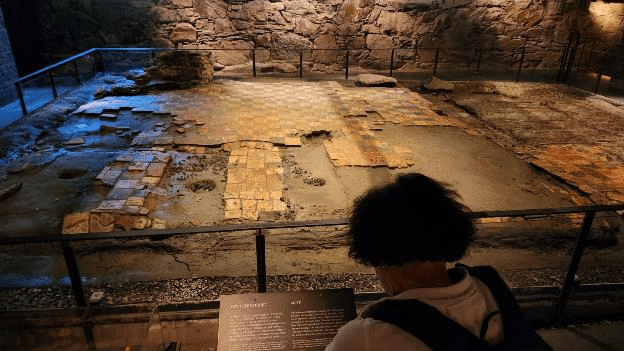
They uncovered a workshop that was a mint that I thought was interesting. Here’s the model of it as it probably looked when in operation.
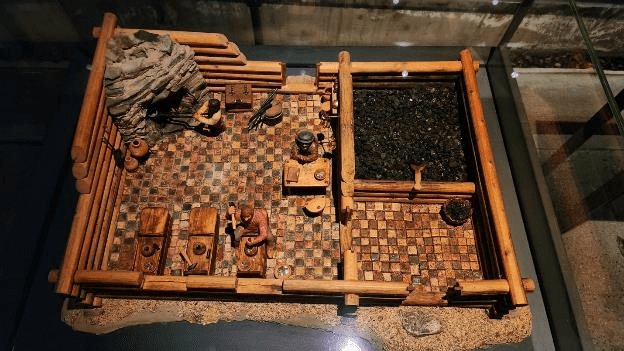
Shown below is what archaeologists uncovered. I read that the tile floor was expensive back then. It was constructed around the year 1500 and was used for about 20 years.
The original St. Denis statue is in the museum. We saw a recent recast of this statue up on one of the niches of the Cathedral façade several days ago and mentioned to each other how striking it was to see that he was holding his head in his hands. I’ve not heard of this saint before and I thought it was a curious thing. Below are pictures of the original statue along with its replacement currently located on the Cathedral façade.
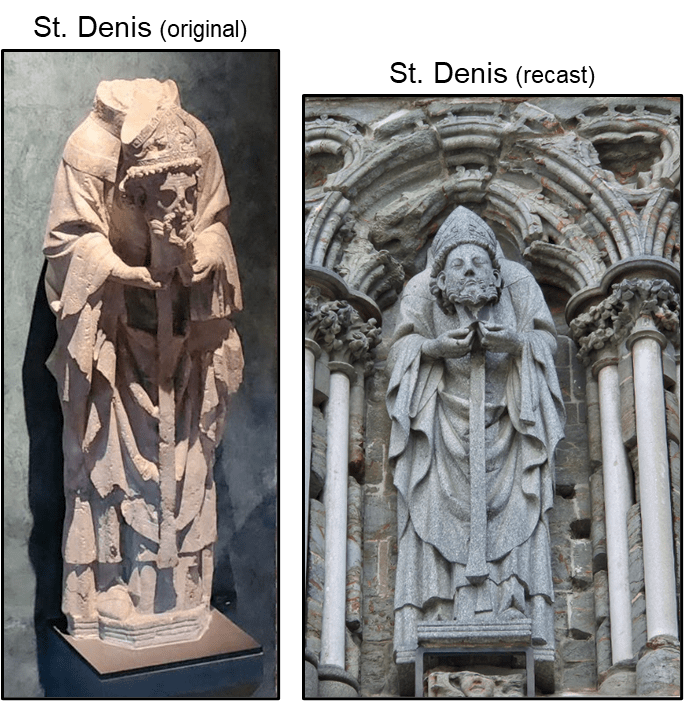
“Denis of Paris was a 3rd-century Christian martyr and saint. According to his hagiographies, he was bishop of Paris (then Lutetia) in the third century and, together with his companions Rusticus and Eleutherius, was martyred for his faith by decapitation. Denis is the most famous cephalophore in Christian history, with a popular story claiming that the decapitated bishop picked up his head and walked several miles while preaching a sermon on repentance. He is venerated in the Catholic Church as the patron saint of France and Paris and is accounted one of the Fourteen Holy Helpers.”
That’s a new word for me, I think it stimulates my sense of the macabre.
“Cephalophore: a saint who is generally depicted carrying their own severed head. In Christian art, this was usually meant to signify that the subject in question had been martyred by beheading.”
I learn something new every day.
The museum was interesting and we ended up watching a 40-minute video that talked about the palace over the centuries.
After the museum we walked back into the church for a few minutes to see some things we just learned about. One of them was this small stone statue of a mason who has not yet inserted the last brick into a wall. It is located in a hard to see and nearly hidden place on the side of the right Cathedral tower. It took us quite a while to locate this statue — again, it is very well hidden. I retrieved the picture on the left off the internet. Patti was able to capture the picture on the right.
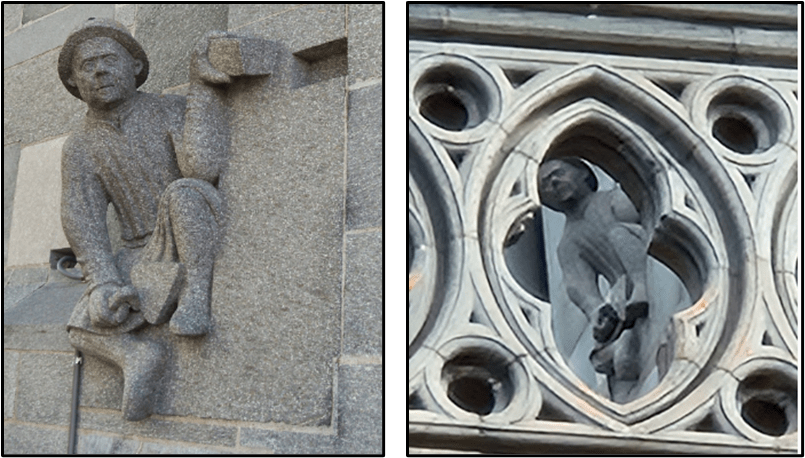
Here’s the story about it: “According to a prophecy of uncertain provenance, the cathedral will fall upon its completion. To avert such a brutal consummation of the long and arduous process of restoration and reconstruction, the petrified mason now holds the last brick in his hand, forever preventing the cathedral from being completed and thus – as the legend goes – keeping doomsday at a halt.”
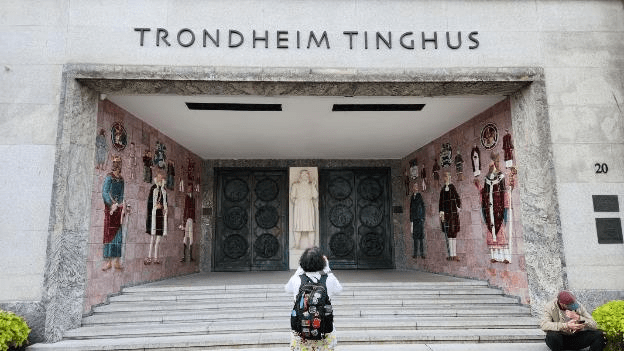
After we left the Cathedral complex, we walked north on a main street and passed the Trondheim Courthouse which had pretty decorations out front. Here’s Patti taking a picture of them.
The marathon race was still going on, believe it or not, but we were able to walk on the sidewalk without problems. At the main square they had TV cameras and people talking on PA systems. There were lots of runners going by.
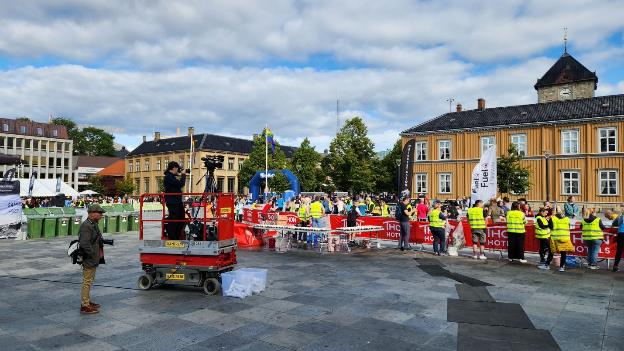
One girl was watching the race while sitting on a bronze reindeer statue.

We picked up some provisions from a grocery store on the way home because tomorrow is Sunday and many groceries and shops are closed on Sunday in Norway. Now we have enough food for Sunday and Monday morning.
September 3, 2023 – Sunday: Another Hamburger Restaurant
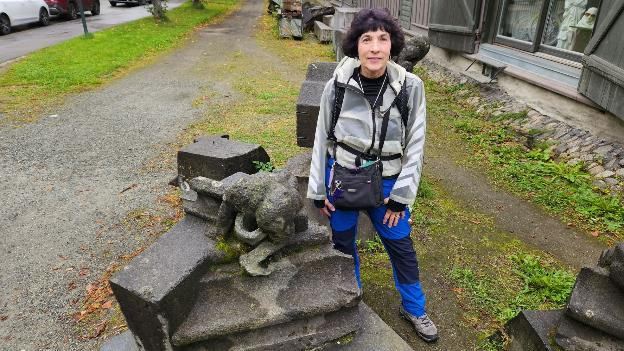
Patti eats a lot of hamburgers, sometimes it seems as though she eats several burgers in a week. Today she wanted to try Superhero Burger which is in the Trondheim shopping mall. At lunchtime today we walked down there. On the way we walked by a building where it looks like they’re keeping some of the statues and plaster casts from the Nidaros Cathedral that we visited yesterday. I got this picture of Patti with one of the downspout statues. I don’t know if you can see it well in the picture but it’s in the shape of a naked person who looks like they are defecating into the downspout output. Patti wore her recently purchased high performance hiking pants (made in Norway) today.
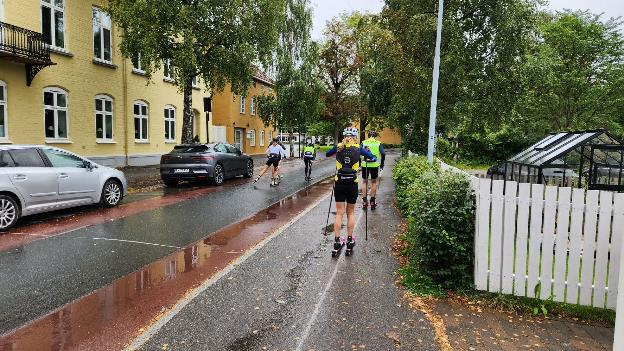
We also saw another group of people on roller skis. We’ve read that this is a good way to stay in shape for snow skiing, when there is no snow. They were moving fast, they zoomed by us and it looked like they were working hard.
Also along the way we saw this modern house with a sod roof.
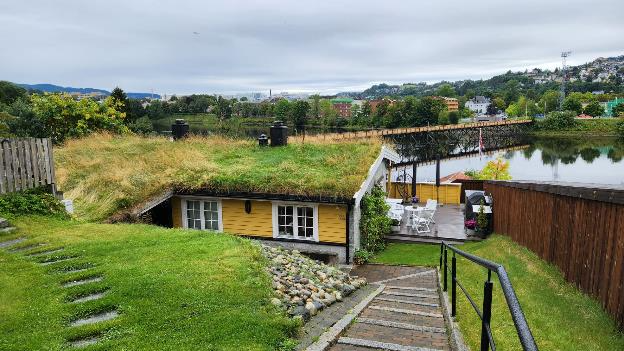
We’ve seen quite a lot of sod roofs in Norway, mostly on the older houses in outdoor folk museums but also on newer houses.
“A sod roof, or turf roof, is a traditional Scandinavian type of green roof covered with sod on top of several layers of birch bark on gently sloping wooden roof boards. Until the late 19th century, it was the most common roof on rural log houses in Norway and large parts of the rest of Scandinavia. Its distribution roughly corresponds to the distribution of the log building technique in the vernacular architecture of Finland and the Scandinavian peninsula. The load of approximately 250 kg per m2 of a sod roof is an advantage because it helps to compress the logs and make the walls more draught-proof. In winter the total load may well increase to 400 or 500 kg per m2 because of snow. Sod is also a reasonably efficient insulator in a cold climate. The birch bark underneath ensures that the roof will be waterproof.”
Below is a picture of the layers of a sod roof.

I’m pretty sure you can get a sod roof on your house in Norway today. We’ve read that it’s a little more expensive than a shingle roof but does have the advantage of absorbing about 50% of the rain that falls on it.
When we got to the restaurant we each got a burger, not surprisingly. Here’s Patti with our food.
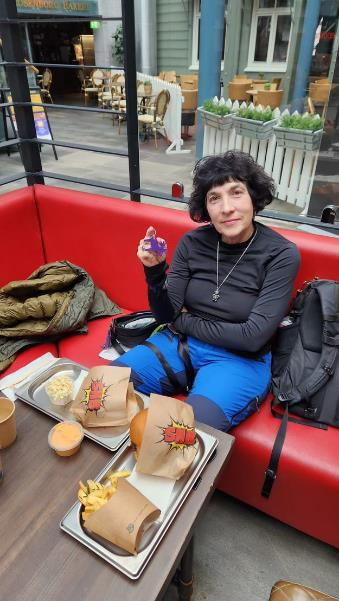
The mall was closed today because it’s Sunday. We’ve seen that most places in Norway are closed on Sundays. But this restaurant has an outside entrance off the street. Patti said her burger was good. The menu had the story of the restaurant.
“Superhero Burger was founded in 2014 with a mission to rescue fast food lovers from bland, frozen burgers. Over the past decade, we have successfully sold over 1 million flavorful and fresh burgers, made with all meats and salads sourced from Trondelag and eggs from local suppliers. All of our mayonnaise is made in-house, approximately 400 liters per week, and our meat is also ground in-house to ensure maximum freshness and taste. Despite facing challenges from larger corporations, we have held strong in our commitment to revolutionizing the burger game in Norway. We are proud to have overcome a major legal battle to keep our name and we have emerged as a survivor of the Covid-19 pa ndemic. As we approach our 10-year anniversary, we are excited for what the future holds. To our loyal customers, thank you for your support. Without you, we wouldn’t be where we are today.”
It’s funny how hamburgers seem to be popular wherever we are in the world.
It was a drizzly day so after lunch we just walked back home and did some work to prepare for our trip tomorrow when we fly from Trondheim to Stavanger. It pays to plan ahead, for example, our trip tomorrow will hopefully go like this:
1. Leave the apartment by 10:30 AM
2. Walk to the train station (about ½ mile)
3. Catch the 11:11 PM train to the airport
4. Buy train tickets from the conductor on the train
5. Arrive at the airport train station
6. Walk to the departures area
7. Check in, get boarding passes and check our bags
8. Go through security, go to the concourse, find our gate
9. Wait for the flight to board
10. Board the plane, sit and wait while the plane flies to Stavanger
11. Get off the plane, get our checked bags, walk to the airport shuttle bus stop
12. Buy bus tickets
13. Take the airport bus to the last stop in downtown Stavanger
14. Wait there for the #4 bus and take it to the Søilandsgate stop
15. Walk around the corner to our Airbnb and meet our host, Emilie
16. Emilie gives us the key and shows us where to take out the garbage
17. Get settled into the new place
18. Go to a nearby grocery store for provisions
19. Finish unpacking
Since we do all this planning ourselves, we have to know what all the train and bus routes are that we need to take, how to buy tickets, and what the schedules are, etc. That all takes time. I get the information from websites, travel guide books, travel blogs, Airbnb hosts, Google Maps, etc.
This evening we watched more episodes of “Ragnarok” on Netflix, it’s a Norwegian show about teenagers getting the superpowers of the gods.
 2024 TRAVEL TALES