This travel update is for our three-day stay in Stamsund, Norway. It covers August 20 – 22. “Any text in quotes and Italics has been copied and pasted from some informational website like Wikipedia.”
August 20, 2023 – Sunday: Driving to Stamsund
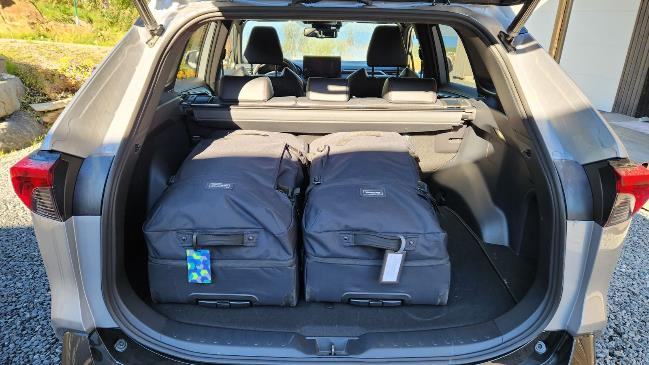
We got up pretty early this morning in Narvik and hit the road around 9AM. Our new Dakine 120 liter bags fit well in the back of our rental Toyota RAV4 plugin hybrid with room to spare.
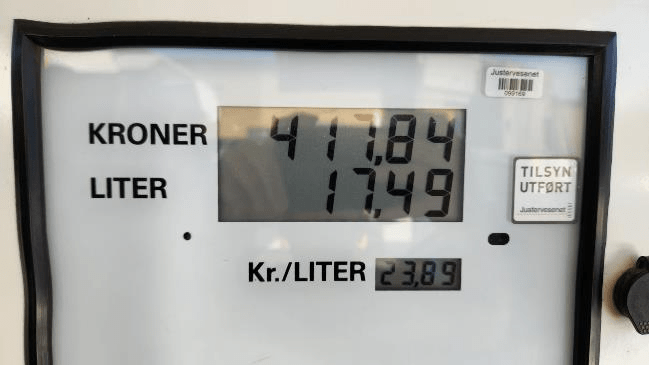
On our way out of Narvik I filled the RAV4 with gasoline. It turns out that gas is about $8.50 USD per gallon here! If my conversion arithmetic is correct. I was surprised because Norway has a lot of offshore oil fields and produces a lot of oil. I had thought that gas would be cheap here, but I didn’t do any investigation into it like I should have before we rented the car. So, it cost around $41 for about half a tank of gas.
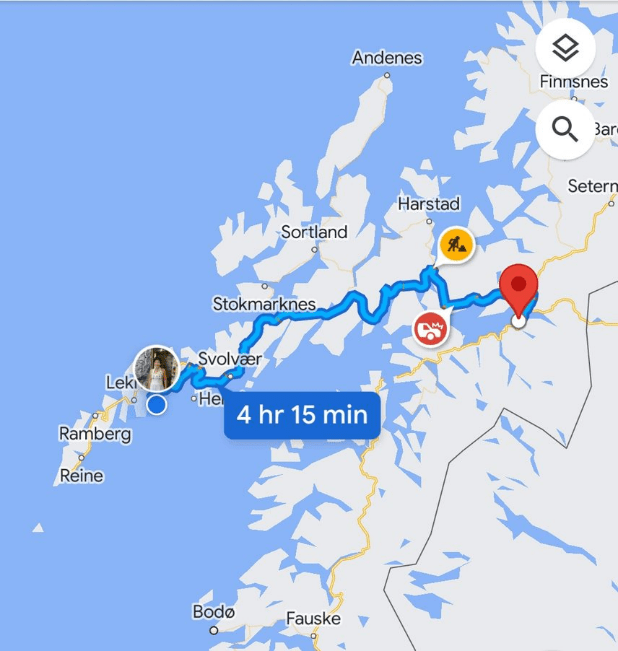
Our drive was mostly southwest, to Stamsund.
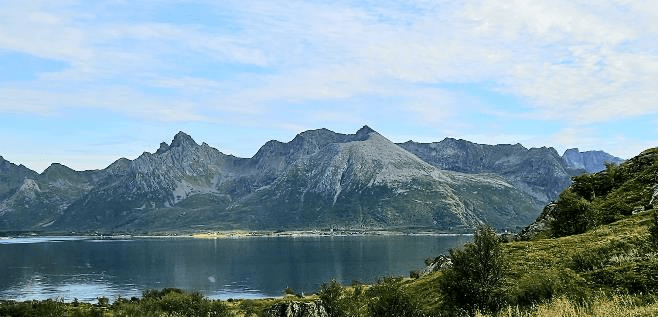
Patti took some nice pictures of the scenery along our route.
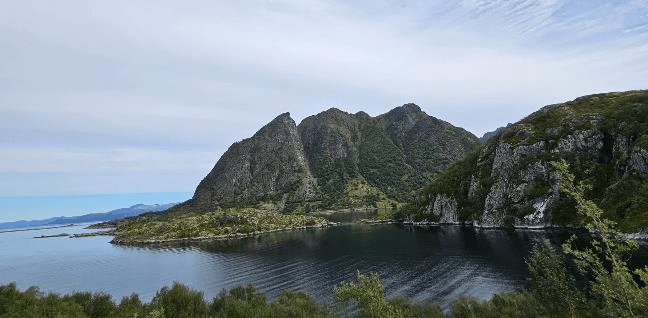
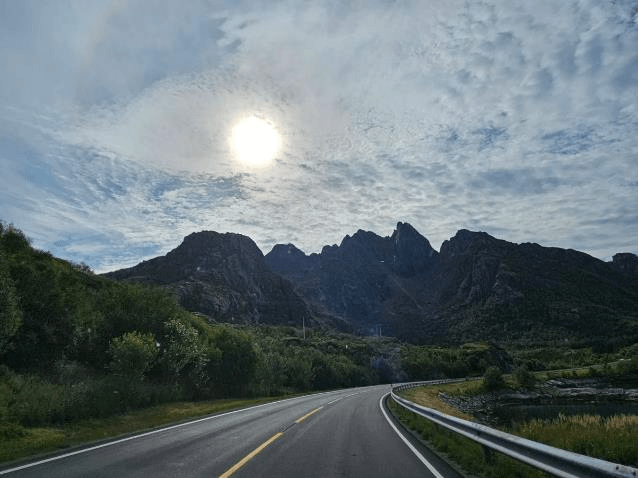
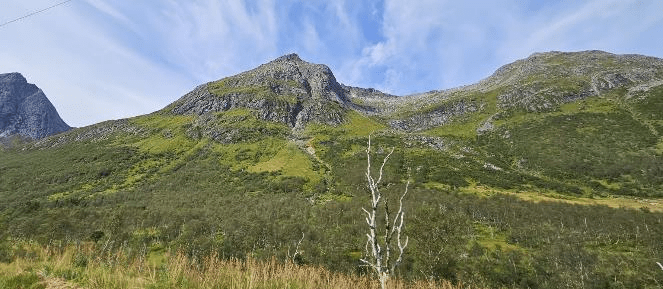
There were quite a few tunnels, one of them was 6 km long! That’s the longest tunnel I can remember being in.
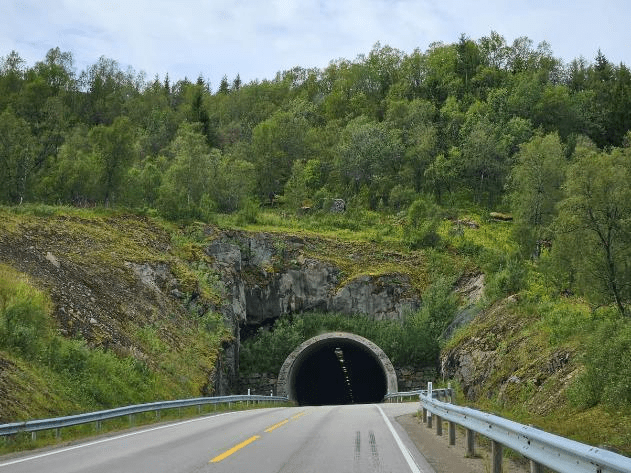
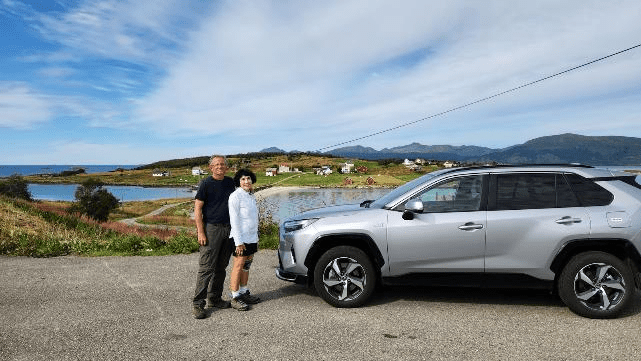
We stopped at a scenic view and another tourist took our picture. He is an American from New Jersey, and he and his wife were traveling in a rented campervan.
We stopped in Svolvær for lunch and went by the tourist info center there to get a pamphlet on things to do in the Lofotens.
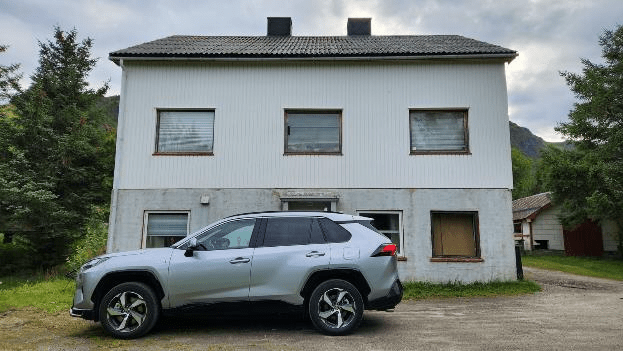
We got to our Airbnb in Stamsund around 5PM. We are in the lower floor of this building, and the host family lives in the upper level but they’re away on vacation right now.
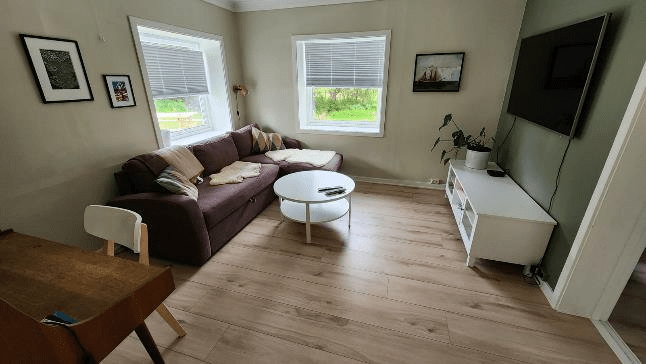
We have quite a bit of space, this is the living room.
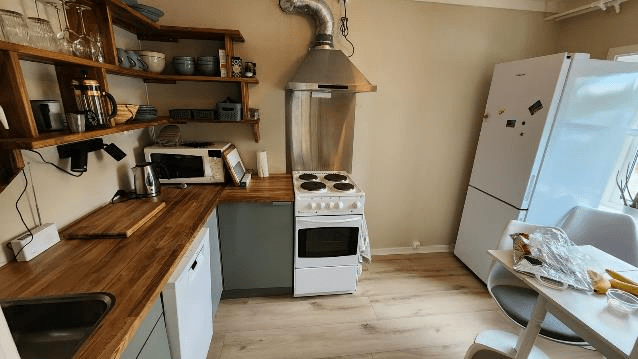
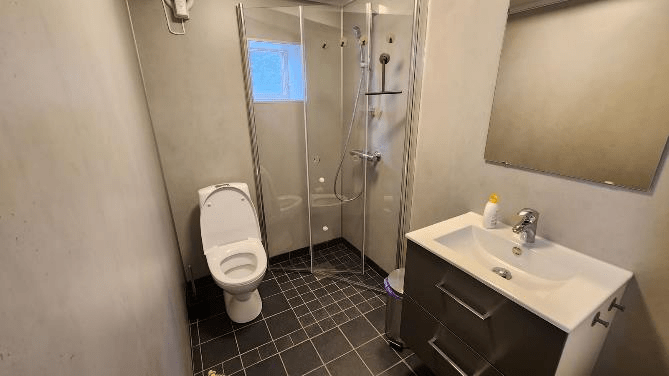
The kitchen and bathroom are roomy.
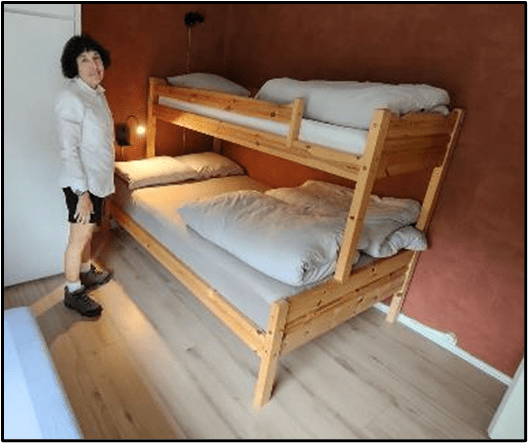
And we’ve got a bit of a strange bed. It’s a bunk bed with a double bed on the bottom and a single on the top.
Here is some information on the Lofoten Islands, where we are travelling around for the next 10 days.
“Lofoten is an archipelago and a traditional district in the county of Nordland, Norway. Lofoten has distinctive scenery with dramatic mountains and peaks, open sea and sheltered bays, beaches and untouched lands. There are two towns, Svolvær and Leknes. According to Robert M. D’Anjou and others: “There is evidence of human settlement extending back at least 11,000 years in Lofoten, and the earliest archaeological sites are only about 5,500 years old, at the transition from the early to late Stone Age.” Iron Age agriculture, livestock, and significant human habitation can be traced back to c. 250 BC.”
Here’s a map I found in a brochure showing the major islands of the archipelago.
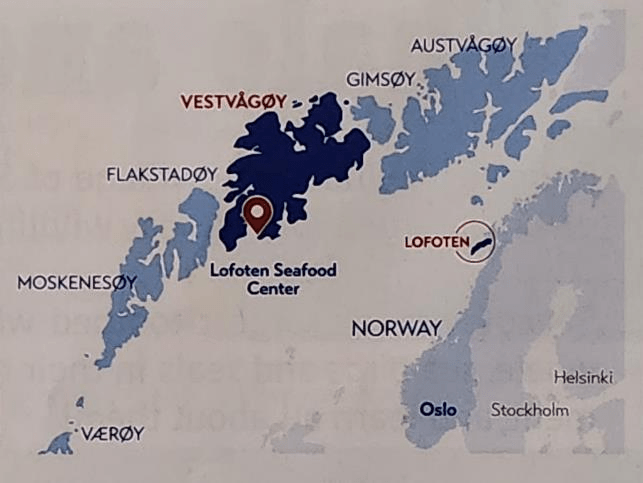
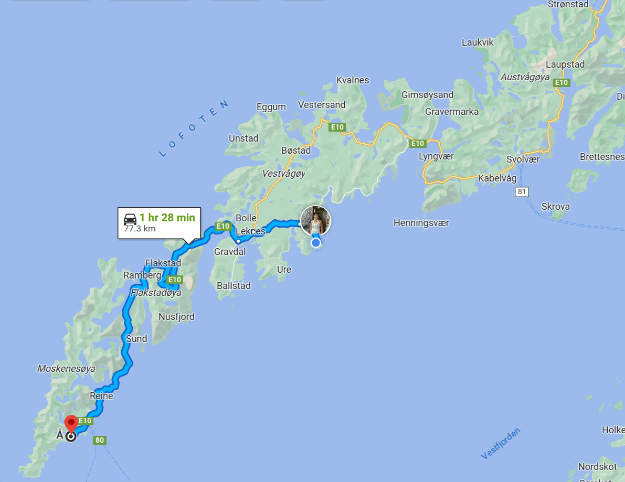
We are staying on Vestvågøy right now. Wednesday we move to Austvågøy. Today we drove west to Flakstadøy and Moskenesøy. We will see some of all the larger islands.
Here’s the Google map of today’s drive.
It was drizzling this morning when we got up and the drizzle continued as we got ready and drove out of Stamsund. The clouds were low on the mountains.
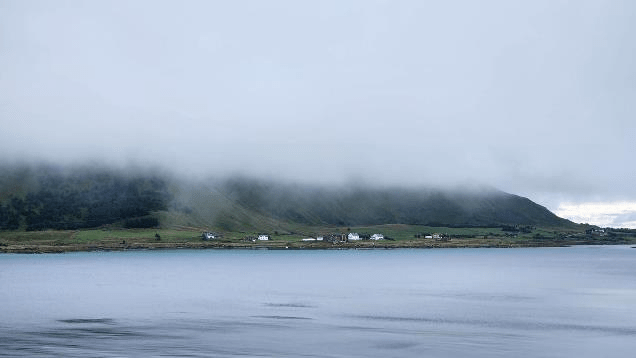
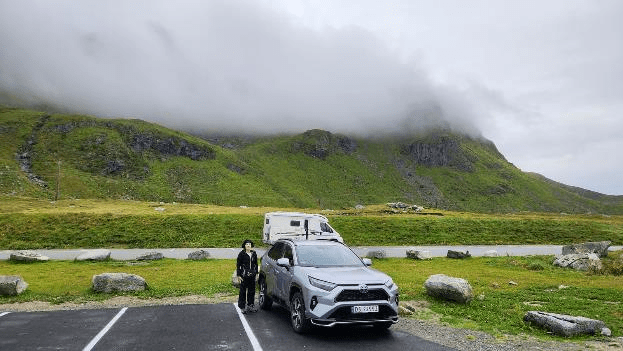
We stopped at the Coop Extra Grocery Store in Leknes to get food for lunch. Around 12:30PM, we found an area with a nice view to stop at to eat our lunch. It’s on the coast with a nice sandy beach and there were a lot of campervans. We parked in the lot and had this nice backdrop of clouds on the hill.
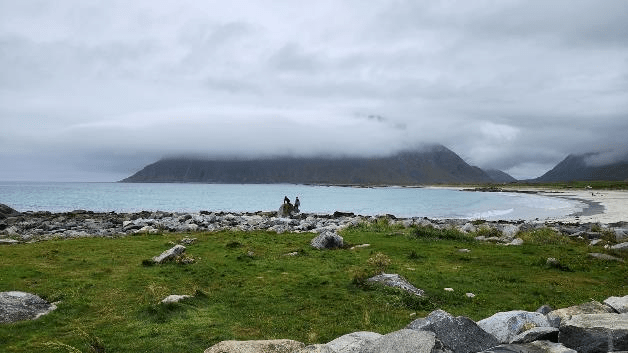
After we ate, we walked down to the beach. It’s a crescent-shaped white sand beach on the Norwegian Sea.
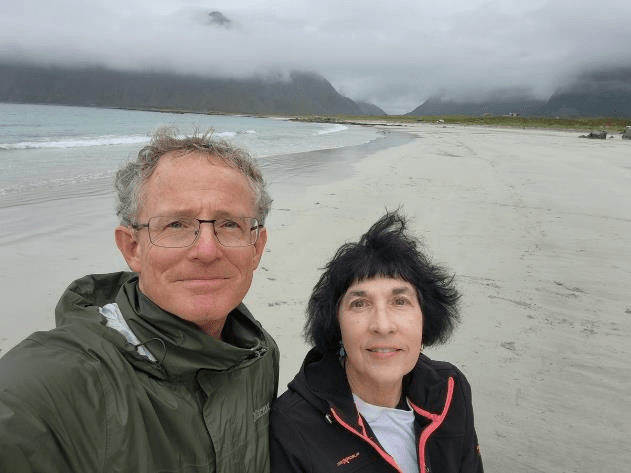
Here’s our selfie on the beach. We put our hands in the water and it was cold.
On our drive today we passed a lot of fish-drying racks. This is a big industry in the Lofotens.
“Every winter, huge numbers of cod, or skrei, migrate to Lofoten from the Barents Sea in order to spawn. This has provided a living for people in the region for almost five thousand years.
In other words, the Lofoten Fishery is an ancient livelihood. The fisheries eventually grew so big that they also became important for people far outside Northern Norway. In fact, over the past thousand years, the seasonal fishery has been of vital importance for the whole nation.
Following the history of cod makes for a fascinating journey through Norway’s history. Sagas, legislation and court records, old accounts and regulations dating back to the 11th century all paint a clear picture. It was the cod that gave us the power and money necessary to establish the church, an administration, monarchy and government and, eventually, our own parliament. The cod made it possible to build the nation stone-by-stone. Without it, people would not have settled in Northern Norway. Bergen, Ålesund and Kristiansund would never have come into existence.”
So, cod are a big deal here. I was confused because they sometimes call the cod skrei, but here’s the info on that.
“Skrei is young Arctic cod caught around the Lofoten and Vesterålen islands high up in the remote north-west of Norway. Its relative youth (the fish are typically 5-6 years old when caught) gives skrei its lean, firm texture.”
They dry the skrei on outdoor wooden racks like these.
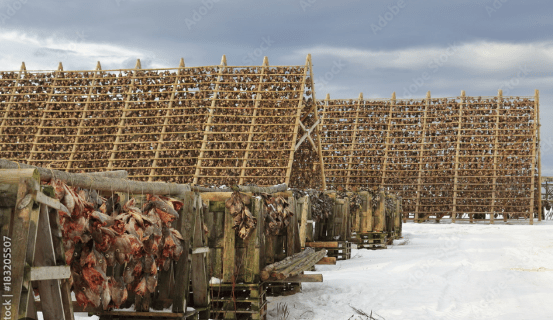
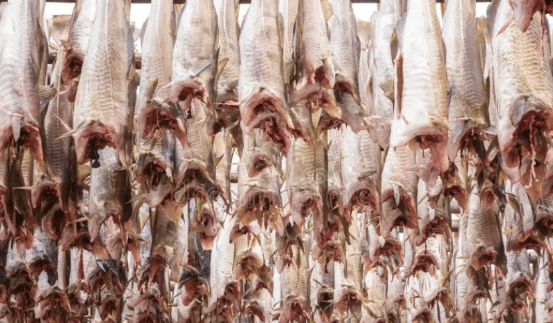
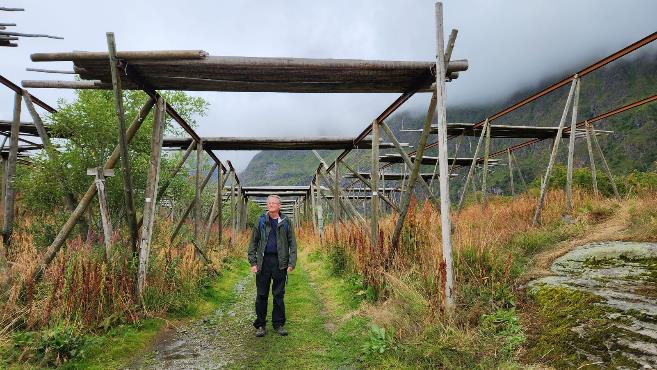
When we got to Å I got my picture with some fish drying racks. The season is over so there are no fish on them right now.
We walked down into Å which is a quaint fishing village that’s touristy now with museums and displays. I liked these fishing boats.
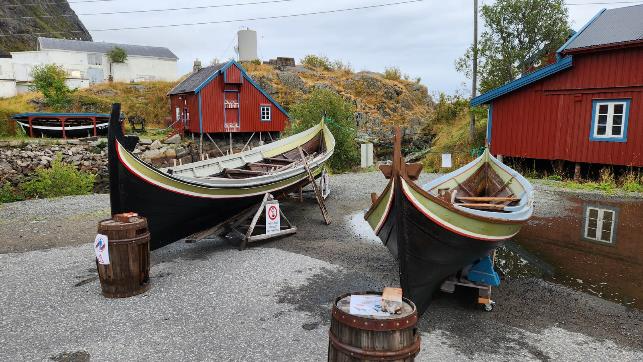
This was a nice view.
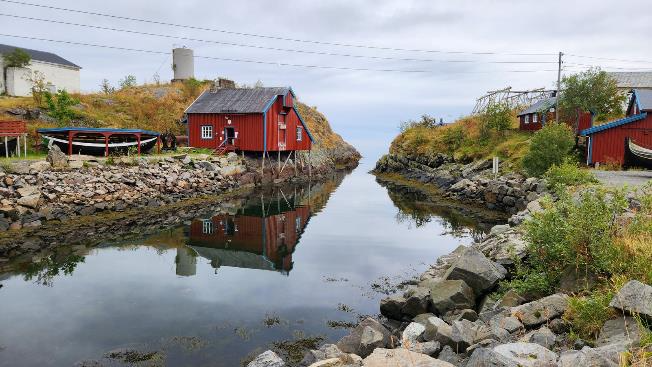
And here’s another one. The red colored cabins are called Rorbu, they are fisherman’s cabins.
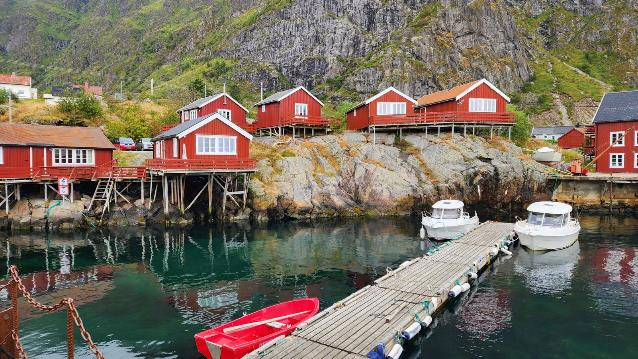
“Rorbu is a Norwegian traditional type of seasonal house used by fishermen, normally located in a fishing village. The buildings are constructed on land, but with the one end on poles in the water, allowing easy access to vessels.”
Patti decided to have some creamy fish soup at the restaurant on the wharf and she liked it!
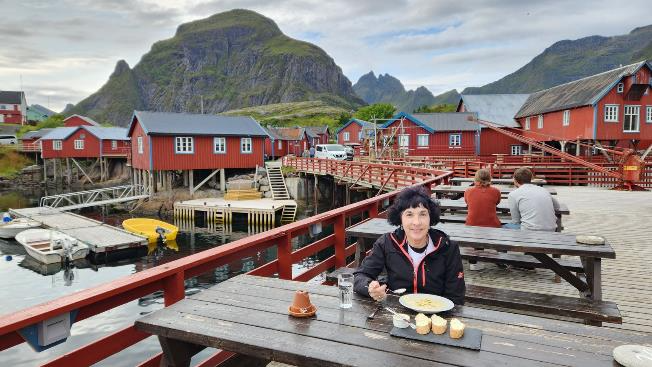
Here’s our selfie with the village of Å.
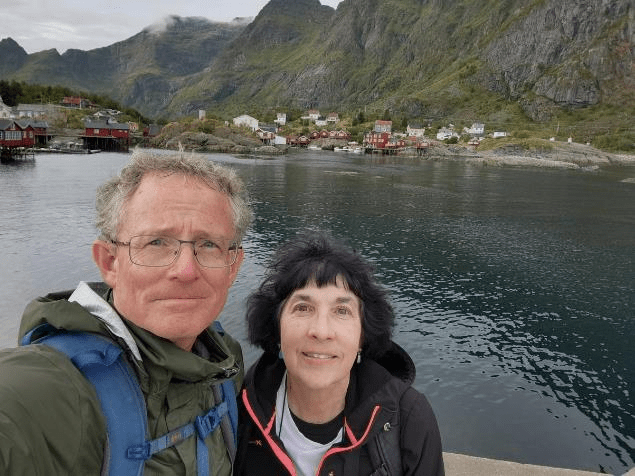
After Å we drove to Nusfjord, another recommended touristy fishing village. It looks about the same as Å.
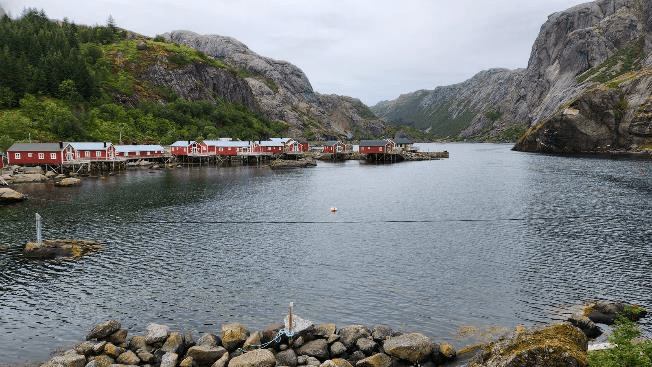
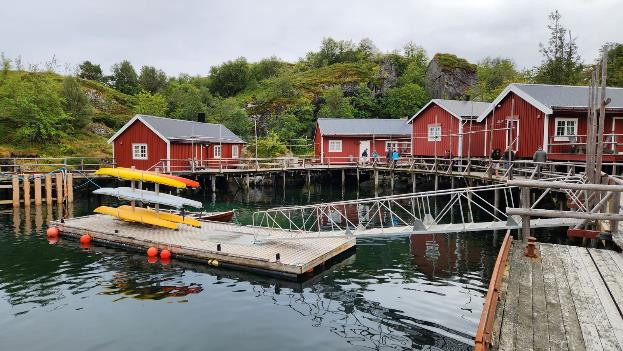
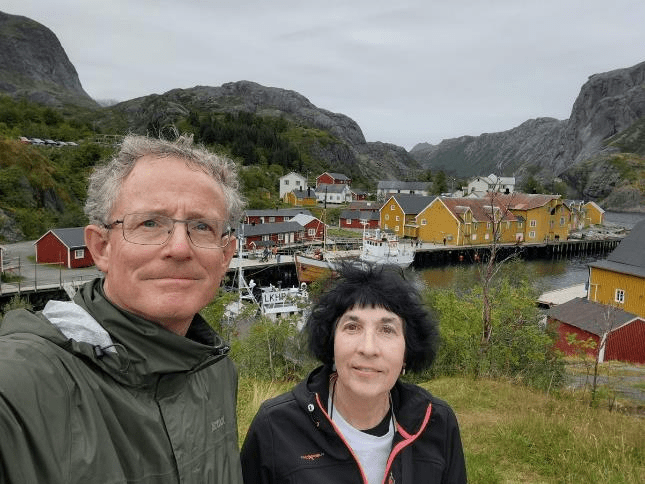
Here’s our selfie with Nusfjord.
After Nusfjord we drove back home. I stopped a couple of times to get some pictures of more beautiful scenery.
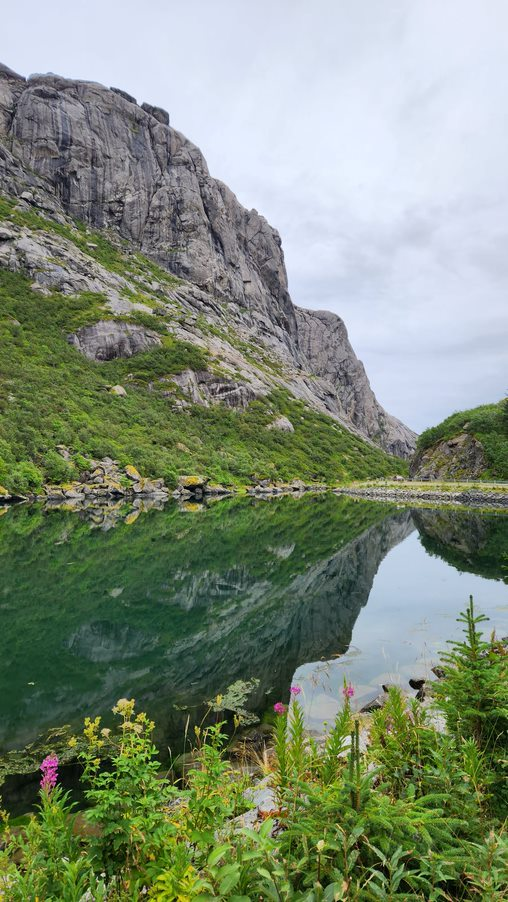
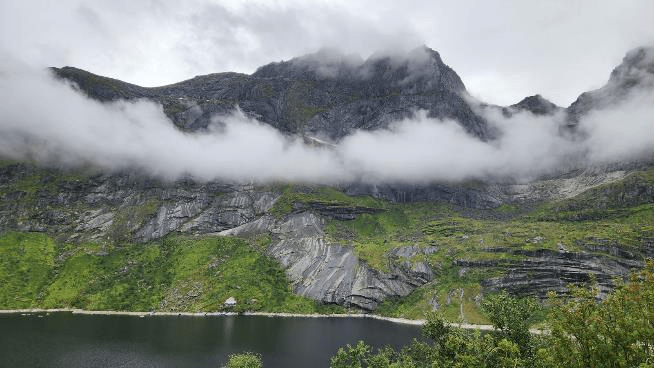
We had a lovely drive today through the Lofoten Islands with nice scenery and fishing villages.
By the way, we’ve been seeing mostly red, yellow, and white painted buildings here and there’s a story behind that.
“Traditionally, Norwegian houses were painted in red, yellow, or white. The color the owners chose depended mostly on the family’s financial situation, location and profession.”
We’ve heard that red is the least expensive color, yellow is more expensive, and white is the most expensive. So, the Rorbu fishermen’s cabins are painted red because they are the cheapest housing. More important buildings are painted yellow, and rich people have white houses.
August 22, 2023 – Tuesday: The Viking Museum
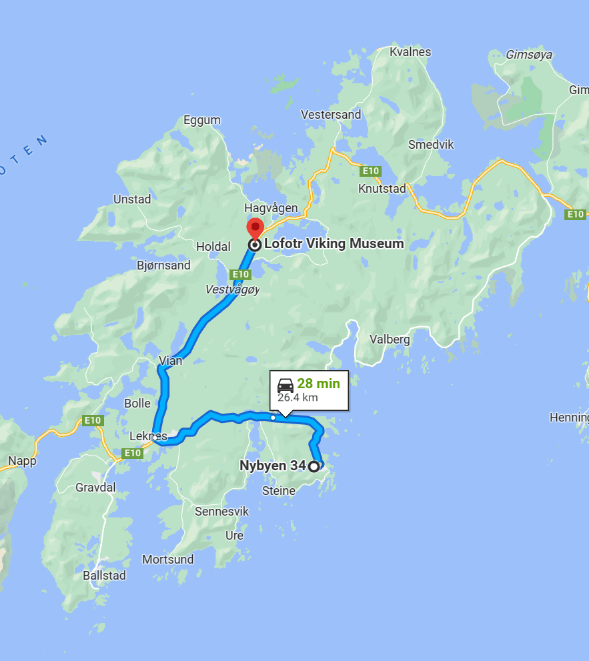
We stayed on the island of Vestvågøy today because we wanted to go to the Viking Museum in Borg. It was a short drive, and on the way we stopped at a grocery store in Leknes and got food for lunch.
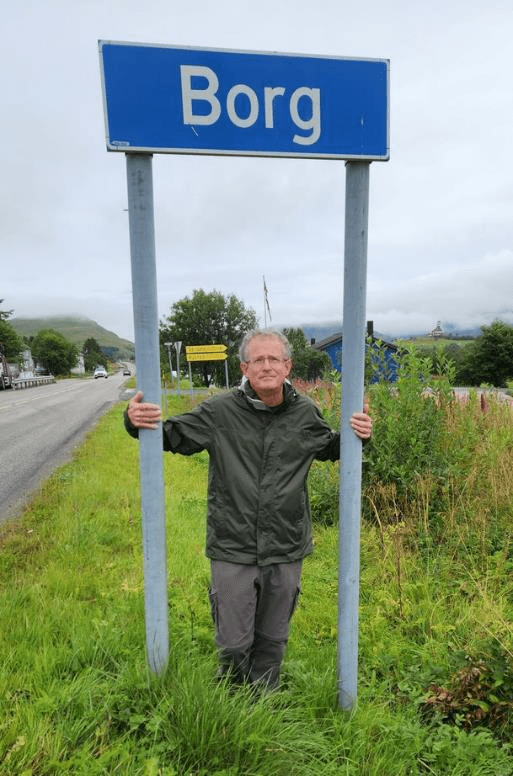
In Star Trek: The Next Generation there is an enemy alien race called the Borg that likes to assimilate other races. So, since I’m a SciFi nerd, I got my picture with the sign when we got to Borg, Norway. You’ll be relieved to know that I was NOT assimilated, possibly because I am already a cyborg with my new cochlear implant.
We paid our 450 kroner admission at the museum then sat in the café area and ate our picnic lunch of grilled chicken, potato salad, and edamame. Thus fortified we set out to see what life was like here over 1,000 years ago.
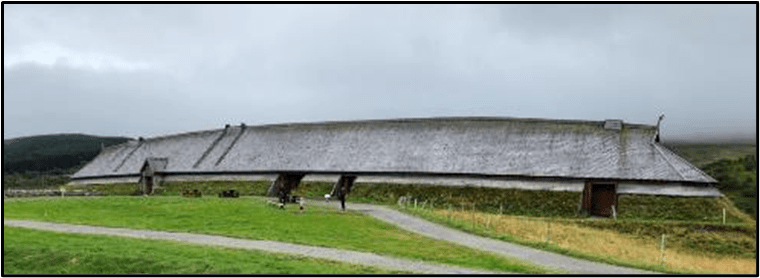
“Lofotr Viking Museum is a museum at Borg in Vestvågøy, built around finds from the Viking Age. During the excavation, the largest house found so far from the Viking Age was uncovered. This house has been reconstructed in full size, 83 meters long. The first archaeological excavations took place in 1986–1989, and this was also the seed of the idea of a separate museum. The main building was designed by Boarch architects at Gisle Jakhelln, and the museum opened in June 1995. The museum’s purpose “is to create interest in and knowledge of the Northern Norwegian Iron Age and the Middle Ages, especially the Viking Age”. The museum is a living museum that emphasizes the communication of history in an engaging and vibrant way. As a guest you can experience the Viking Age in the reconstructed Chieftain’s House with exciting living and working environment, the smell of tar and bonfire, exhibitions and the beautifully decorated guild hall. The museum also has two Viking ships (copies of Gokstad ships), reconstructed forge, boathouse and iron vine. On the farm there are animals of old breeds (Nordland horses, Nordland cattle, wild sheep, wild boar). The archaeological exhibitions show unique finds from Borg and the surrounding area.
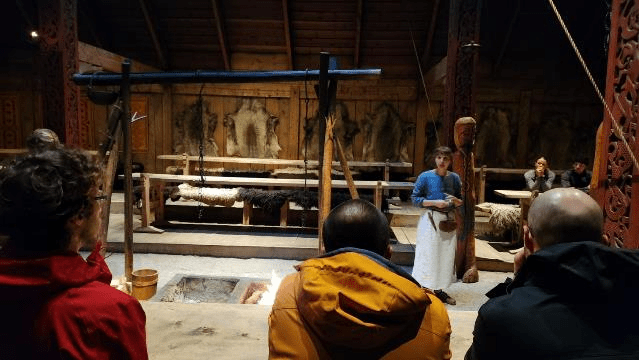
In the Longhouse we listened to a presentation by this Nordic woman in period clothes explaining about the lifestyle of the wealthy Viking Chieftain who lived here. There were animal hides on the walls and it was a bit smoky from the fire that always burns in the firepit in the center of the room over the roof hole.
After that some people were hefting a coat of mail that was sitting on one of the tables, so I decided to try it on. It was heavy, at least 15 pounds if not 20, and it was a struggle to get it on. I believe the chieftain would have had servants who helped him put it on. Patti had me to stand next to this wooden statue for my picture with mail, helmet, and axe. I don’t believe she realized what the “symbol” on the front of the statue represented.
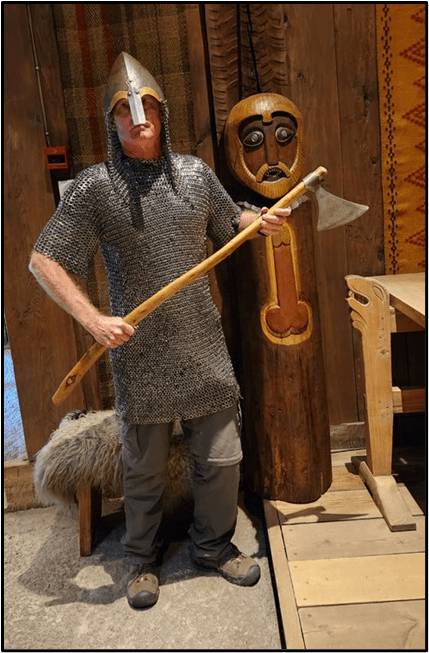
Once I had the mail on it didn’t feel as heavy because it was better distributed over my shoulders. It must have been dangerous to wear mail in a boat because if you went in the water you’d be pulled straight to the bottom by the weight of the mail.
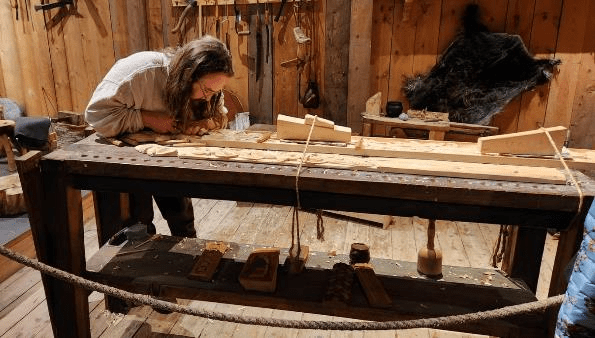
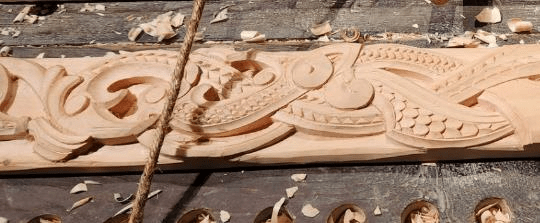
We enjoyed watching this carpenter carving patterns into wood.
Here’s the longhouse from the outside, it was an impressive structure.
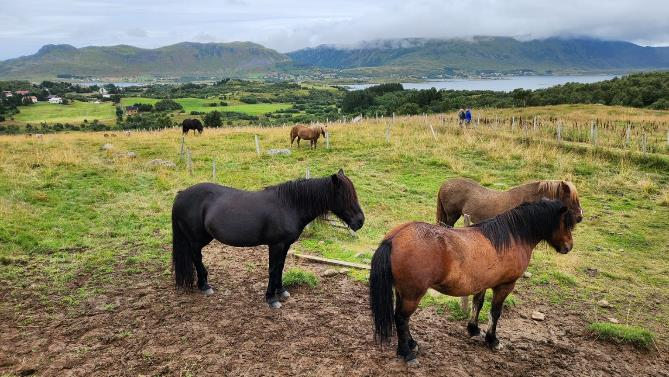
After the longhouse we walked around the outdoor grounds of the museum to see the rest of the sights. These horses made a nice foreground against the background of lake and mountain.
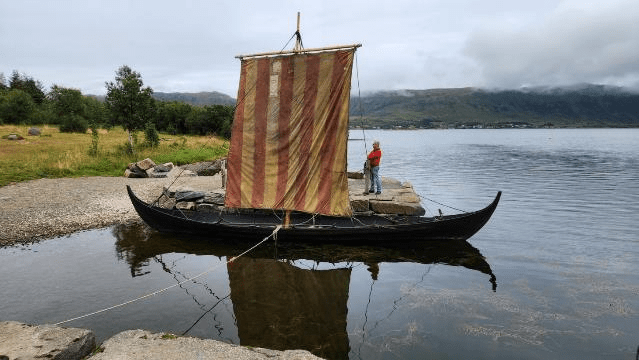
We walked down to the lake so we could get a ride on one of the Viking boats. This is the smaller one that we didn’t ride on.
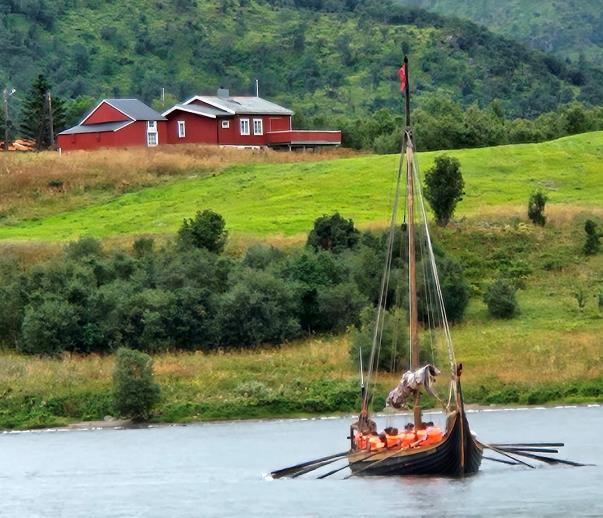
The big boat sails every 30 minutes, here’s a picture of it with the previous crew.
When it was our turn we boarded the boat and took a rowing bench. Here’s our boat selfie.
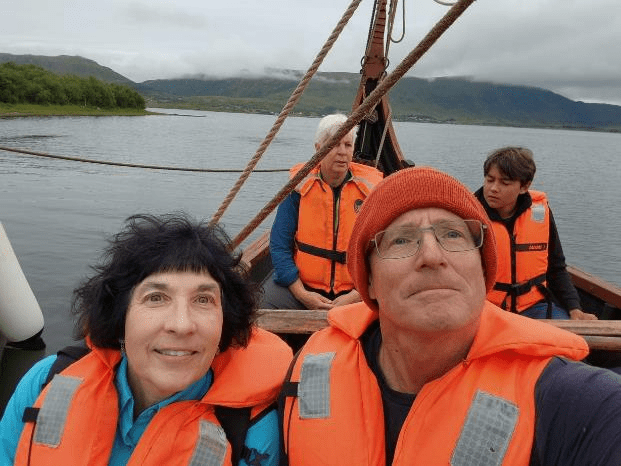
We were on the port side one bench away from the bow. We chatted with the couple next to us on the starboard bench and learned they are from Germany. After the captain pulled us away from the dock we set our oar in the tholes and pulled, trying to match our rhythm with the other five oars on our side. Every oar was pulled by two people. It was a fun ride, and now I can say that I’ve rowed on a Viking Longship!
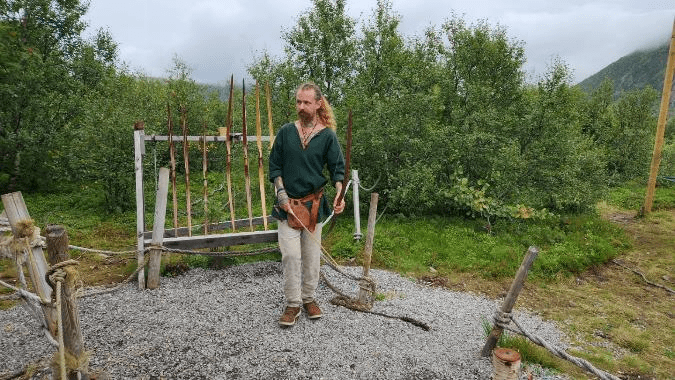
After the boat ride we tried our hand at shooting arrows. Neither of us had ever done that before but we got some instructions from this Viking.
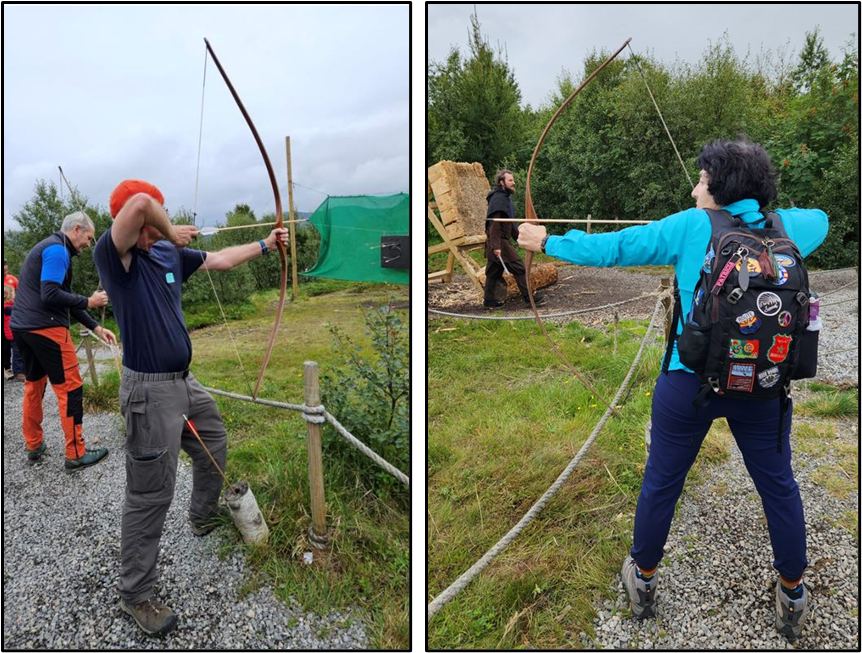
We each got 3 arrows and I missed the target with all three. Patti hit it with her last arrow. I think I may have been holding my right elbow too high.
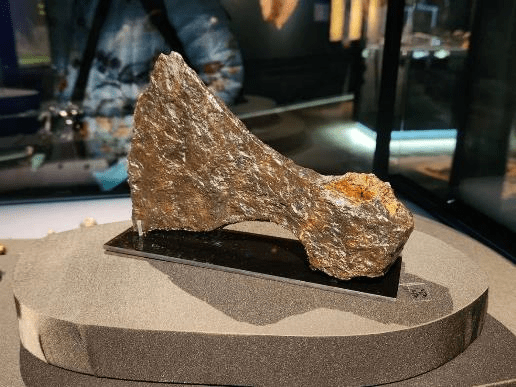
Later, we went back into the exhibition building where they had a lot of artifacts like this axe from a grave at Kvalnes from the late 800’s.
We had a good time at the Viking Museum and learned some things too, like coats of mail are heavy and it takes a lot of muscle power to row a longboat.
 2024 TRAVEL TALES