This travel update is for part two of our week in Oslo, Norway. It covers our trip to the folk museum on July 20.
July 20, 2023 – Thursday (Thor’s Day): The Norwegian Folk Museum
Many of our American days of the week are named for Norse Gods, like Thursday, for example, which is named for Thor, God of Thunder.

Today we decided to go to the Norwegian Folk Museum. Again, Google Maps and the Ruter app very conveniently showed me the quickest route on public transportation. Blue is a tram and red is a bus on the Google map.
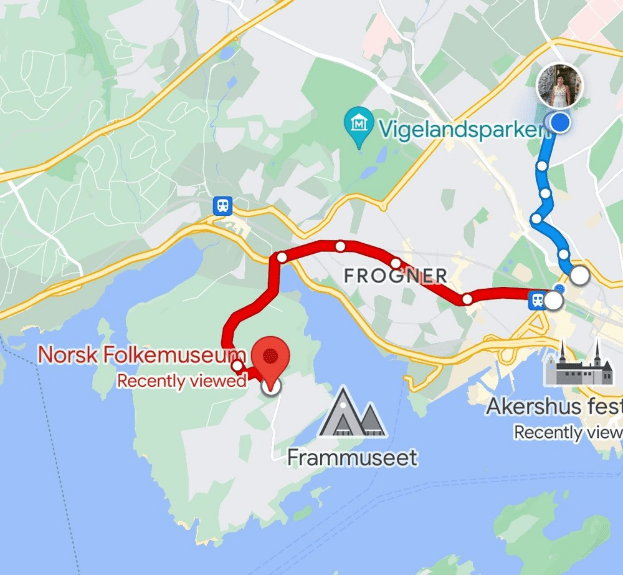
We got to the museum around 10:20 AM and bought our tickets which were about $18 USD each.
“Norsk Folkemuseum (Norwegian Museum of Cultural History), at Bygdøy, Oslo, Norway, is a museum of cultural history with extensive collections of artifacts from all social groups and all regions of the country. It also incorporates a large open-air museum with more than 150 buildings, relocated from towns and rural districts. The Museum is situated on the Bygdøy peninsula near several other museums, including the Viking Ship Museum; the Fram Museum; the Kon-Tiki Museum; and the Norwegian Maritime Museum.”
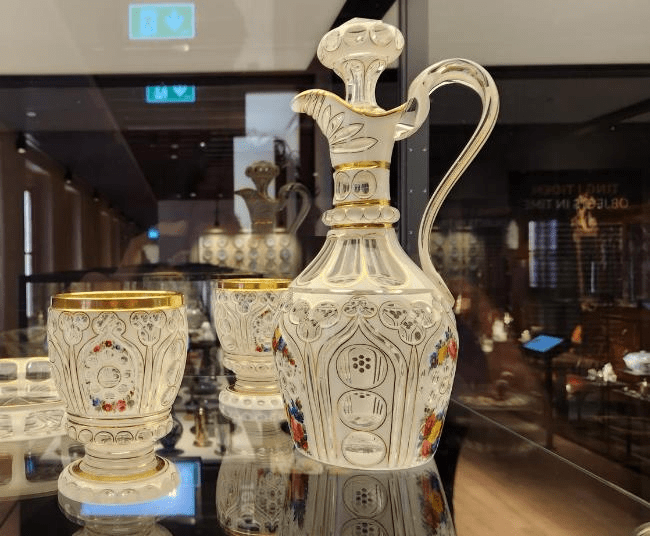
We chose this museum because we wanted to learn about Norse culture. There was a guided tour in English at 11 AM and before that we had a little time to go into one of the indoor galleries that had various Norwegian artworks and treasures. I particularly liked this carafe and glasses made using the “flash glass” technique.
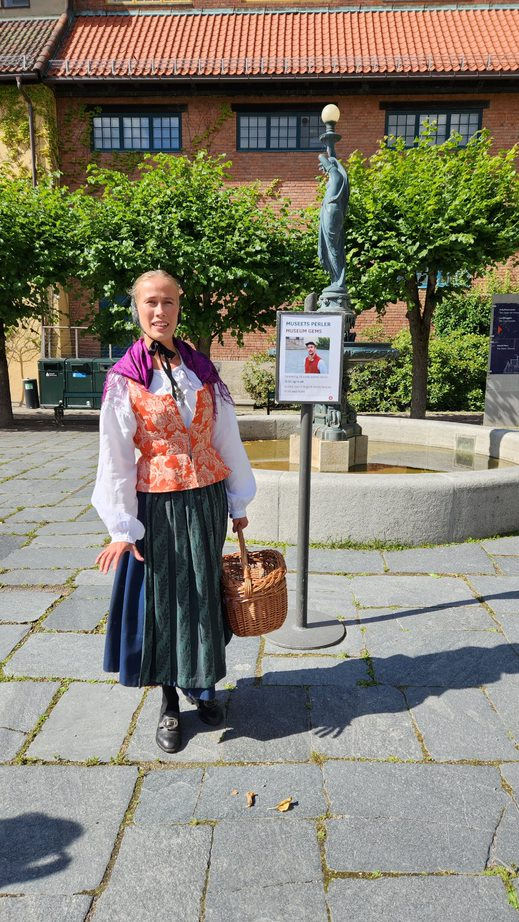
At 11 AM we met our guide, Britt, who was dressed in period clothes and took us to a few of the outdoor exhibits.
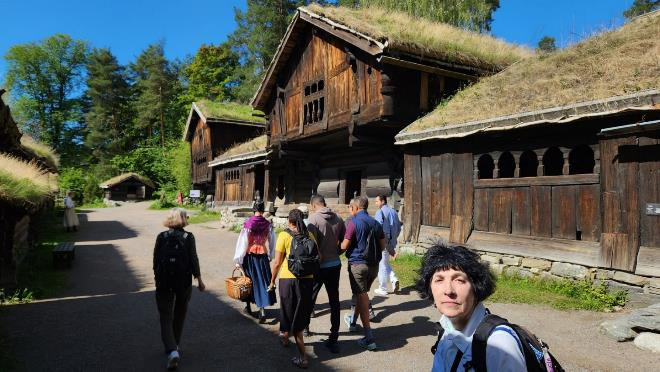
We went to an old village. All these buildings have been moved here from somewhere else in Norway.
Then we went up to the Stave Church which is one of the most popular buildings here. I think I remember that it was constructed in the 1300’s.
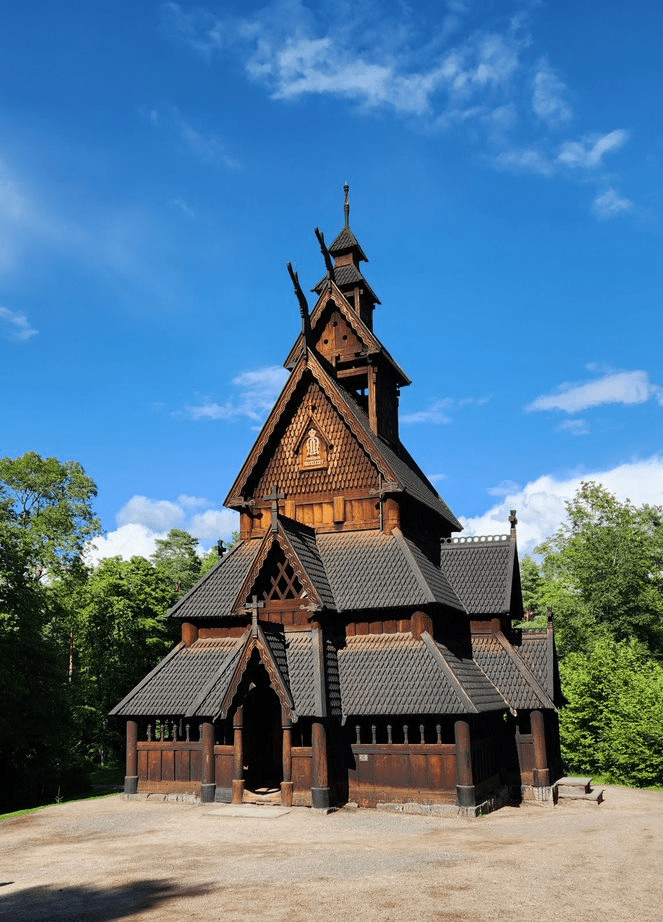
“A stave church is a medieval wooden Christian church building once common in north-western Europe. The name derives from the building’s structure of post and lintel construction, a type of timber framing where the load-bearing ore-pine posts are called stafr in Old Norse (stav in modern Norwegian). Two related church building types also named for their structural elements, the post church and palisade church, are often called ‘stave churches’. Originally much more widespread, most of the surviving stave churches are in Norway.”
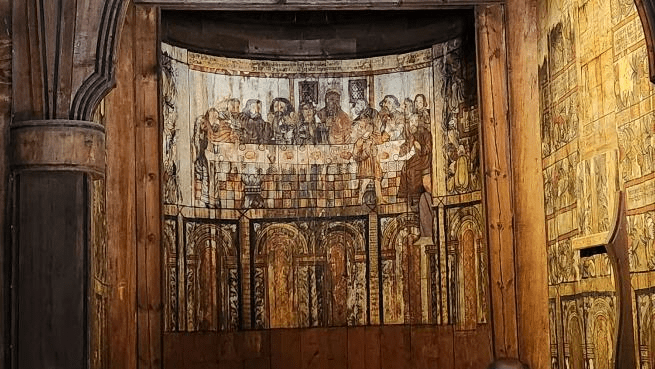
Here’s the painting of The Last Supper inside the church. We learned that the local architects and artists were trying to create something similar to the stone cathedrals of Europe with these wooden stave churches.
After the guided tour we went back down to the indoor museum. There were paintings, clothing, nautical devices, housewares, etc. All kinds of things from Norway’s past.
After that we ate our picnic lunch in the courtyard then walked around the outdoor exhibits. Some of the more modern houses that had belonged to rich people were very nice.
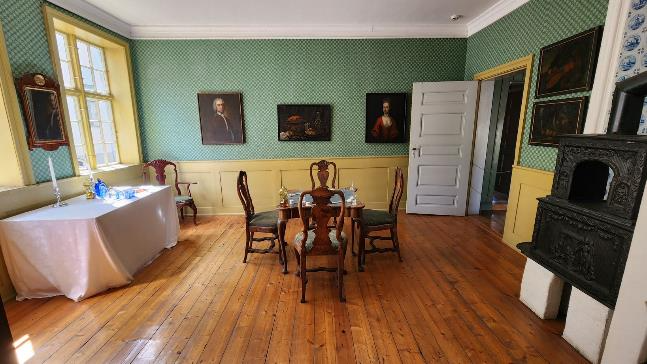
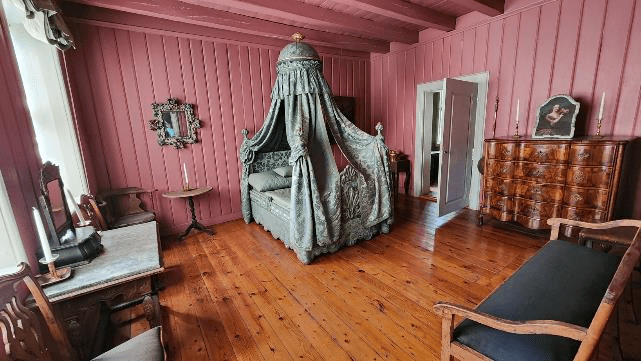
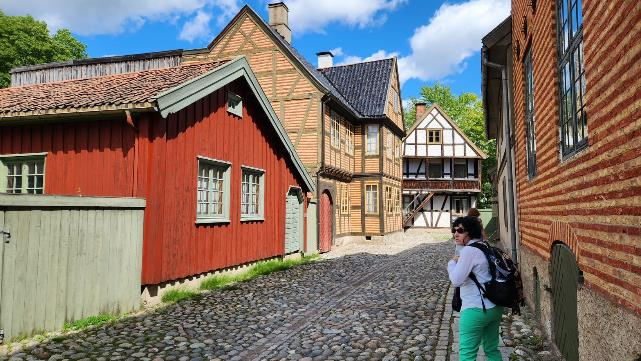
We went to the “old town” area which had interesting looking houses and cobbled streets.
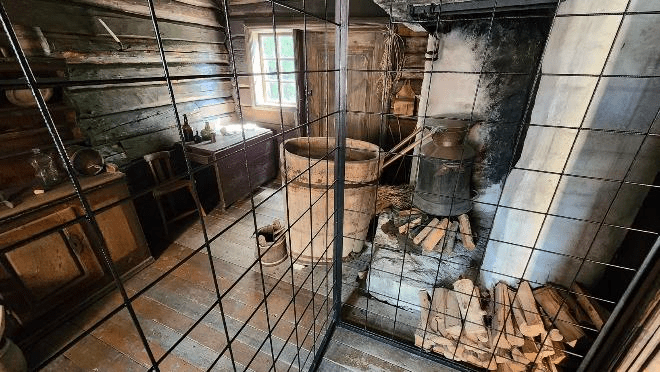
In this house was a corner hearth with a distilling setup for making alcoholic beverages.
Our guide had told us that local school children come here to spend a week at a time, dressing in period clothes and learning how to do the chores that were done in earlier ages. Here two girls were learning how to use the outdoor wash basin.

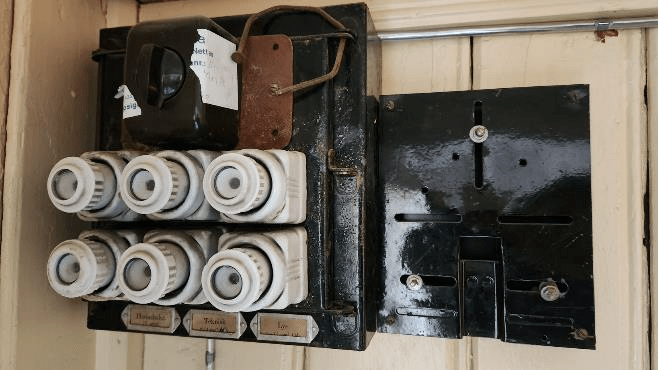
The more modern houses had their electrical systems mostly intact. I liked seeing this fuse panel and meter base.
This was another area with an older village of log houses.
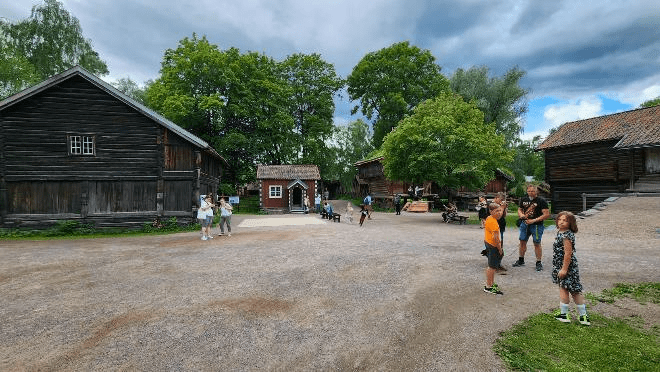
I really liked the looks of these old log houses.
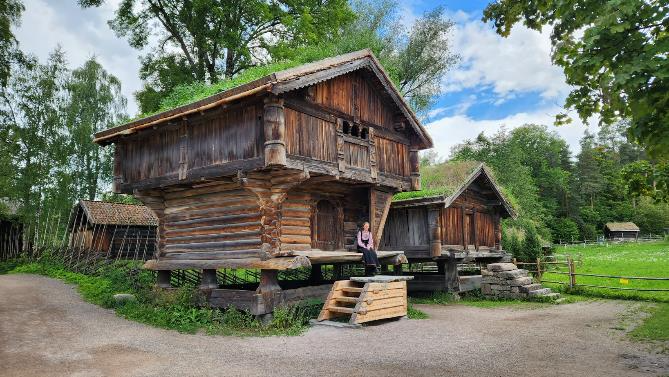
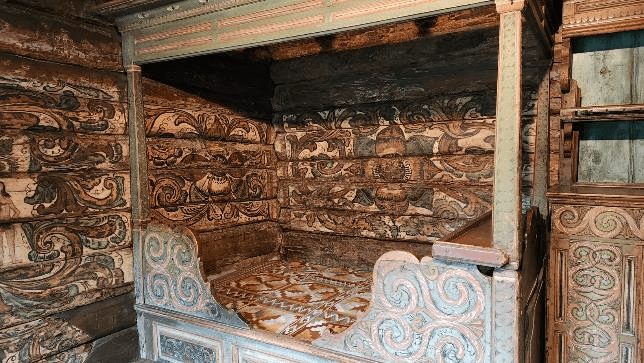
Here’s the inside of one of them with a bed and you can see that the walls are covered with painting.
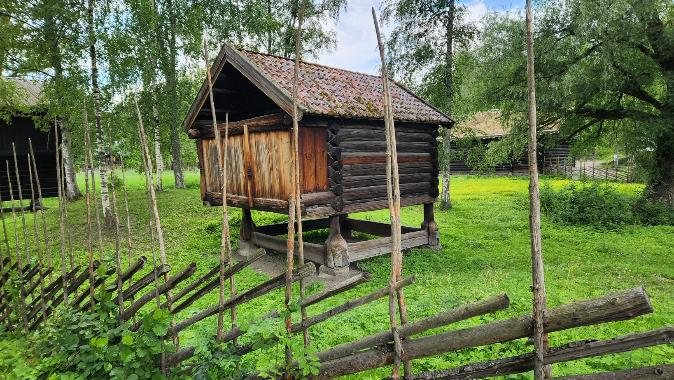
Some of the buildings were built up off the ground. We read that was to minimize rodent infestations and keep things inside drier.
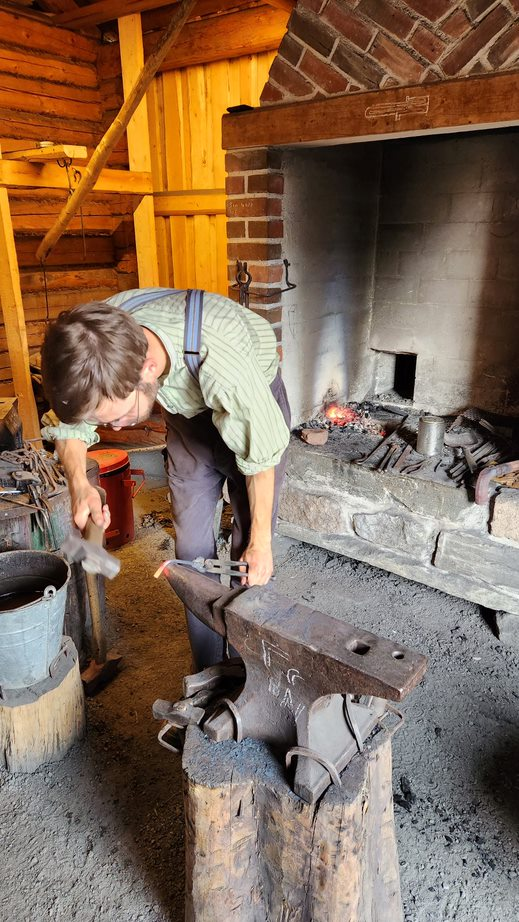
In the village smithy the blacksmith was making hooks out of iron rods.
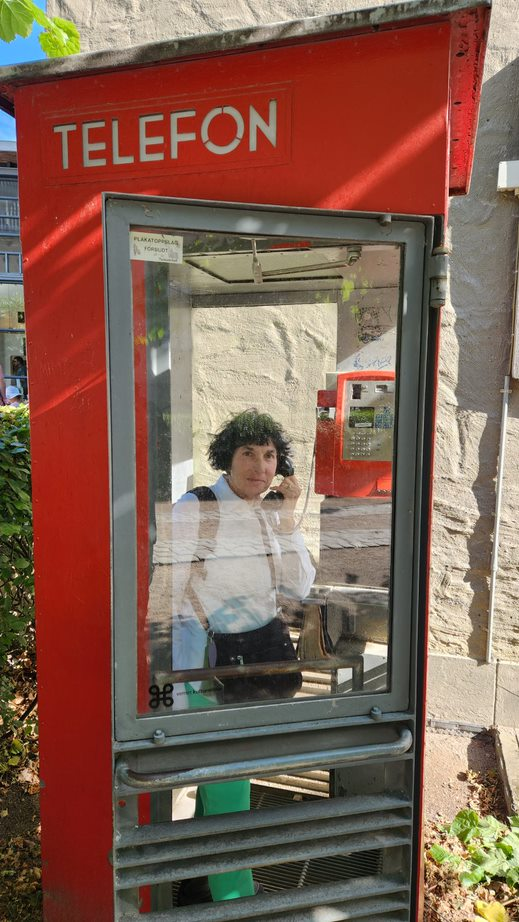
On the way out of the museum we went by this old phone booth. We like getting phone booth pictures.
When we left the museum we caught the next bus, rode it downtown, then transferred to a tram which took us home.
Future Plans:
- July 18 – 26: We are currently staying at an Airbnb in Oslo.
- July 27: We fly on Norwegian Airlines from Oslo to Longyearbyen.
- July 27 – August 2: We have an Airbnb reservation in Longyearbyen.
- August 2: We fly on SAS Airlines from Longyearbyen to Tromsø.
- August 2 – 10: We have an Airbnb reservation in Tomsø.
- We are thinking that after Tromsø, we will head south down the coast of Norway. We will make reservations as we go.
- October 17 – December 3: No plans yet.
- December 3 – 9: I will be participating in research in Durham, North Carolina at the Med-El facilities there. Med-El is the company that made my Cochlear Implant. I’ll spend 9am to 4pm for five days being a lab rat. They say they will test various new programming options for my cochlear implant with the goal of improving their systems. It should be fun. I’m looking forward to it.
- December 9: We drive to Bradenton, Florida
- December 9 – 31: We reserved a cabin at Horseshoe Cove RV Park in Bradenton, Florida, where we stayed last year for two months (November and December). We look forward to singing in the Christmas Choir again.
2024
- January through April: We plan to travel through Belize, Costa Rica, and Panama. We don’t have any reservations yet.
- May and June: We’ve reserved a cabin at Horseshoe Cove RV Park in Bradenton, Florida, again. We’ll spend these two months getting our yearly medical stuff done and visiting with family and friends. May and June are “off-season” in the Sarasota / Bradenton area, and the rate is $56 per night for these 61 days, which is pretty good for a place like this in this location. In season, January through March, the price doubles.
- After June 30, we have no plans, but we are entertaining options about where to travel next summer. Maybe Germany/Austria/Switzerland?
 2024 TRAVEL TALES