This non-travel update is for the month of March 2023. As a reminder, we’ve been staying at the Flamingo Lake RV Resort in Jacksonville, Florida (USA) for a while so I can get a cochlear implant in my right ear at the Mayo Clinic here. So, we’re settled down for 3 months, unfortunately, and our life will be relatively dull. I don’t want to bore you with daily accounts of how we slept and what we had for lunch so I’ll just put in some highlights from the month of March.
The Cochlear Implant:
On March 7 we went back to Mayo Clinic for my second “Mapping”. Millicent, the audiologist, tweaked the settings and gave me more volume.
In case you’re interested in this process, I’m going to put in a few details. If you’re not interested just scroll on down.
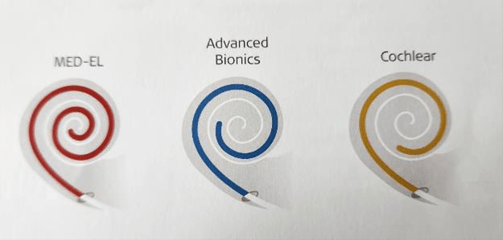
The electrode arrays that go into the cochlea look like this. Med-El (the company that makes my implant) has several different lengths because they like to try and get “complete cochlear coverage”. Cochleas are different lengths, mine was measured at about 34mm. They had thought that they could use the FLEXSOFT 31mm electrode but in the operating room the two surgeons conversed and decided to use the FLEX28 because they thought the 31mm electrode wouldn’t go all the way in.

The other two companies only go part way into the cochlea, as you can see in this picture. Med-El advertises that they can go the full 720 degrees, two full turns into the cochlea, but, for me, they only went about 540 degrees, one and a half turns. It varies with the individual cochlea, I guess.
This is an interesting graphic for visualizing how the electrode array stimulates various places in the cochlea. They’re using the example of a piano keyboard which is good for me because I am currently trying to train my brain to hear piano pitches through the implant.

On our last visit to Mayo I played the piano in the atrium for a few minutes to see what it would sound like.

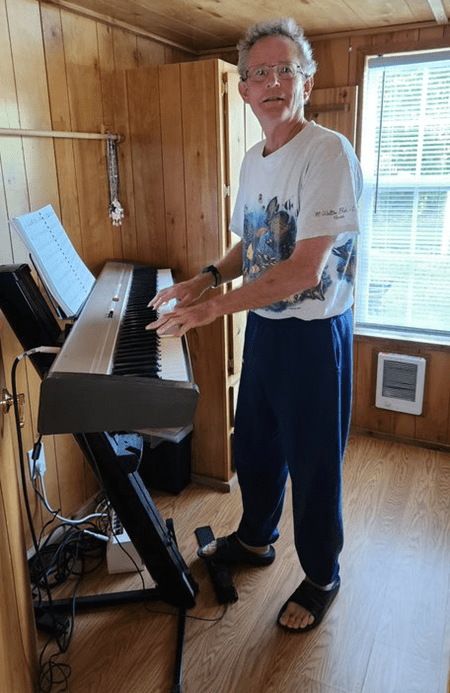
Sounds still sound very strange through the implant, but I’m doing listening exercises every day to try and develop my brain’s listening capabilities. I’ve got my digital piano in our cabin which has a nice sampled grand piano sound. Here I am with it.
The Azaleas:
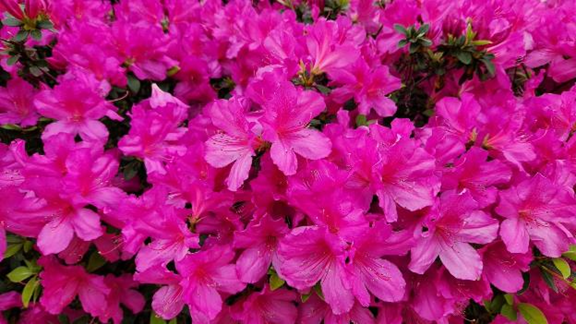
My mom grew up in Atlanta and loved azaleas and they are blooming here this month. We went for a walk downtown and through the neighborhood of Ortega where we saw lots of multimillion dollar houses and lots of azaleas.
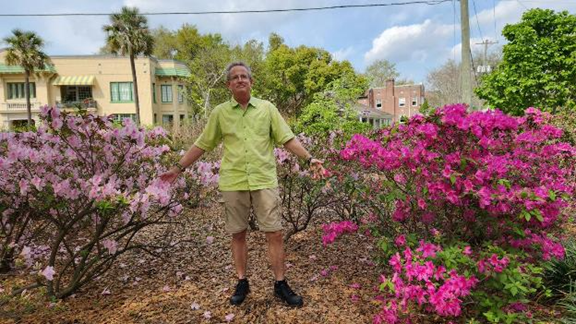
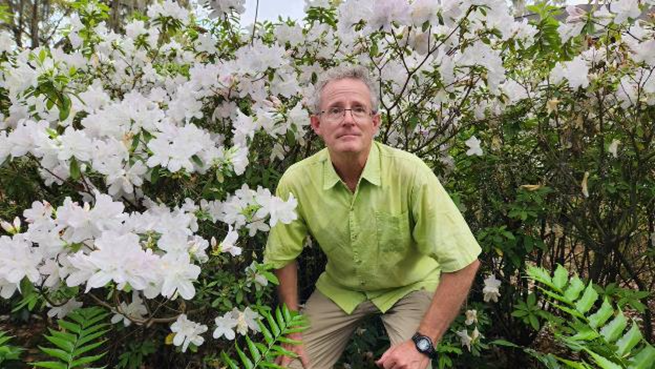
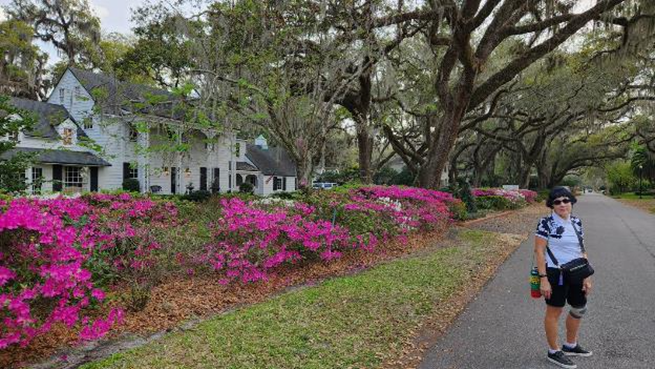
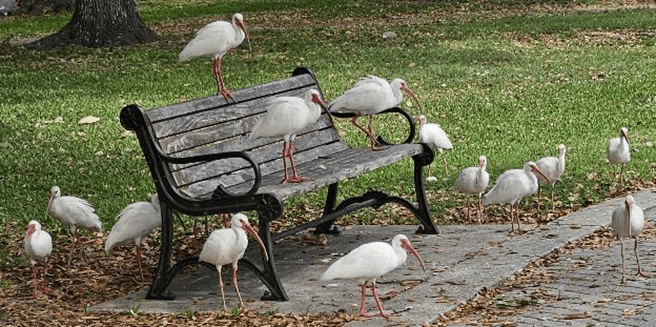
We also saw a lot of Ibis that day. I like the way they hang out together.
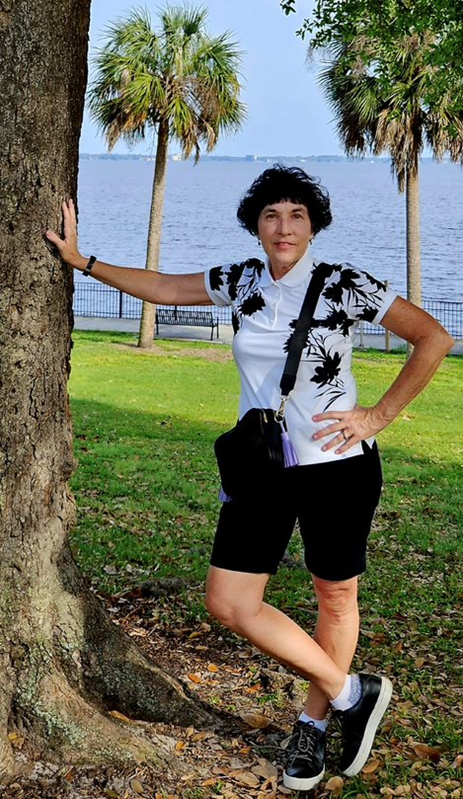
Here’s Patti that day at a park on the river.
The Squirrels of Flamingo Lake:
There’s a squirrel that hangs out around our cabin and we’ve been feeding him raw peanuts. Patti has named him Thomas. He’s used to people and will take the peanut out of your hand.
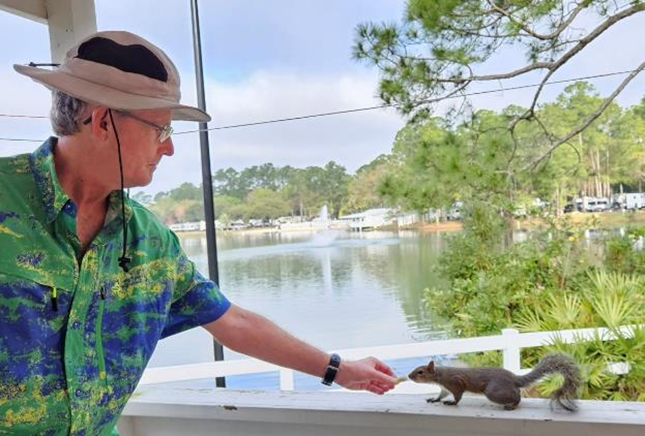
He’s a cute little guy.
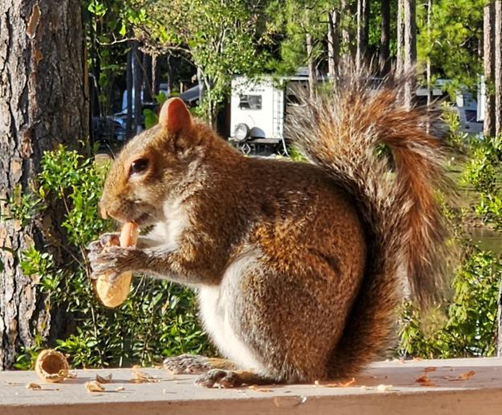
Sometimes I leave the bag open on the table so he can help himself.
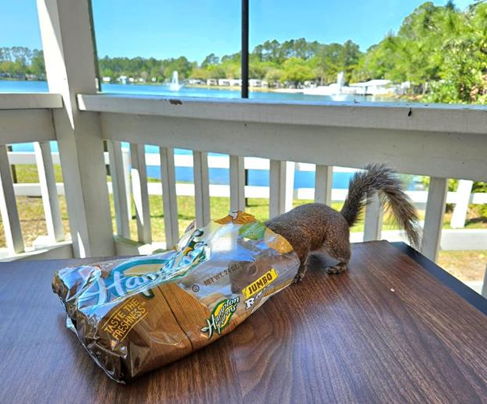
Another squirrel started coming by the cabin but wouldn’t get very close so Patti threw it peanuts and named it Thomasina.
The Baby Turtle:
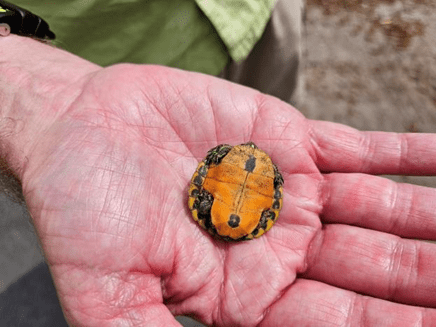
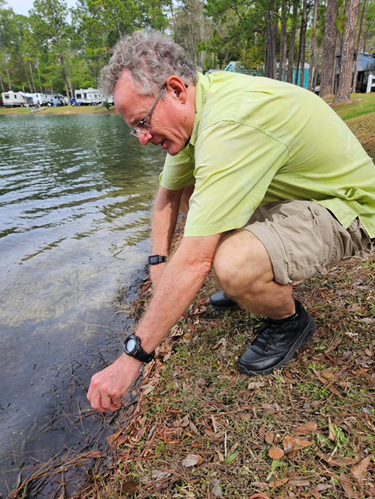
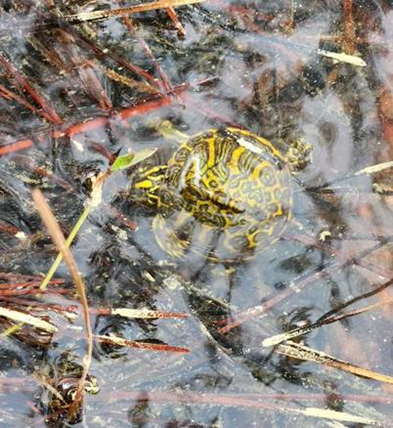
One day as we were driving out of the RV Park I saw a baby turtle on the road. He had probably just hatched and was heading for the water. He was on the hot asphalt so I decided to give him a lift.
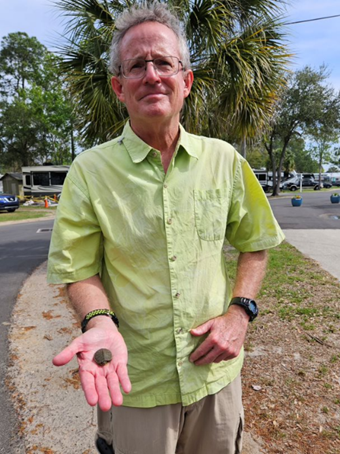
Here’s a view of his plastron.
I put him near the water.
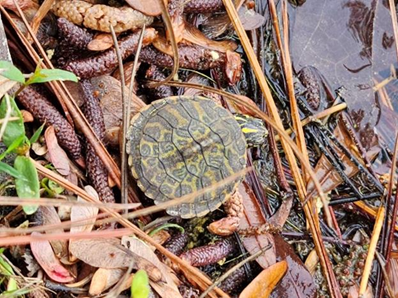
And he went right in.
The Jacksonville Arboretum and Gardens:
We spent a day here and enjoyed it.
“The Jacksonville Arboretum & Botanical Gardens (JABG) is a 501(c)(3) non-profit organization in Jacksonville, Florida, similar to Tree Hill Nature Center, and organized for the purpose of developing a unique natural attraction on a city-owned, 126.82-acre (51.32 ha) site. The arboretum officially opened on November 15, 2008, and the Sierra Club of Northeast Florida stated, “Development of this park is truly a community project of a size and scope never before undertaken by a volunteer organization.””
I was wearing my green and blue shirt today for camouflage.

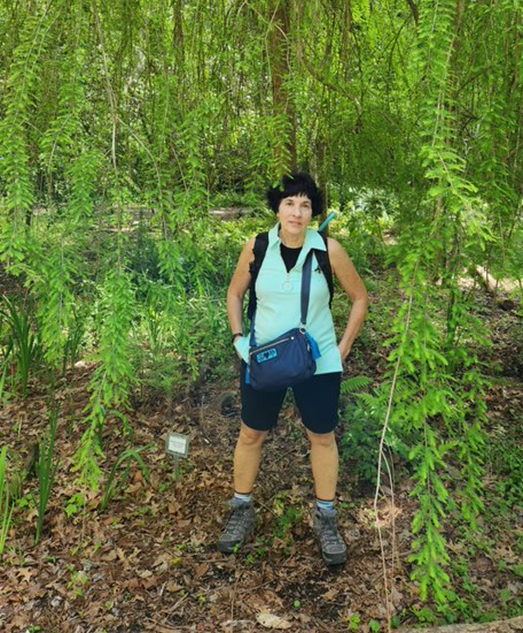
And here’s Patti with a Falling Waters Bald Cypress tree. I had never heard of this type of Cypress before but is was very pretty. So was Patti.
Patti’s Rainy Run:
For a while Patti was running 3 miles every day, even on rainy days. Here she is running in the rain.
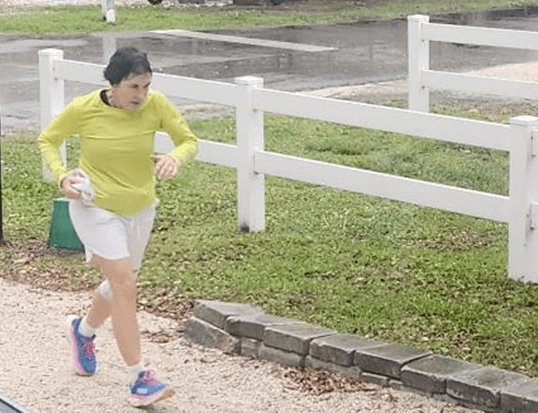
It wasn’t raining when she left, so she thought she could make back to the cabin before the rain started.
Patti’s Cracked Rib:
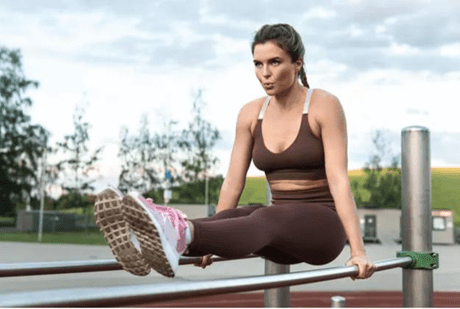
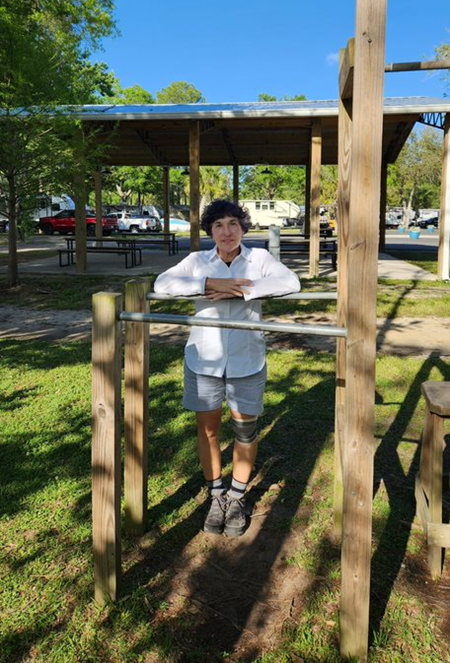
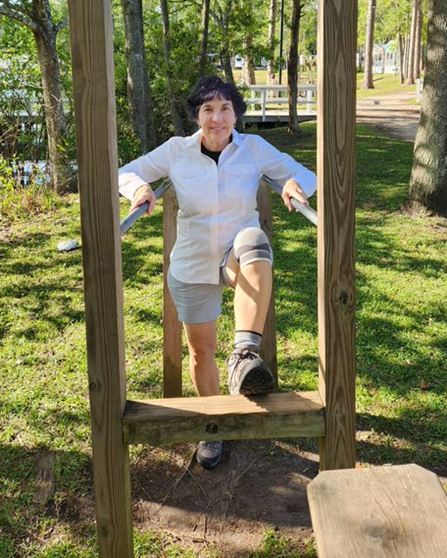
Yes, another injury to report. We were walking around the RV park one day and Patti saw some old kids playground equipment and decided to do what is called an L-Sit which would, ideally, look something like this.
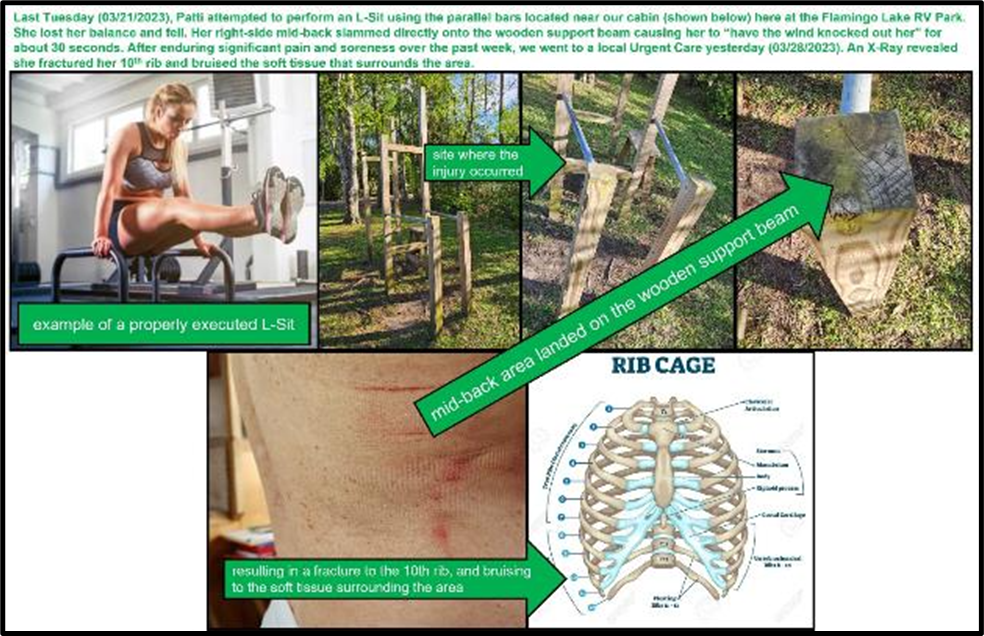
But, her arms weren’t strong enough to finish the maneuver successfully and she ended up crashing down on the top edge of the 4X4 wooden post which gave her some superficial surface scratches and bruised some soft tissue between her ribs and cracked her #10 rib on the right side. I found an urgent care about 5 miles away that was in our insurance network and would have been a $30 co-pay but Patti didn’t want to go yet. So, we waited a week then, since she was still in pain, she decided she wanted to go. The X-ray revealed the cracked rib and they recommended taking it easy for the next 4 -8 weeks while it heals.
Patti made a picture describing her experience.
Here’s Patti with the equipment…
…and demonstrating what she was starting to attempt.
The two lessons we need to learn are these:
1. We can’t be doing all the things we used to do when we were kids. We need to take it easy on our old bodies.
2. Go to the doctor sooner, it’s worth it.
A Trip to Mayport Village:
“Mayport is a small community located between Naval Station Mayport and the St. Johns River in Jacksonville, Florida. It is part of the Jacksonville Beaches communities. The only public road to Mayport is State Road A1A, which crosses the St. Johns River Ferry to Fort George Island.”
We had heard that there is good fresh seafood there. Here’s Patti with the sign. This area was originally settled by the French back in 1562.

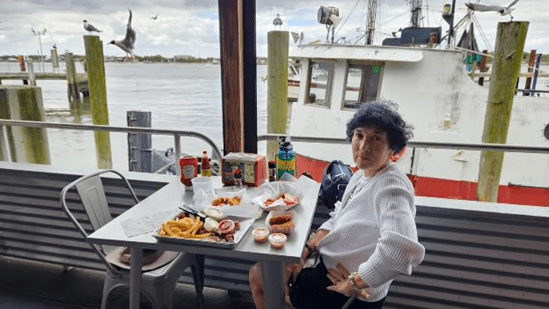
We had lunch at the famous Safe Harbor Seafood Restaurant.

The birds watched us hungrily while we ate. We had a nice view of the docked boats and the St. Johns River.
The Jacksonville Zoo:
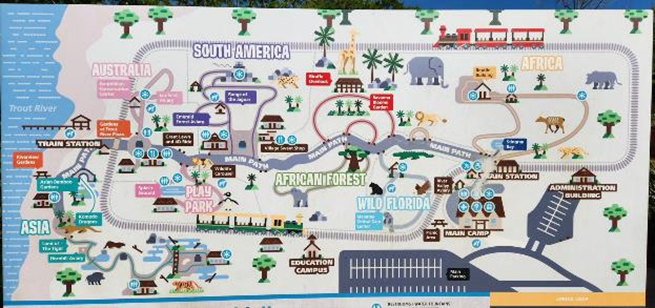
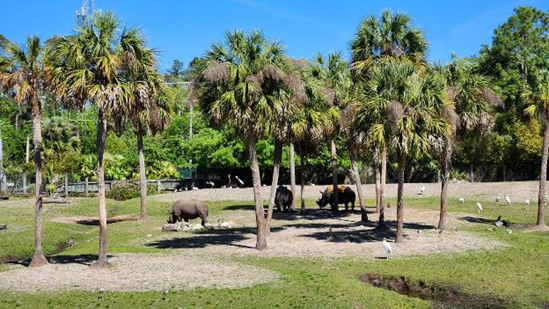
This was a fun day trip. It’s a pretty nice zoo with plenty to see.
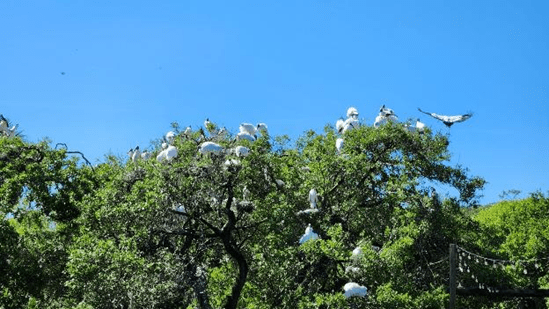
Next to this rhinoceros habitat there was a big Live Oak that local Wood Storks had turned into a nesting tree.
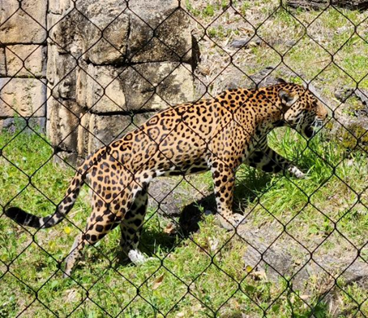
The Jaguar was impressively large, I didn’t realize Jaguars are the third largest cat, after tigers and lions. I remember that when we were in the state of Chiapas in Mexico we read that the native Indians were afraid of the jaguars.
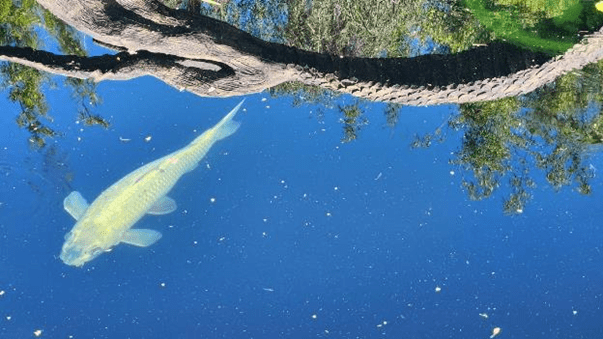
The Japanese Garden had a big Koi pond…
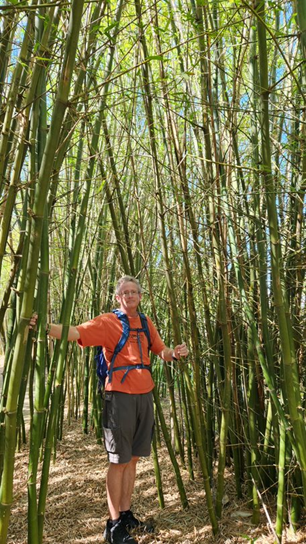
…and also, a lot of bamboo. I’ve always liked bamboo, I planted a grove of it in my backyard in Cincinnati.
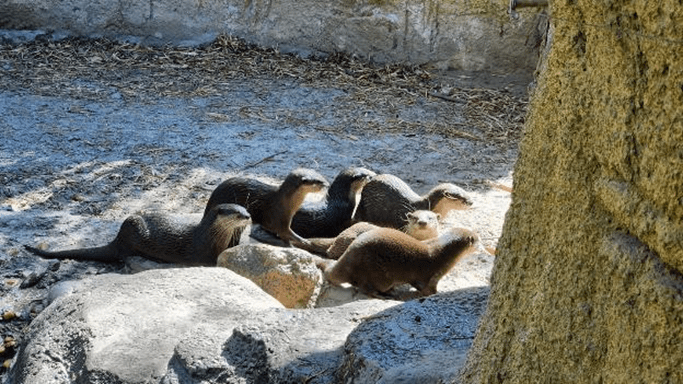
A lot of the habitats were very large and had at least 6 or 8 critters so they could enjoy each other’s company. These otters were fun to watch as they rambled around together.
If you like zoos you would like this place.
The Jacksonville Farmer’s Market:
“Operating much as farmers markets have for hundreds of years, Jacksonville Farmers Market offers a unique shopping experience for any age. Enjoy the open air and festive market atmosphere as you stroll each of the outdoor bays. Greet farmers from across the area as they proudly display their hand-picked produce and assorted food items from amongst the broad selection.”
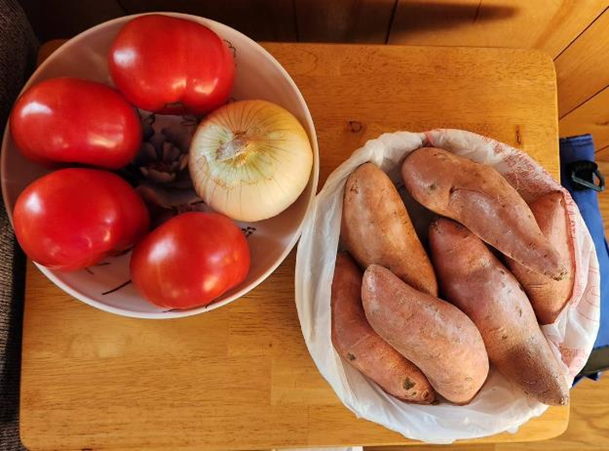
We stopped by one day and enjoyed the bright colors of the produce.
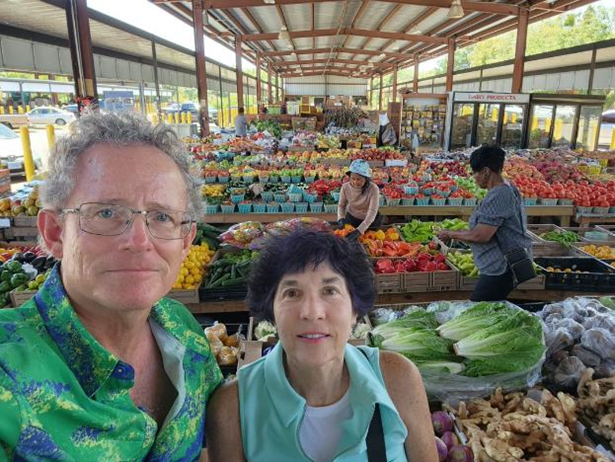
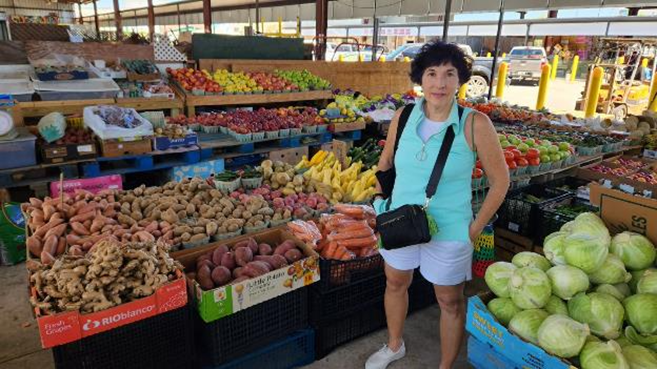
When we got home Patti displayed the fruits (and vegetables) of our journey.
The San Marco Neighborhood:
“The quaint San Marco area centers on its leafy namesake square, a lively hub with indie boutiques and casual eateries serving brunch, pizza and ice cream. Chic bistros and trendy bars dot surrounding streets. The art deco San Marco Theatre shows art-house movies and new releases, and rock bands play at intimate venue Jack Rabbits Live. The neighborhood is also known for its old riverfront mansions.”
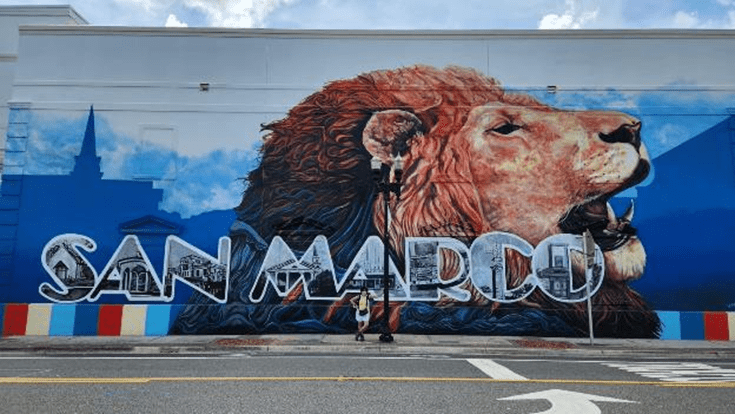
We had a nice afternoon here strolling around. Here’s the big wall mural with Patti looking small in comparison.
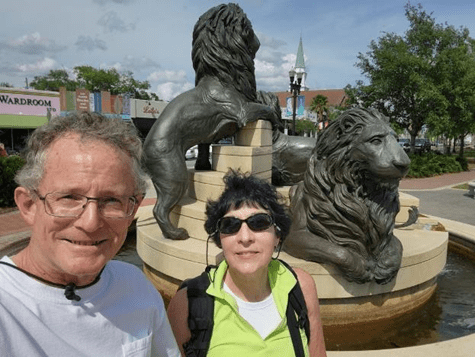
And the Fountain Of Lions is a well-known landmark here.
We walked along River Street to see some of the big mansions. I liked the look of this one.
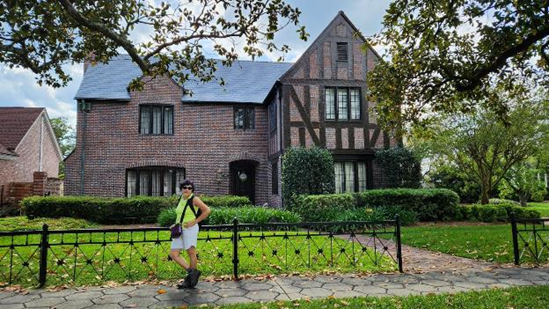
Patti was checking house prices on Zillow as we walked. They ranged from about 1.5 million to 3.5 million dollars. That’s out of my price range at this time.
The Timucuan Ecological and Historic Preserve part 1:
This is a huge area of land, about 46,000 acres, east and north of downtown Jacksonville, much of which is estuary or salt marsh. Today we went to the area south of the St. Johns River. Here’s a decent map of the entire preserve.
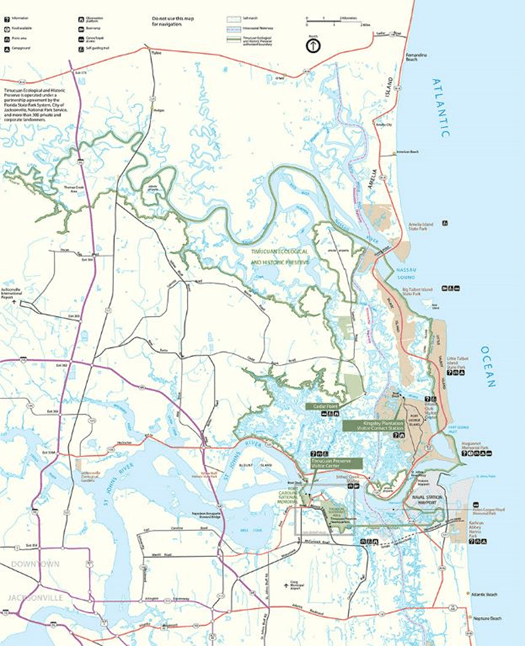
“The Fort Caroline National Memorial is located in the Timucuan Preserve, as is the Kingsley Plantation, the oldest standing plantation in the state. The Preserve is maintained through cooperation by the National Park Service, the Florida Department of Environmental Protection and the City of Jacksonville Department of Parks and Recreation. It is named for the Timucua Indians who had 35 chiefdoms throughout northern Florida and south Georgia at the time of Spanish colonization.”
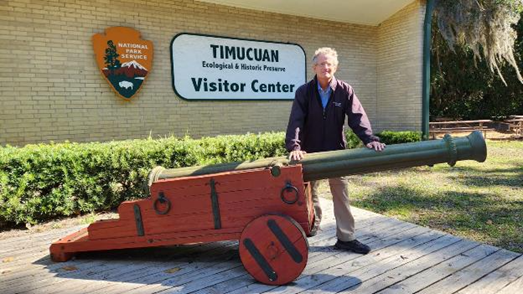
Here’s me with a reconstruction of a canon at the visitor center.
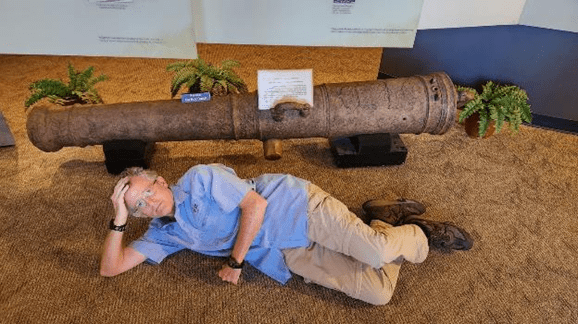
And here’s me with a real, bronze, Spanish canon that was recovered from a shipwreck a little ways south of here. It was cast in Spain in 1594. I could still make out some of the decorations that were cast into it. It must have been beautiful when it was new and shiny.
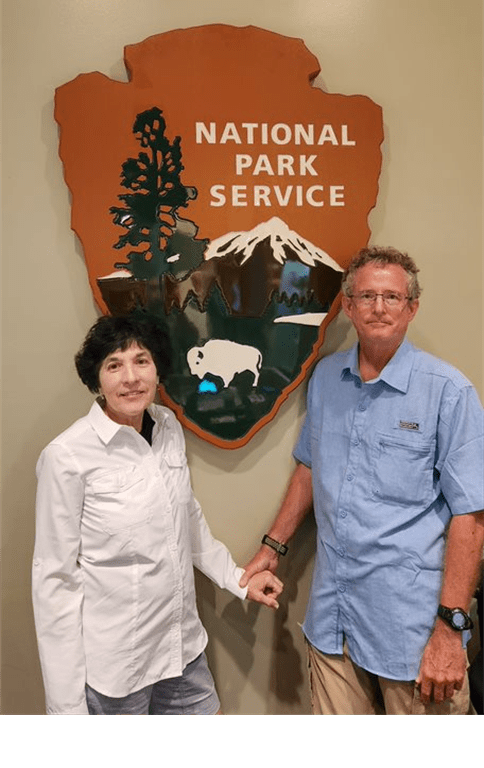
The nice park ranger took a picture of us with his sign.
Here’s Patti at a reconstruction of Fort Caroline.
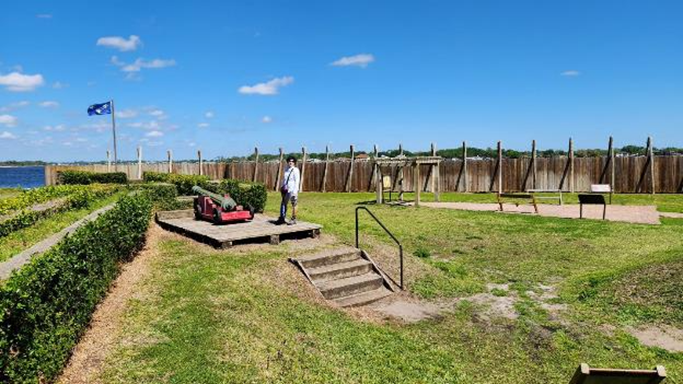
“Fort Caroline was an attempted French colonial settlement in Florida, located on the banks of the St. Johns River in present-day Duval County. It was established under the leadership of René Goulaine de Laudonnière on 22 June 1564, following King Charles IX’s enlisting of Jean Ribault and his Huguenot settlers to stake a claim in French Florida ahead of Spain. The French colony came into conflict with the Spanish, who established St. Augustine in September 1565, and Fort Caroline was sacked by Spanish troops under Pedro Menéndez de Avilés on 20 September. The Spanish continued to occupy the site as San Mateo until 1569.”
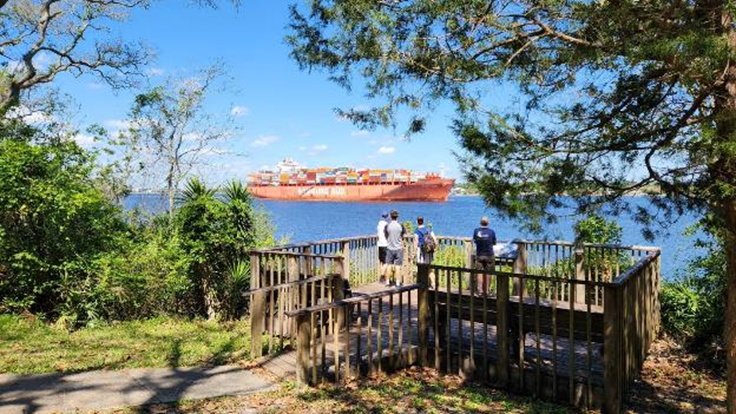
The history was interesting, as far as I know this was the only French settlement on the southern east coast of the “new world”. Nowadays, the St. Johns River is a busy waterway for all kinds of vessels. We watched this big container ship go by.
After the fort we hiked about 3 miles in the Theodore Roosevelt area.
“The Theodore Roosevelt Area is a 600-acre natural treasure of hardwood forest, wetlands, and scrub vegetation. It is also rich in cultural history. Visitors can experience miles of thickly wooded peaceful nature trails, vast grassland that supports both water and land animals, ancient piles of discarded oyster shells which yield clues about an extinct culture, and the legacy of preservation bequeathed to all by this property’s last private owner, Willie Browne.”
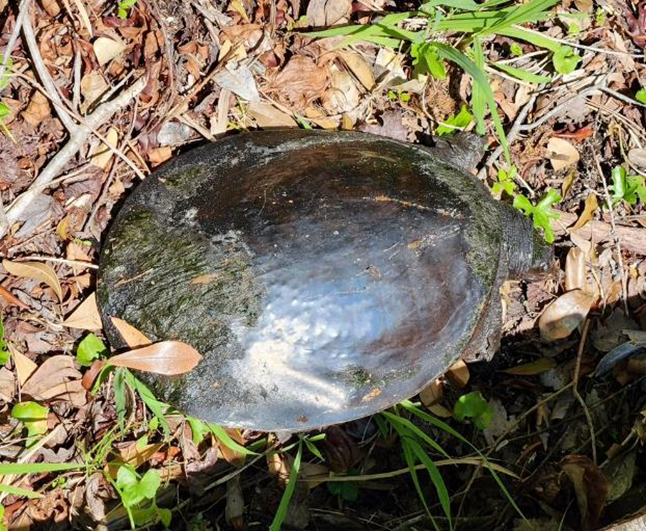
We saw this softshell turtle next to the boardwalk, it may have been a female looking for a place to dig a hole and lay some eggs.
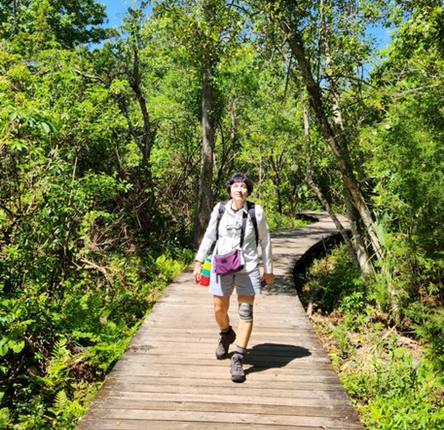
Here’s Patti on the boardwalk.
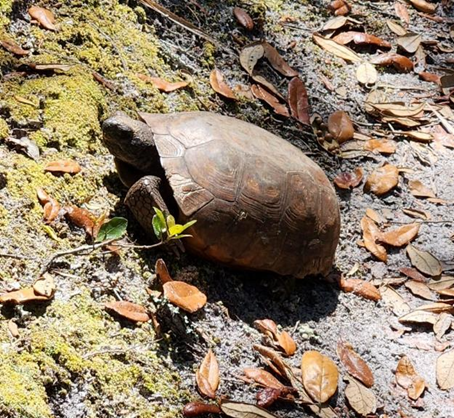
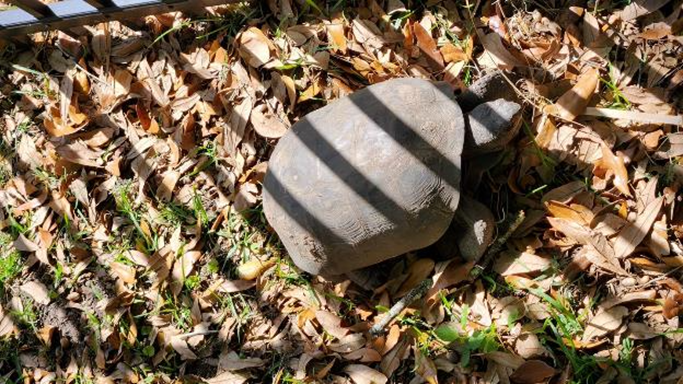
Gopher Tortoises are always fun to see.
These Lubber grasshoppers were swarming on some fallen leaves. I didn’t know the name of this insect. I’ve seen the adults before but don’t remember seeing young ones like this.
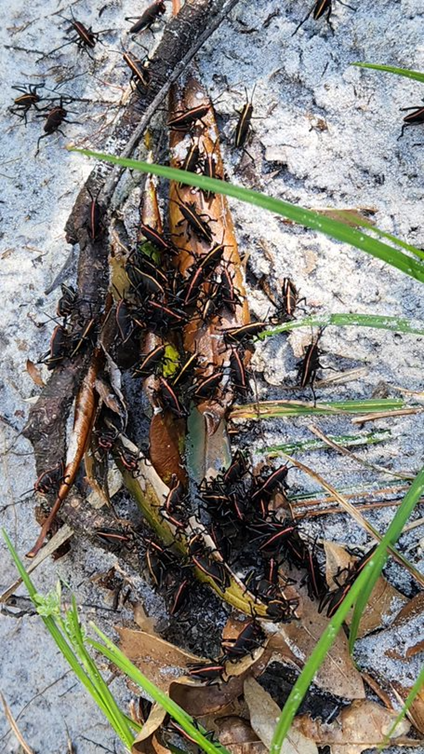
“The Eastern lubber grasshopper, Romalea microptera (Beauvois), is a large colorful flightless grasshopper that often comes to the attention of Florida homeowners. It is native to Florida and the Southeastern Coastal Plain of the United States. Because of its size and coloration even one individual in a garden is conspicuous, but occasionally local populations explode to such an extent that the grasshoppers can seriously damage ornamentals, row crops and citrus groves. Such population explosions are the result of factors such as weather and rates of parasitism by beneficial insects that normally limit population growth.”
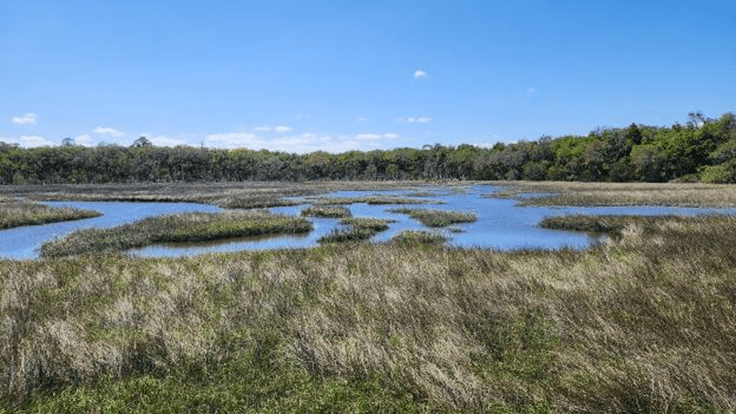
We like the salt marsh estuaries. We went up into a lookout tower and watched the Ospreys fishing. It was a pretty view.
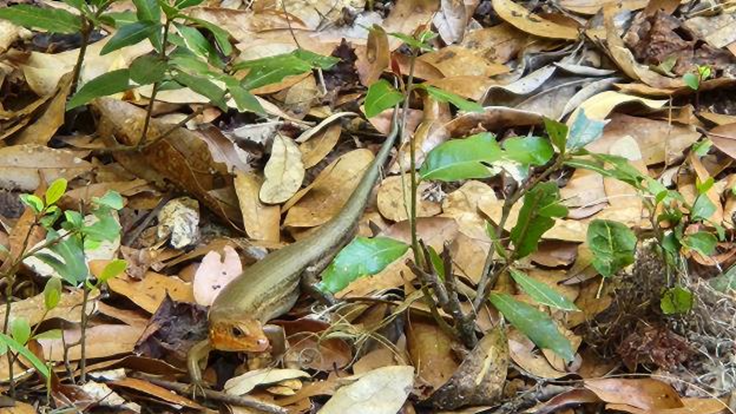
This Skink was pretty good sized. I like Skinks, they’re so smooth-looking.
We had a nice walk in the woods.
The Timucuan Ecological and Historic Preserve part 2:
Today we went north of the St. Johns River to Ft. George Island and the Kingsley Plantation and Ribault Club.
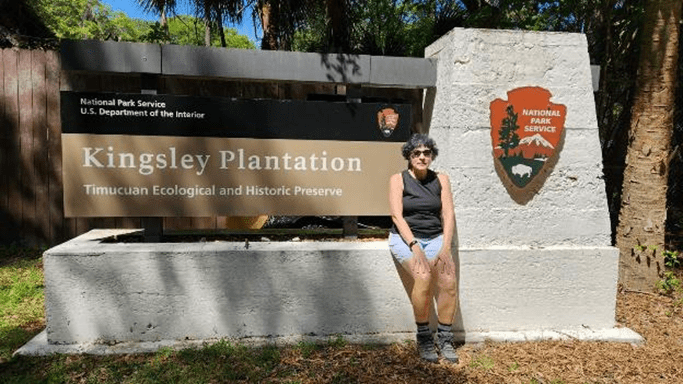
“Kingsley Plantation (also known as the Zephaniah Kingsley Plantation Home and Buildings) is the site of a former estate on Fort George Island, in Duval County, Florida, that was named for its developer and most famous owner, Zephaniah Kingsley, who spent 25 years there. It is located at the northern tip of Fort George Island at Fort George Inlet, and is part of the Timucuan Ecological and Historic Preserve managed by the U.S. National Park Service. Kingsley’s house is the oldest plantation house still standing in Florida, and the solidly-built village of slave cabins is one of the best preserved in the United States. It is also “the oldest surviving antebellum Spanish Colonial plantation in the United States.””
The plantation house and kitchen house are in pretty good shape.
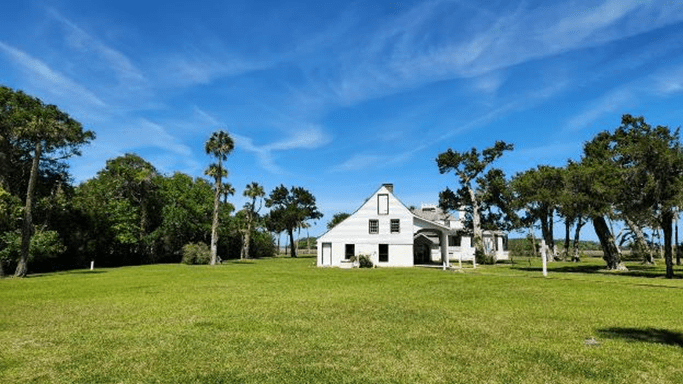
And here’s Patti with the slave cottages.
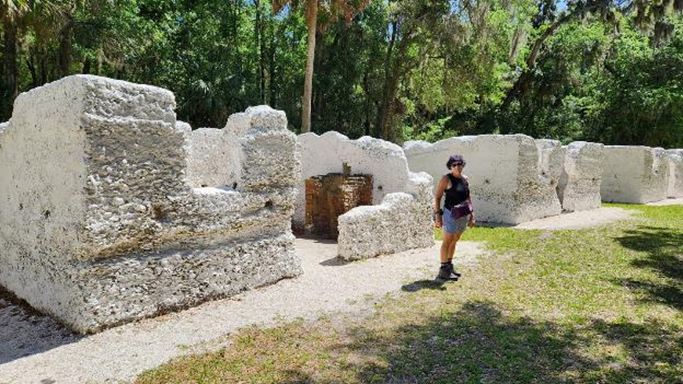
These are made out of Tabby concrete, which is something I’d never heard of.
“Tabby is a type of concrete made by burning oyster shells to create lime, then mixing it with water, sand, ash and broken oyster shells. Tabby was used by early Spanish settlers in present-day Florida, then by British colonists primarily in coastal South Carolina and Georgia. It is a man-made analogue of coquina, a naturally-occurring sedimentary rock derived from shells and also used for building. Revivals in the use of tabby spread northward and continued into the early 19th century. Tabby was normally protected with a coating of plaster or stucco.”
Kingsley and his first wife make a very interesting story. He purchased his first wife as a slave in Havana, Cuba when she was 13 years old. She had been captured and enslaved by a rival tribe in Africa. Her father was actually chief of their tribe and had slaves of his own. Kingsley later freed her and put her in charge of his estate on Ft. George Island which she then managed, including managing all the slaves. He had a total of nine children with four of his black slaves/wives.
“In 1814, Zephaniah Kingsley moved to Fort George Island and what is known today as the Kingsley Plantation. He brought a wife and three children (a fourth would be born at Fort George). His wife, Anna Madgigine Jai, was from Senegal, West Africa, and was purchased by Kingsley as a slave. She actively participated in plantation management, acquiring her own land and slaves when freed by Kingsley in 1811. With an enslaved work force of about 60, the Fort George plantation produced Sea Island cotton, citrus, sugar cane, and corn. Kingsley continued to acquire property in north Florida and eventually possessed more than 32,000 acres, including four major plantation complexes and more than 200 enslaved people.”
Kingsley believed that blacks were superior to whites in many ways and thought that “amalgamation” (having mixed race children) would strengthen the white race. He included all his wives and children in his will and when the race laws of Florida changed he moved his family to Haiti where they would not be in danger of becoming slaves after he died. Two of his daughters married rich white local men and, thus protected, they remained in Florida.
It’s hard to imagine what this society was like, that depended so much on slaves and made so many laws governing their use. It’s hard for me to imagine thinking of people as property, but, that’s the way it was.
We found another Gopher Tortoise at the plantation.
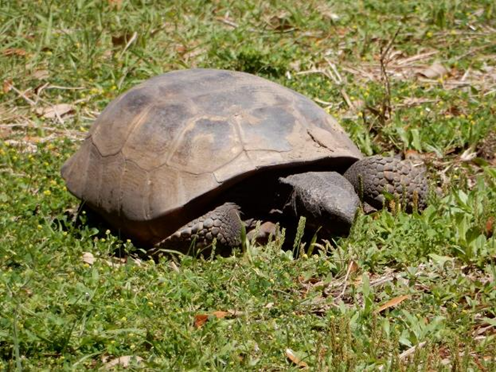
Then we drove over to the Ribault Club, which is also on Fort George Island, and saw another gopher tortoise.
“Named to commemorate French explorer Jean Ribault, who first claimed Fort George Island in 1562, The Ribault Club is situated in Fort George Island Cultural State Park, a site boasting 5,000 years of civilization in North Florida. From the native Timucuan Indians to Spanish conquerors, early American colonists, vacationers of the jazz age, and today’s sportsmen and hikers, Fort George Island borders the mouth of the St. Johns River in Jacksonville, Florida and remains one of the most beautiful and historic settings in Florida. The Ribault Club history begins in 1928. Built atop the shell middens left by native Indians hundreds of years ago, it offered a winter get-a-way for affluent families. The roaring 20’s spirit on this tree-covered estate welcomed members from Philadelphia, New York, Boston and Pittsburg to vacation, dine and dance, earning the knick-name “Millionaire’s Club.” It was so popular that by 1930, an additional lodge was added to accommodate its 350 regular guests. The property included a Donald Ross-designed golf course, lawn bowling, clay tennis courts, hunting, fishing, yachting (and socializing, of course), often welcoming foreign dignitaries, captains of industry and members of society.”
The place has been beautifully restored.

We spent some more time reading about the history of the area here, from the Timucuan Indians through the Roaring 20’s.
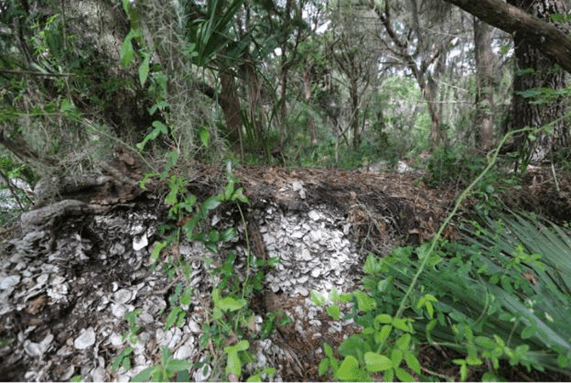
I want to mention the shell middens that are all over the place here.
“A shell midden or shell mound is an archaeological feature consisting mainly of mollusk shells. The Danish term køkkenmøddinger (plural) was first used by Japetus Steenstrup to describe shell heaps and continues to be used by some researchers. A midden, by definition, contains the debris of human activity, and should not be confused with wind- or tide-created beach mounds. Some shell middens are processing remains: areas where aquatic resources were processed directly after harvest and prior to use or storage in a distant location.”
There must be billions of oyster shells in this preserve, leftover from the Timucuan Indians. In many places the middens must be over 10 feet deep. As we hiked we saw many places where vegetation had grown over the middens. The white things in this picture are old oyster shells that probably make up most of the substrate.
Note: “Any text in quotes and Italics has been copied and pasted from some informational website like Wikipedia.”
Future Plans:
- January 23 – April 23: we’ve got this “vacation cottage” reserved at Flamingo Lake RV Resort in Jacksonville, Florida. That’s where I’ve been recuperating from my Cochlear Implant surgery that I had on February 13 and I’ve also been training my brain to hear with this new method.
- April 23 – May 2: We’ve got an Airbnb reserved in Cocoa Beach, Florida about 3 blocks from the beach and we hope to see some rocket launches from nearby Cape Canaveral.
- May 2 – June 13: we’ve got a mobile home reserved at the Twin Shores Mobile Home Park on Longboat Key near Sarasota. We’ve stayed at that park before but in a different unit.
- Jun 13 – 29: We’ve got our first House Sit scheduled in St. Augustine, Florida. We’ll be taking care of a dog and 3 cats while their owners go on vacation to the British Isles. It’s a nice 3-bedroom house in a gated community about 5 miles from all the touristy stuff people do in St. Augustine, we think it will be a good time.
- June 29 – July 5: we’ve got an Airbnb reserved in Ellijay, in the north Georgia mountains. We’re planning on doing some hiking in the mountains there.
- July 5 – 11: We’ve got our second House Sit scheduled in Columbia, South Carolina. We’ll be taking care of two dogs while their owners go on vacation.
- After July 11, no plans yet, but we’re thinking about doing a road trip up the east coast to Maine and back.
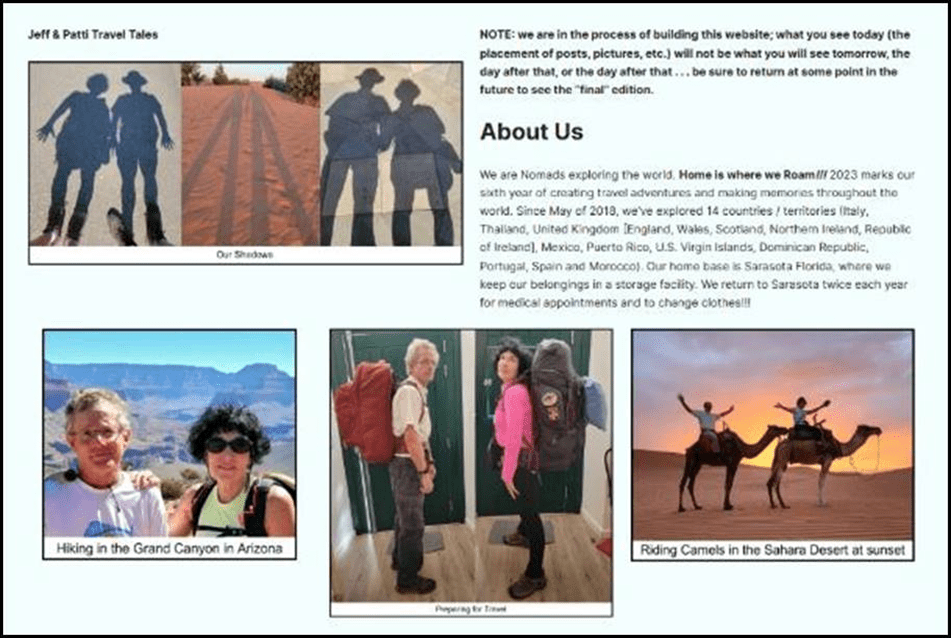
Jeff + Patti Travel Tales website coming soon!!!
Patti is in the process of building a website for all of the “Travel Tales” I’ve written over the past six years. Below is a screenshot of the home page.
 2024 TRAVEL TALES